Restoring my Fiat 126 BIS
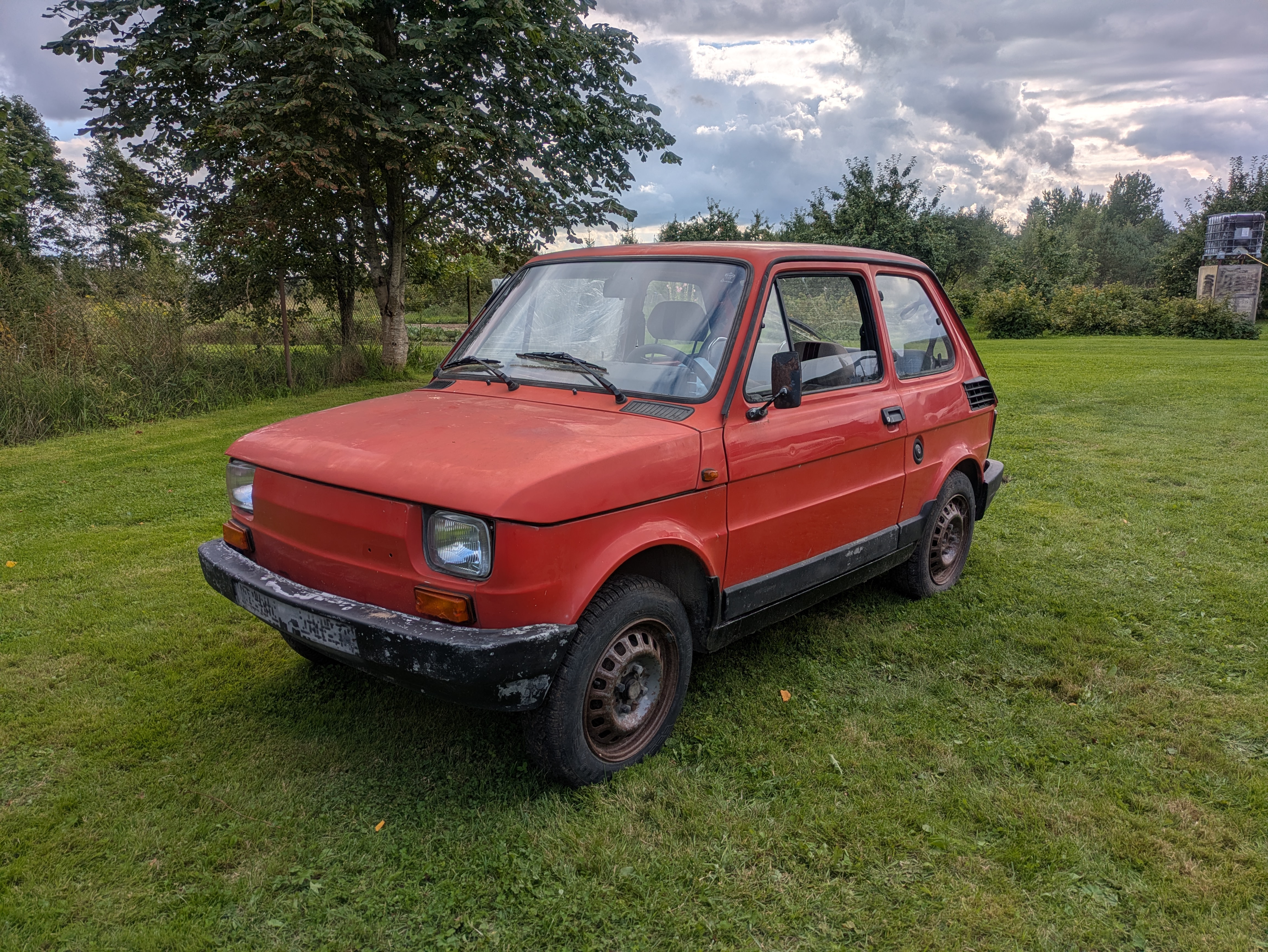
This is an ongoing project that will get continuously updated whenever I have made some progress. Check in once in a while for updates!
You probably have a lot of questions. Let’s begin.
…why?
It all started back in 2021.
A guy from Australia that did videos about restoring and upgrading old iPods set up a car channel, and that was when I got introduced to the glorious Fiat 126. These videos really do feel like a few ol’ mates fixing a car together, and that got me hooked.
You can get a more historically accurate version from Wikipedia or anyone in Poland that’s old enough to remember these, but long story short: these were produced in large numbers in Poland under a license from Fiat proper, and due to the affordability, got super popular in Poland. It’s the car that put Poland on wheels.
The Fiat 126 is an absolute nugget. It’s loud, slow, and makes funny smells sometimes. It looks dorky. It weights about 600-620kg, depending on how rusted it is. Its electrical circuit diagram fits on a single A4 sheet of paper.
It’s me, but in car form!
And that’s why I love it.
With the help of my brother, I was on the lookout for one in Estonia. Most variants that were on sale were usually a different color or outside of my pay range, about 2000-4000 EUR usually. There were no guarantees that they were in good condition either.
Then there was one for sale for 800 EUR. Not started for 10 years, as it got stranded due to a mechanical failure. It has a gearbox leak. Lots of things that are probably not working due to the fact that it stood for 10 years. A proper project car.
That was back in Spring of 2026. I didn’t jump on it yet, as I was quite tired already and didn’t feel like I had the time and energy for a project car.
On 1st of August 2026, an event named “Retrokulgurite päevad” took place. A lot of people with old cars joined the event, and we went to check it out. It was nice, there were lots of unique cars there that you don’t see every day, and a whole trolley-bus that was fitted with a diesel-electric engine to generate power for it, with it being fully street legal.
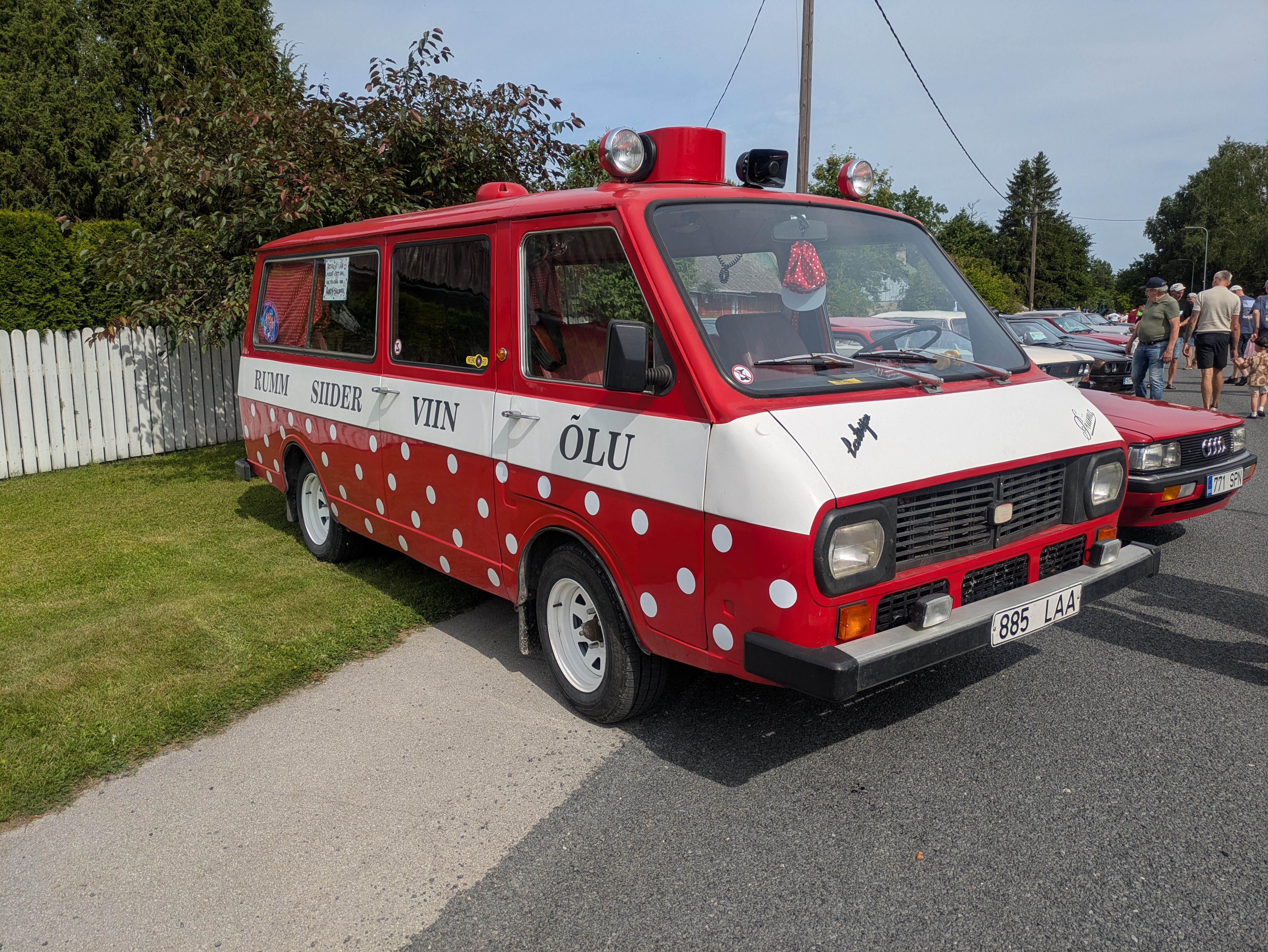
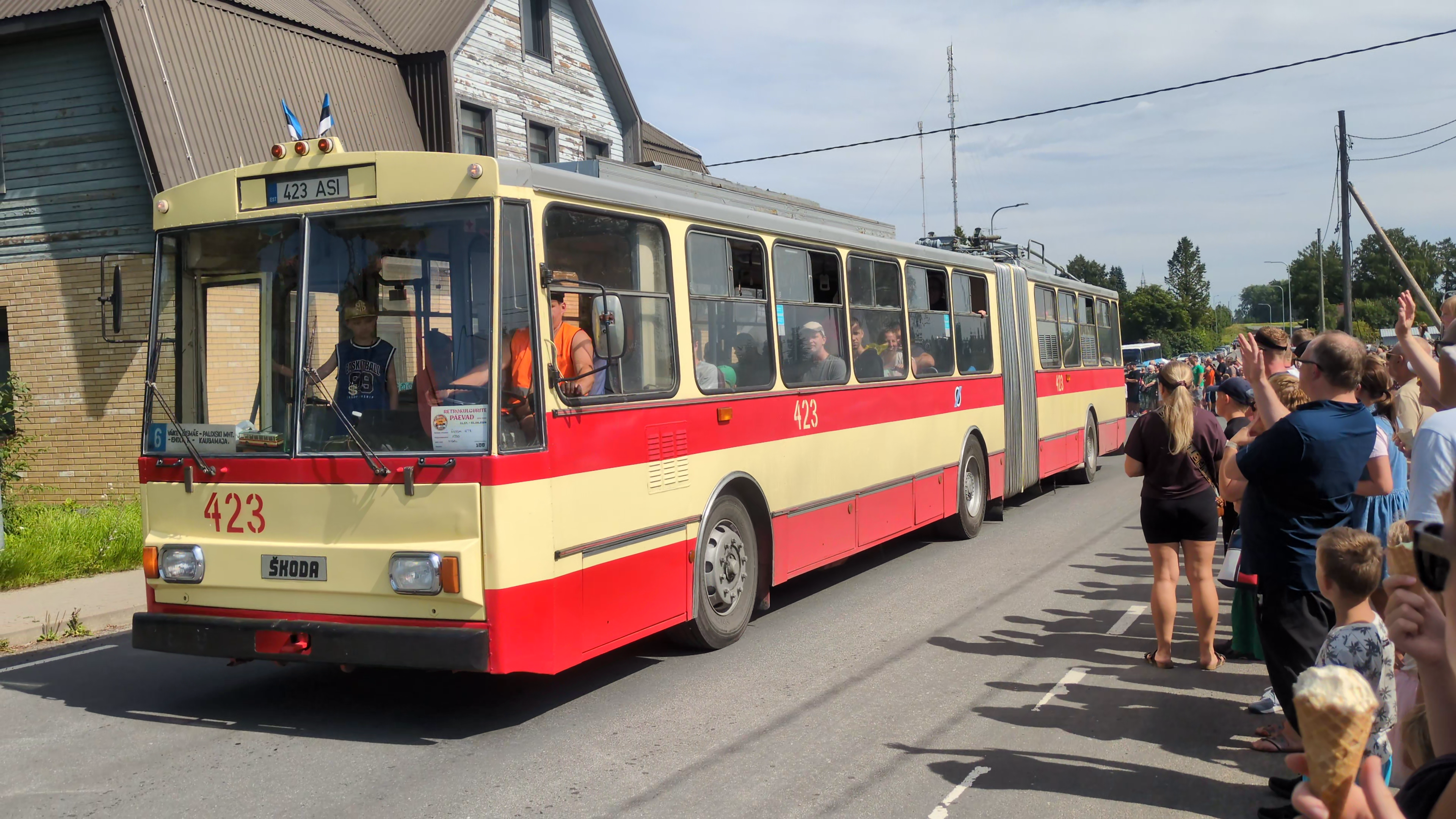
But it had no Fiat 126 models on display. Bunch of Audis and soviet era cars, sure, but no legendary nuggets.
That was the tipping point.
Soon after that, we checked out the 800 EUR option, and deemed it worthy of restoring.
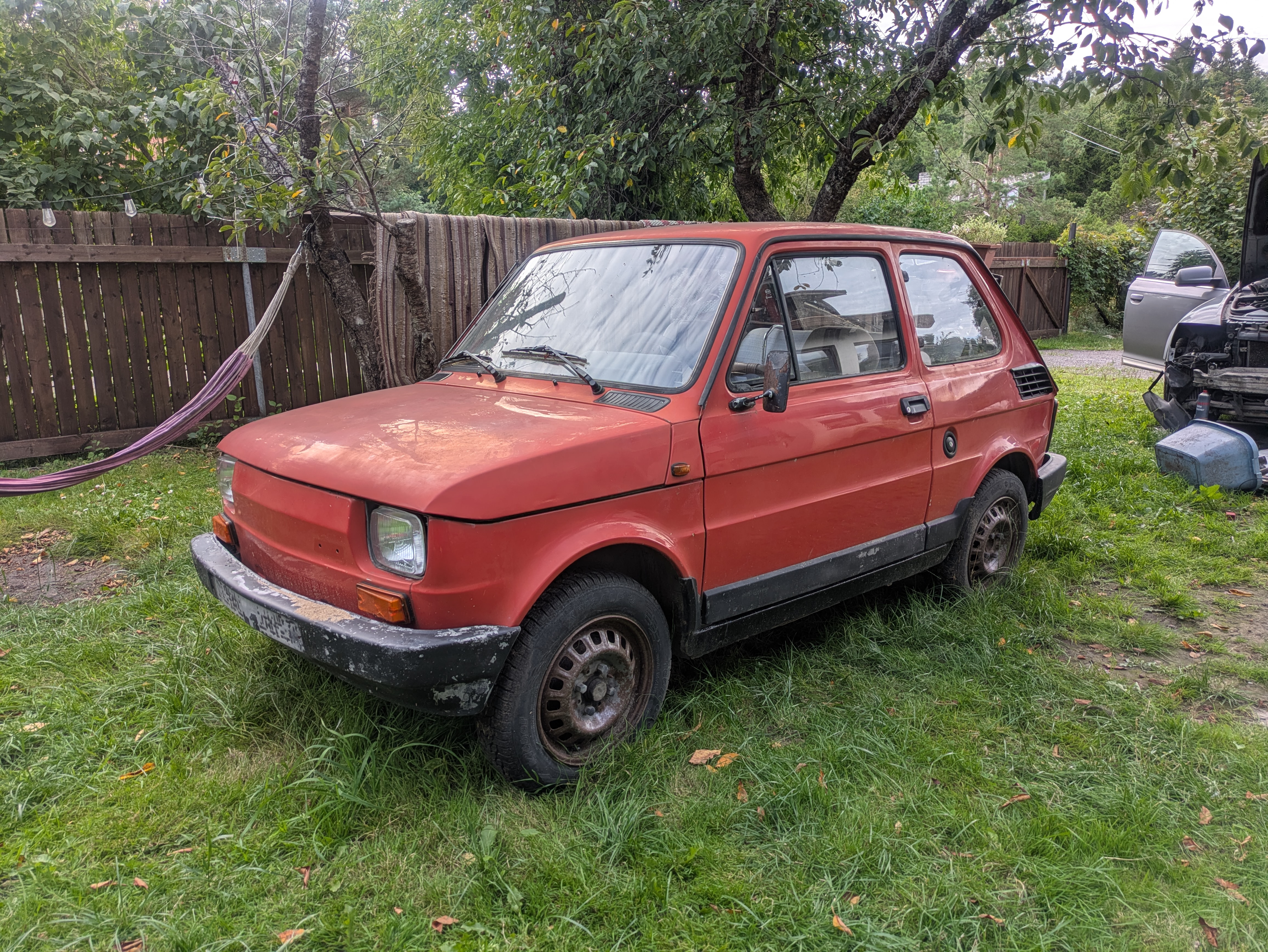
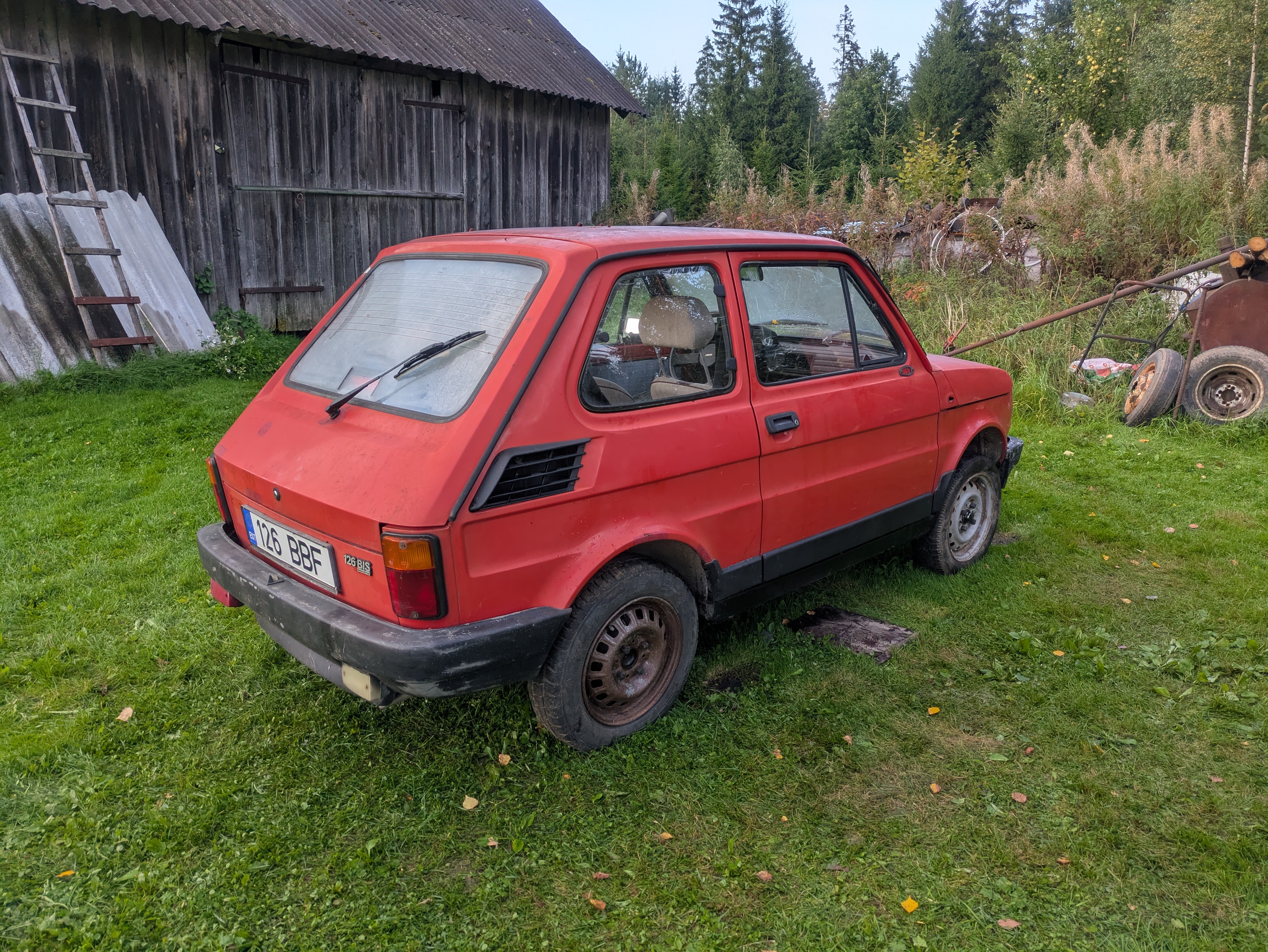
This model is different from most Fiat 126 models, as this one has modern features that the old ones don’t, such as ✨ water-cooling ✨. The engine is still in the butt of the car, but lower, and more compact. This also means that you have a small amount of trunk space, and if you fold the unusably small rear seats down, you actually have a decent amount of space for luggage, making it ideal for a summer car trip with two people. Except during any kinds of warm weather, this thing does not have anything resembling air conditioning.
The transport was quite convenient, as the guy helping with the sale offered to transport it near my home for a good price, as he had some family around here.
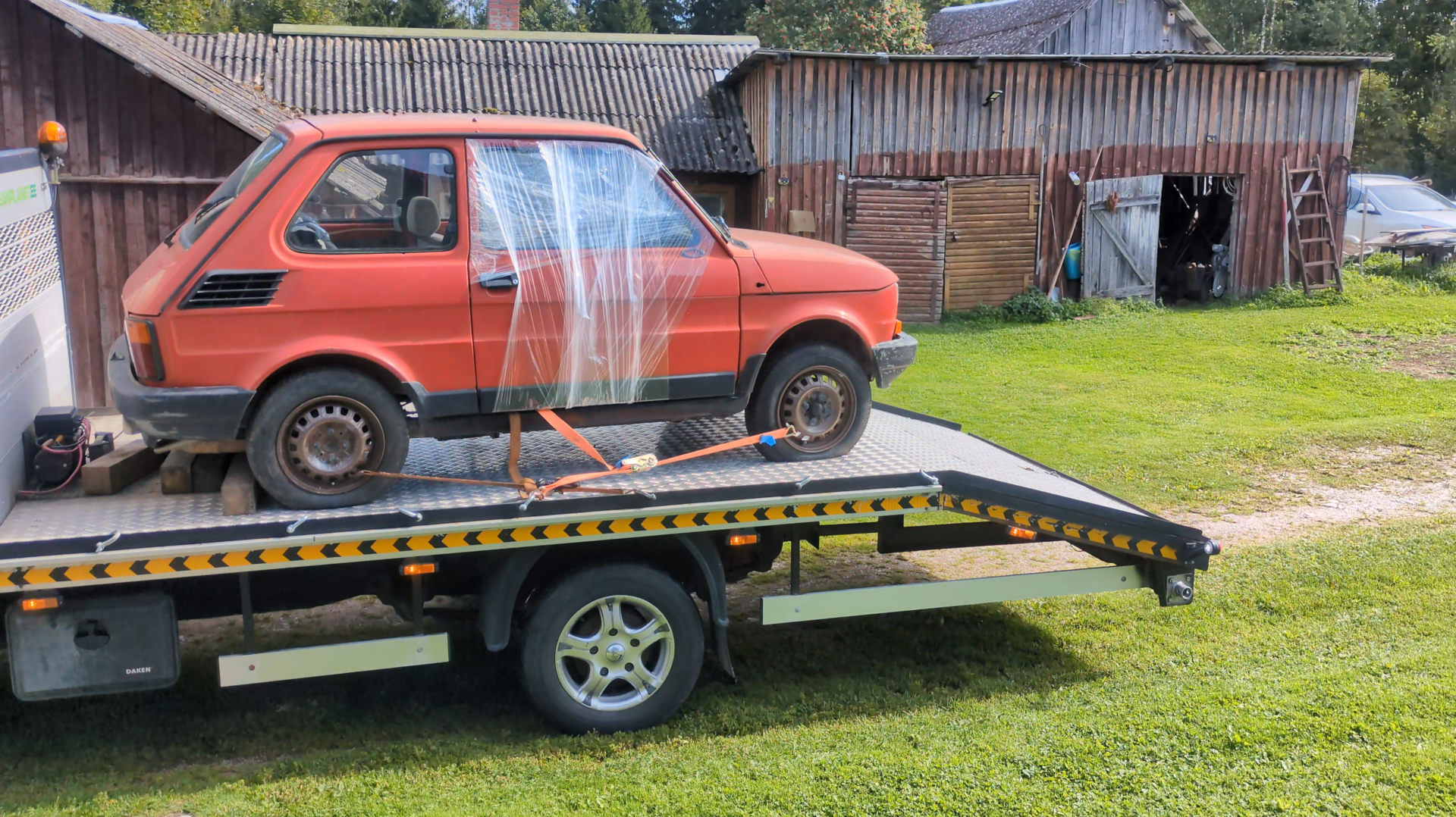
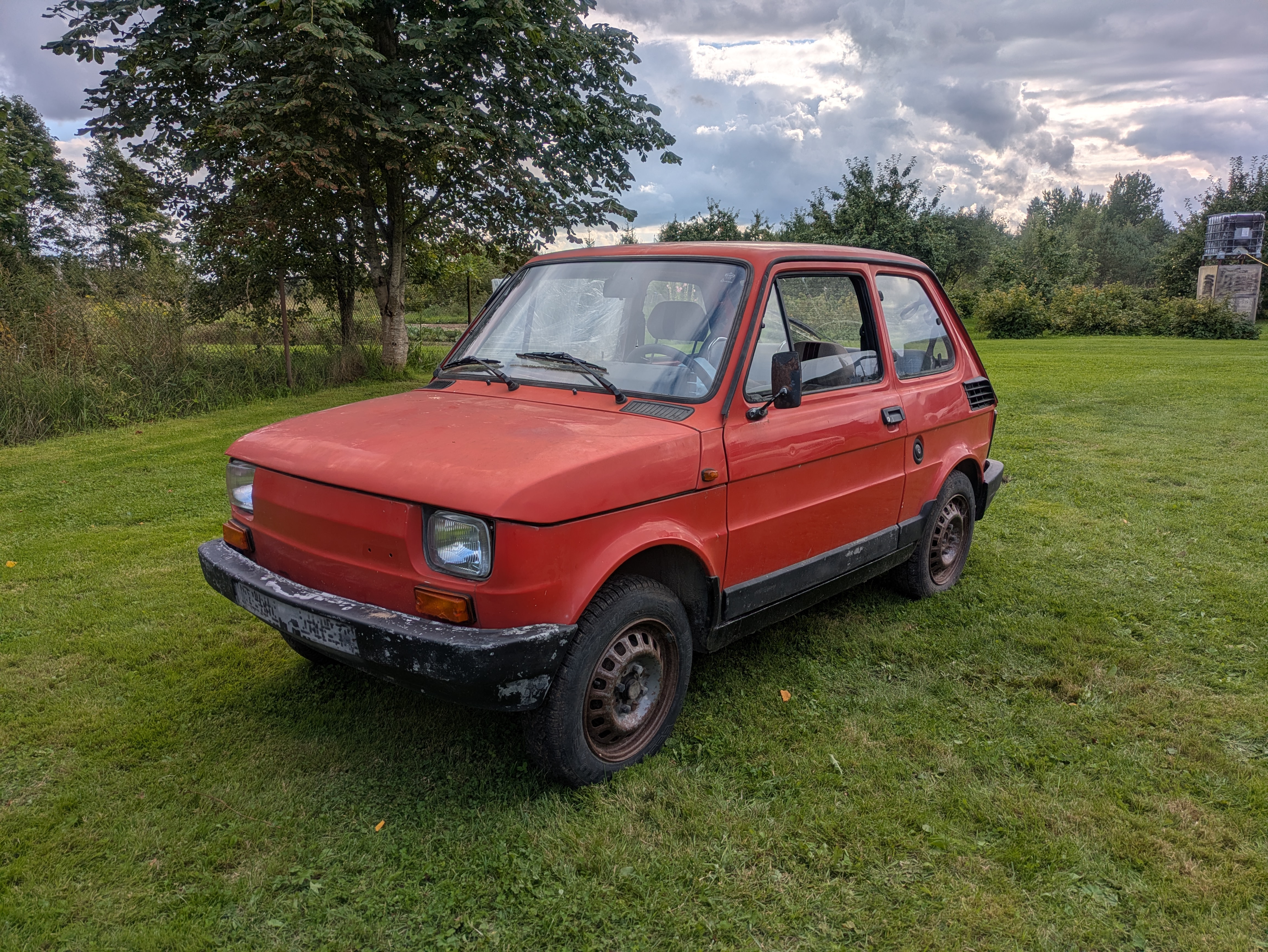
My goal: take part in this event in 2027, including the parade, with a fully street-legal Fiat 126 BIS.
Disclaimer
I’m not a car guy.
Whenever a mechanic explains what needs to be done or what the issue was, I nod, while not understanding a thing they say.
I may use the wrong terminology, the wrong tools, and make mistakes. But that’s fine, this is a learning experience for me.
I have some help along the way from family members who know cars.
I’ll do my best with the legitimately dangerous things.
The plan
We had a lot of work to do, but on a high level the plan is:
- get it moving so that we can push it in a shed
- fix the known issues
- look around for unknown issues
- get the engine running
- do all the tricky parts to get it street legal
2026 August
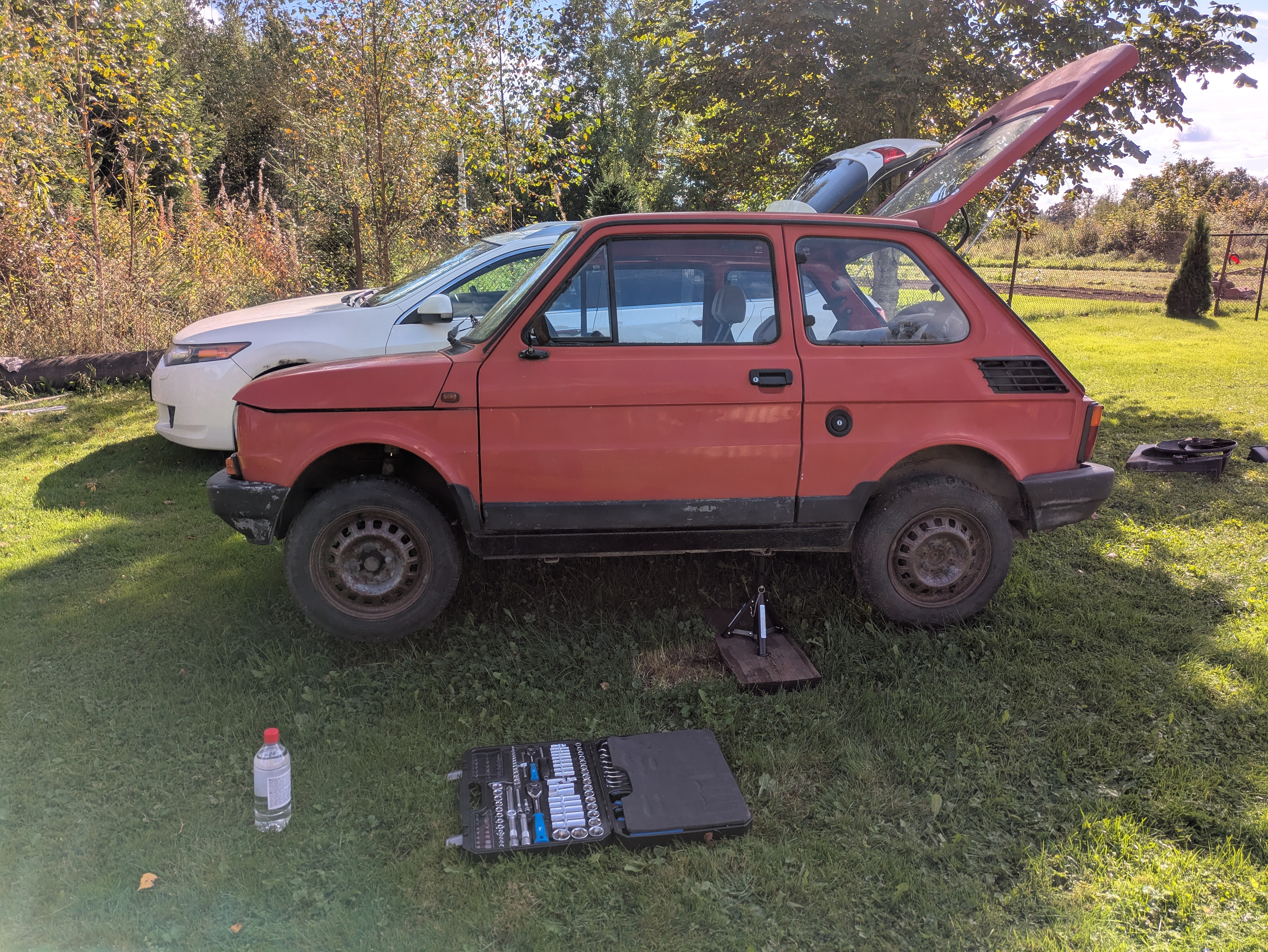
The first job I took on were the brakes. The front wheels were absolutely seized, and that made it impossible to push around.
The goal: take them all apart, observe the carnage, work on the easy known issues and figure out the next steps.
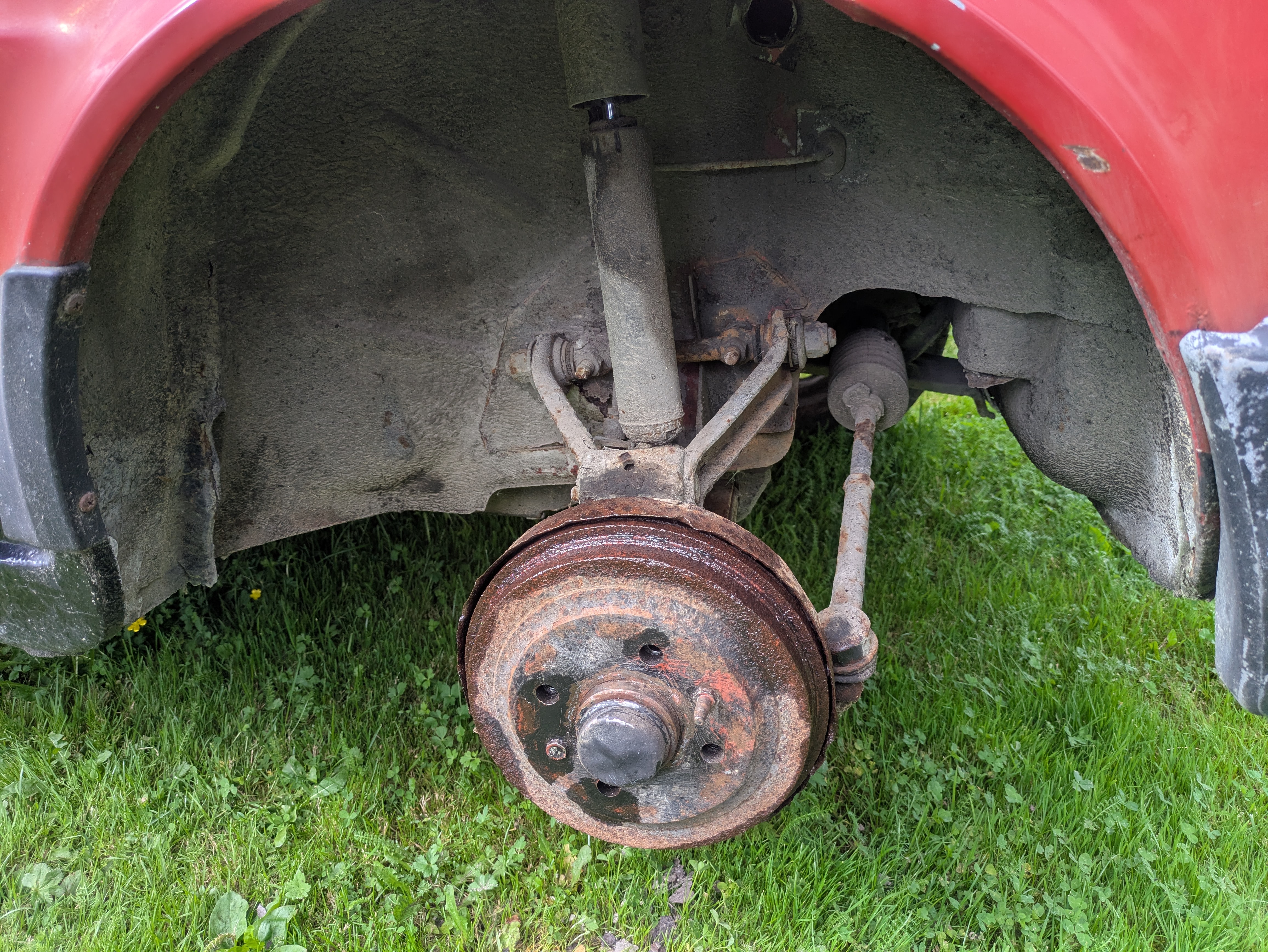
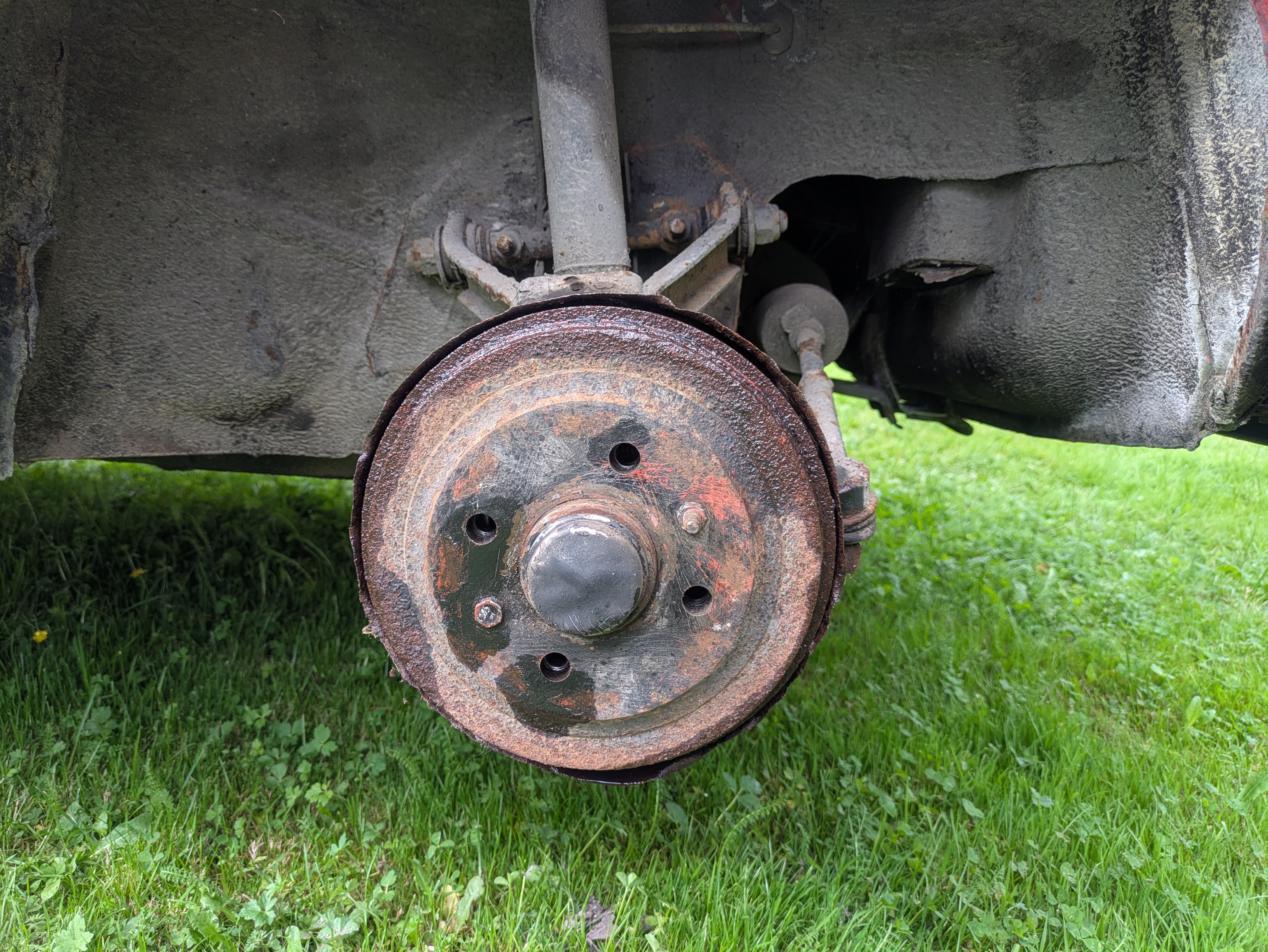
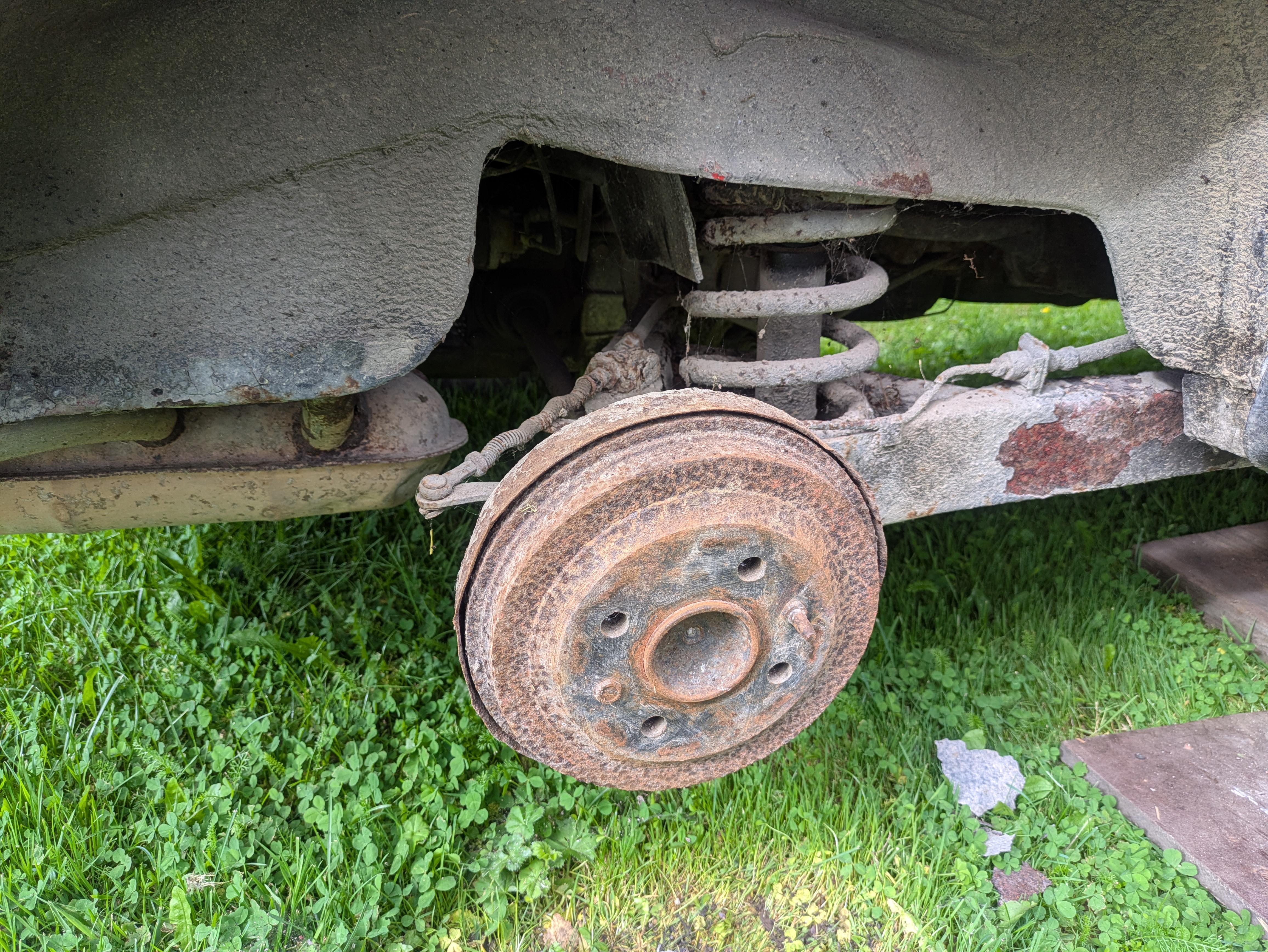
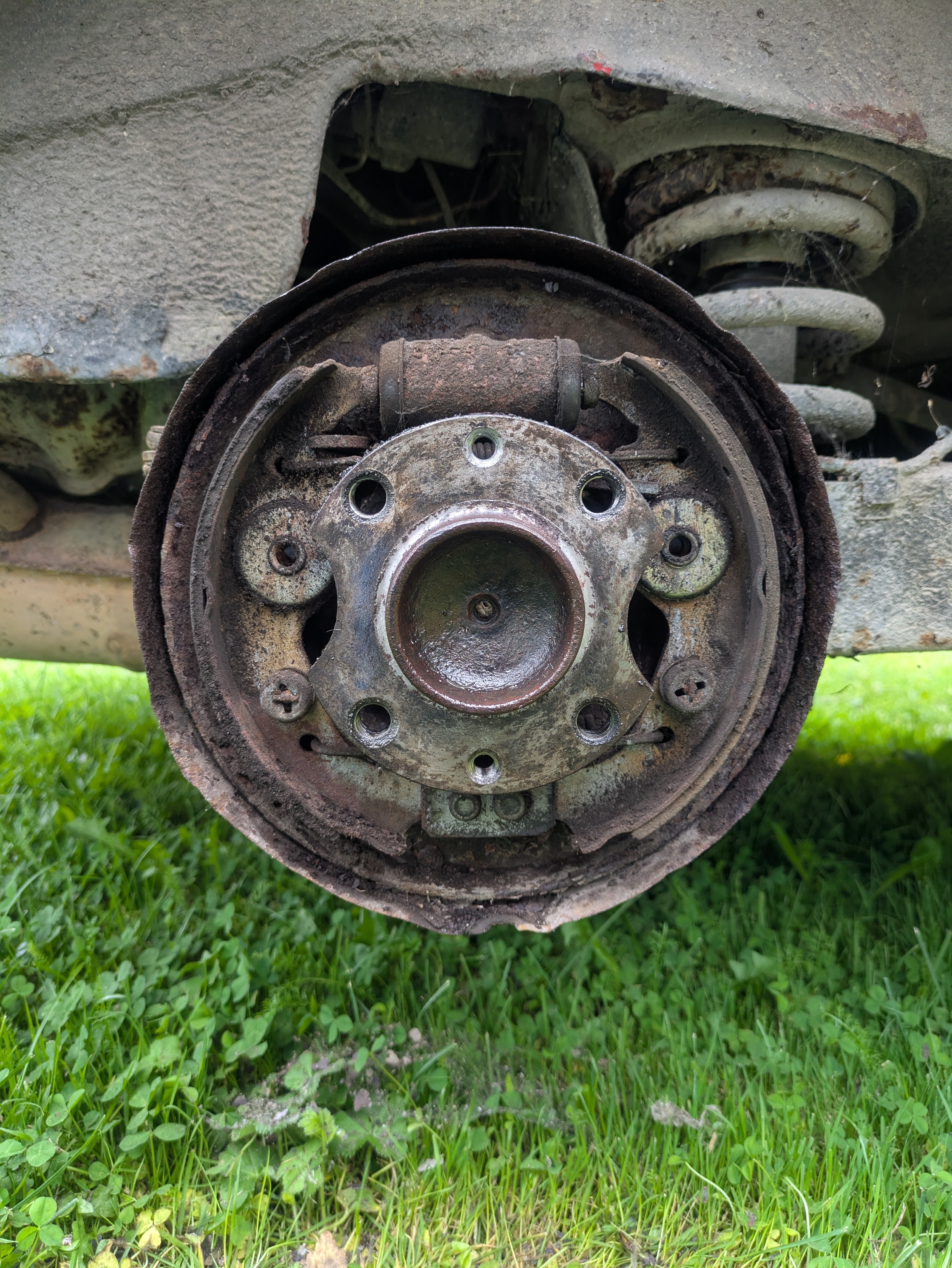
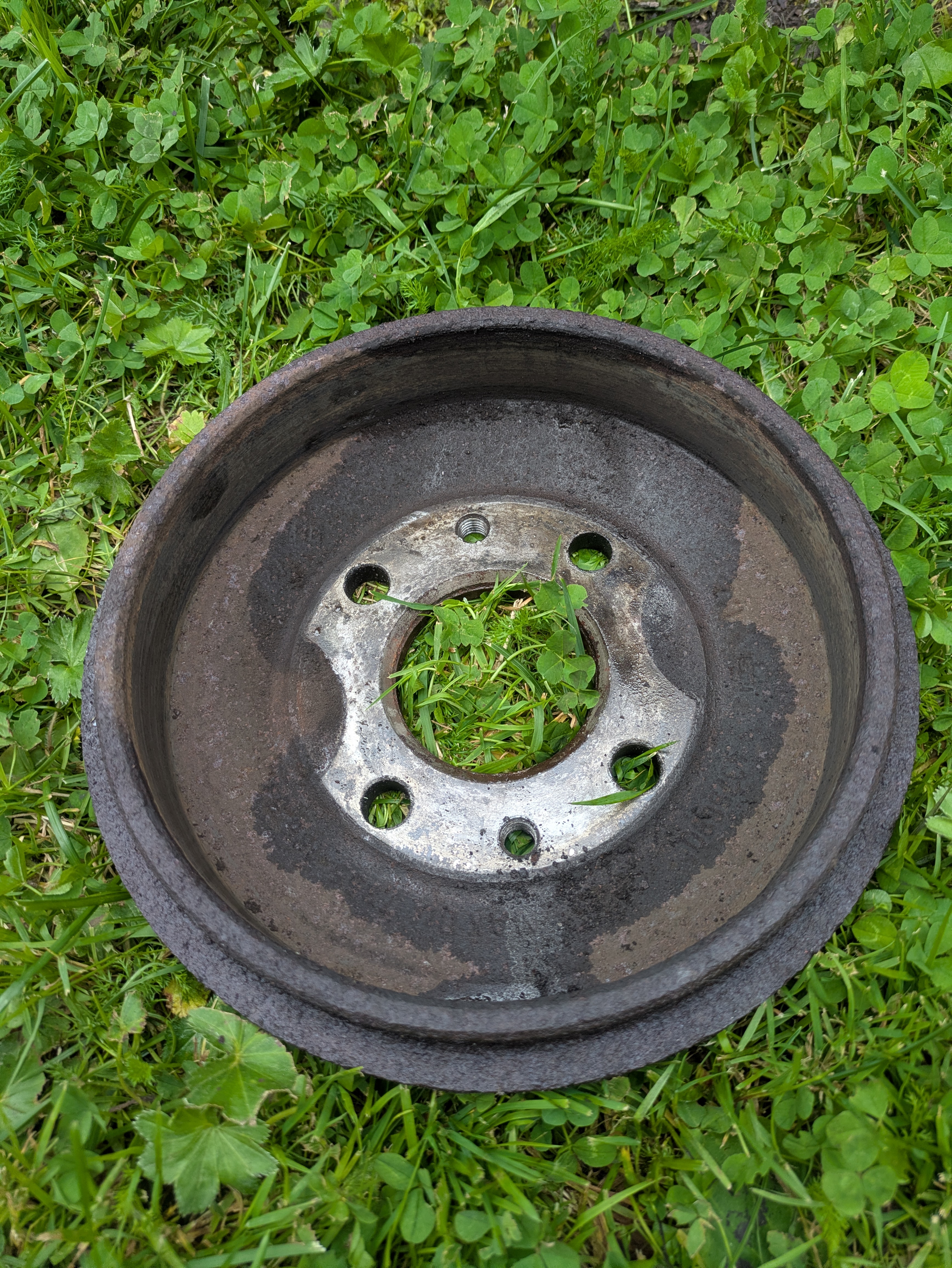
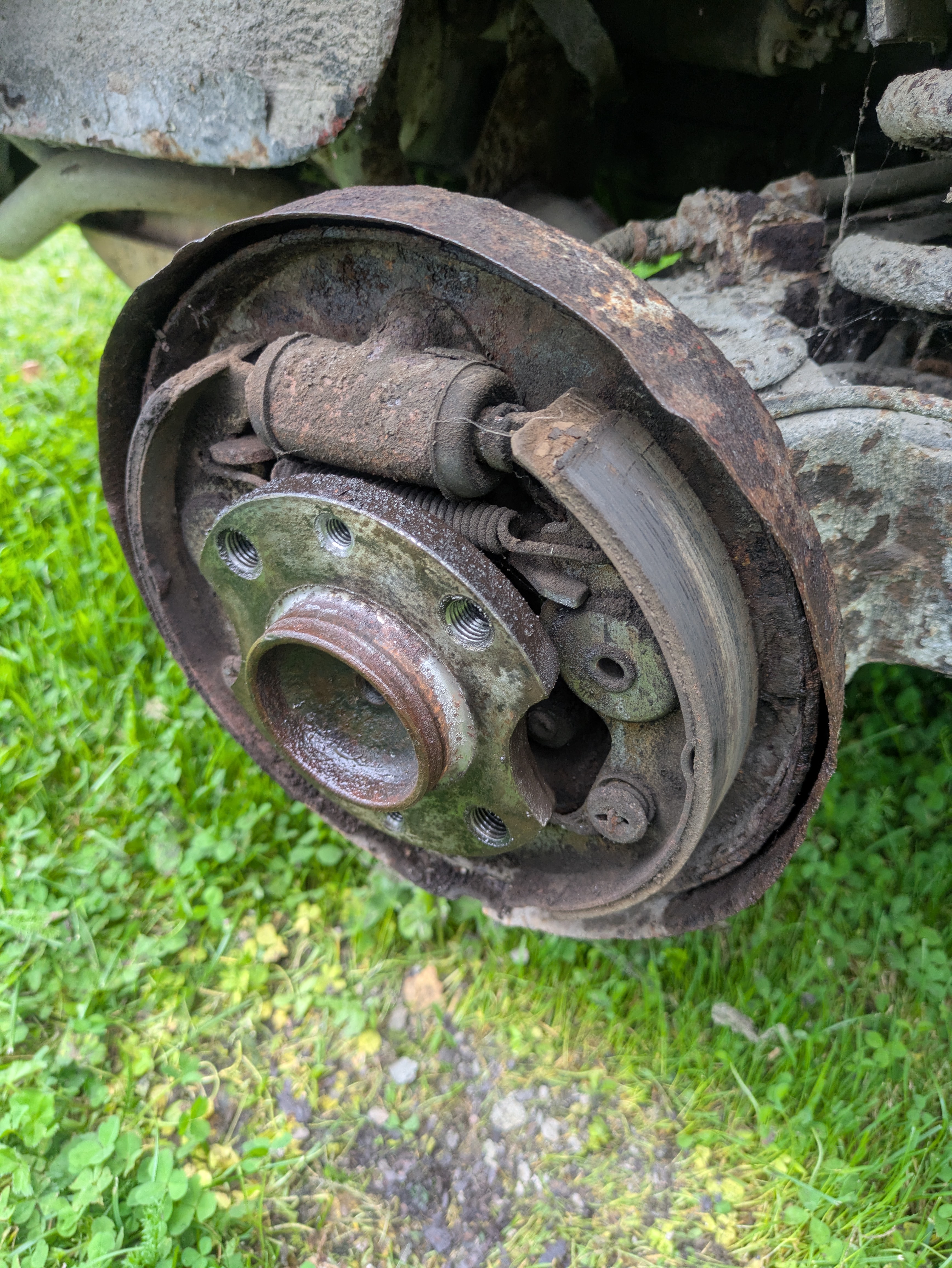
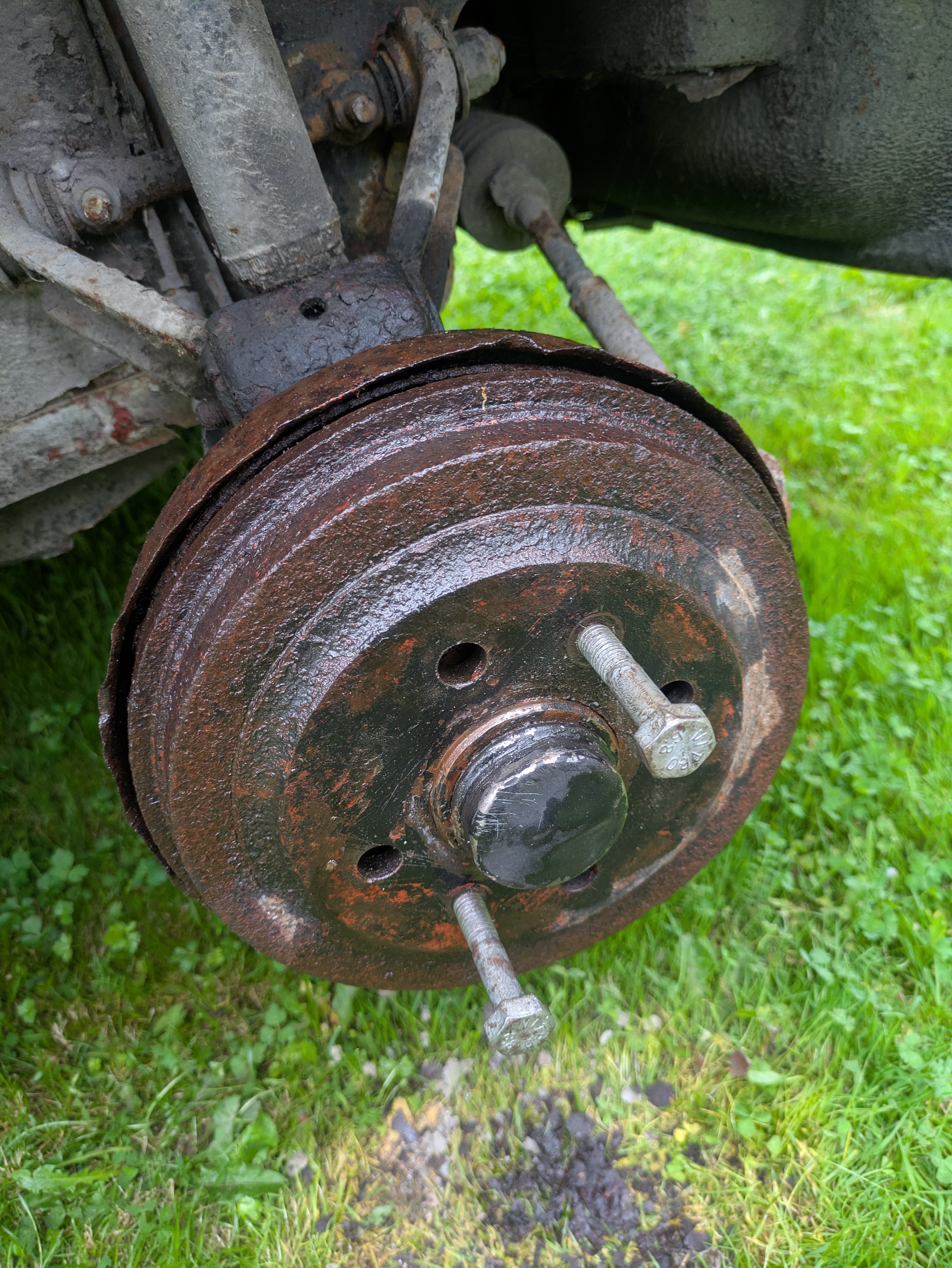
After the first session, I also realized I am lacking tools and liquids, so I got myself a starter kit for doing car things, with all sorts of bits and two ratcheting thingies. I love ratchets.
This was also the time to check around the car for surprises and to do the easy bits.
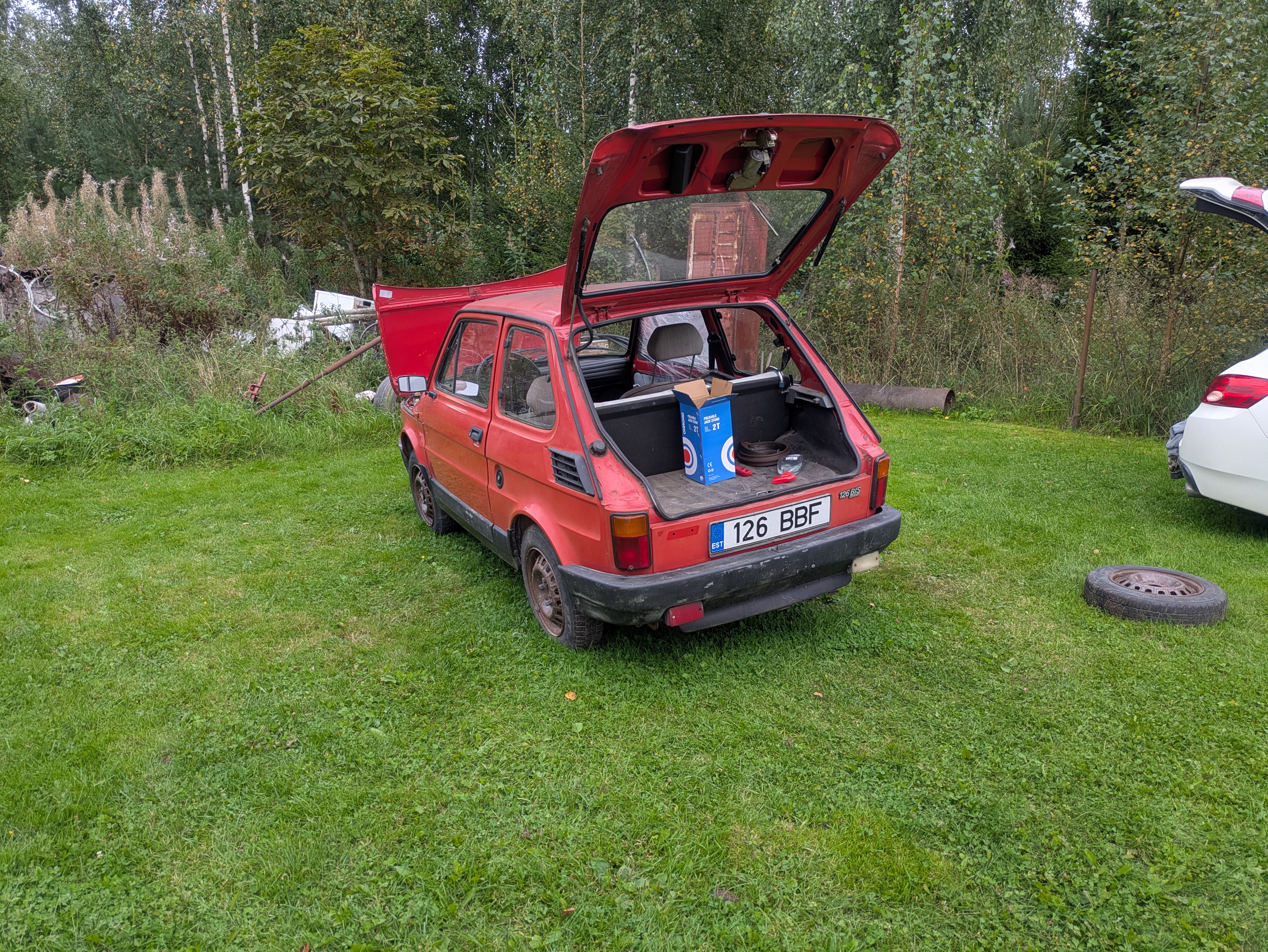
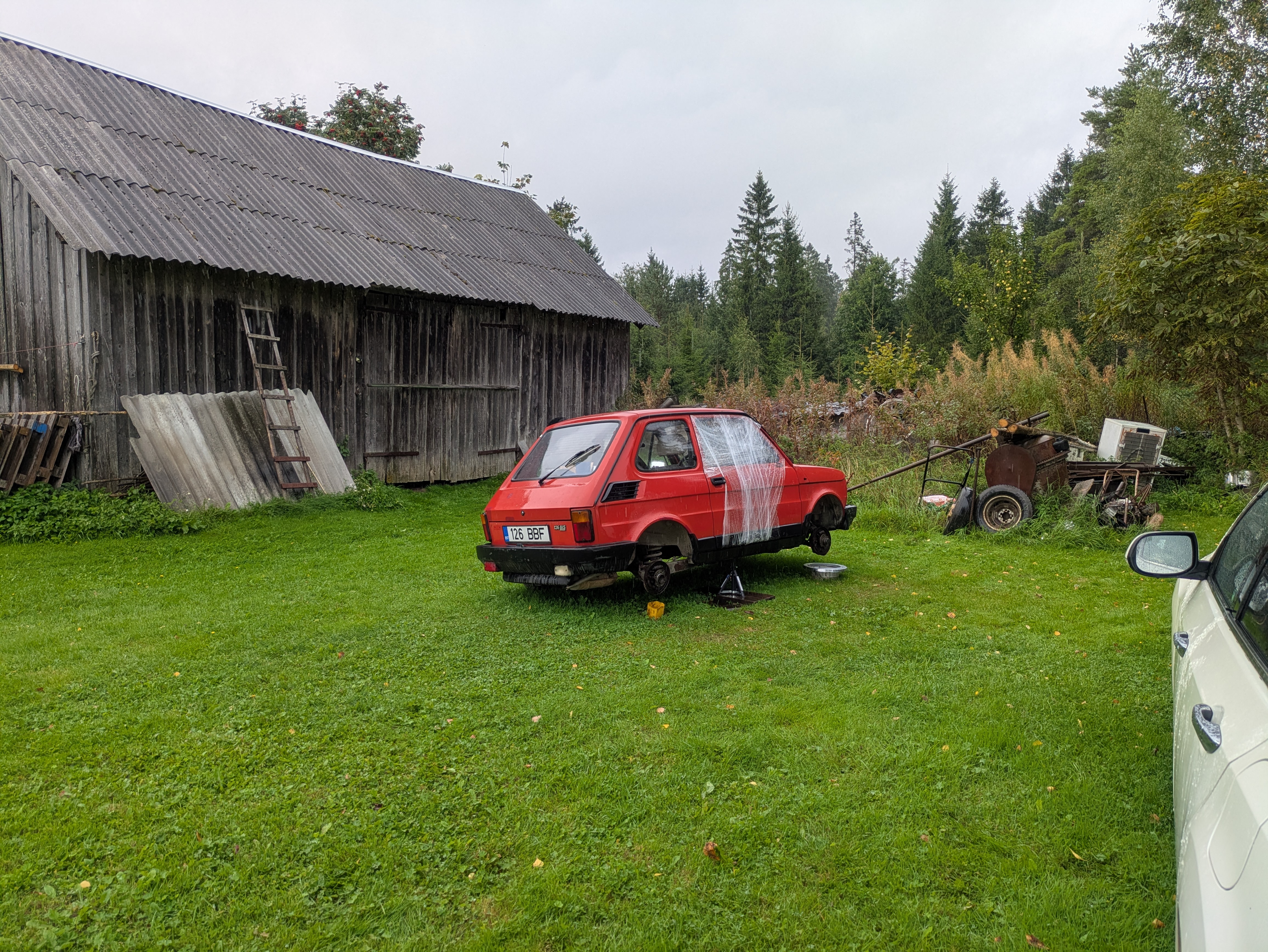
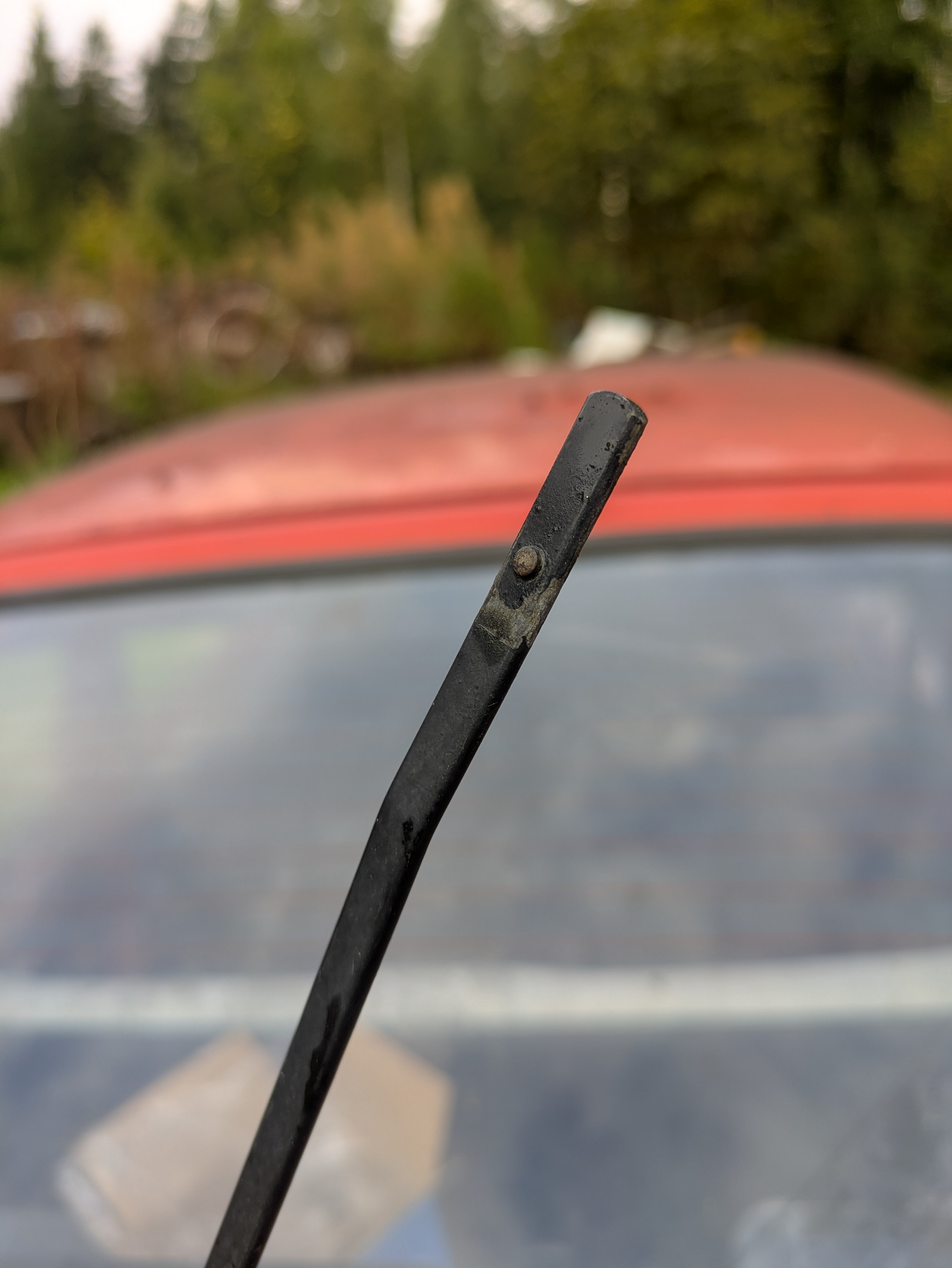
This thing desperately needed new wipers. These ones have this bayonet-style end on it, flat surface, with a small circular bump actually holding things together. 330-350mm should be good enough for this car.
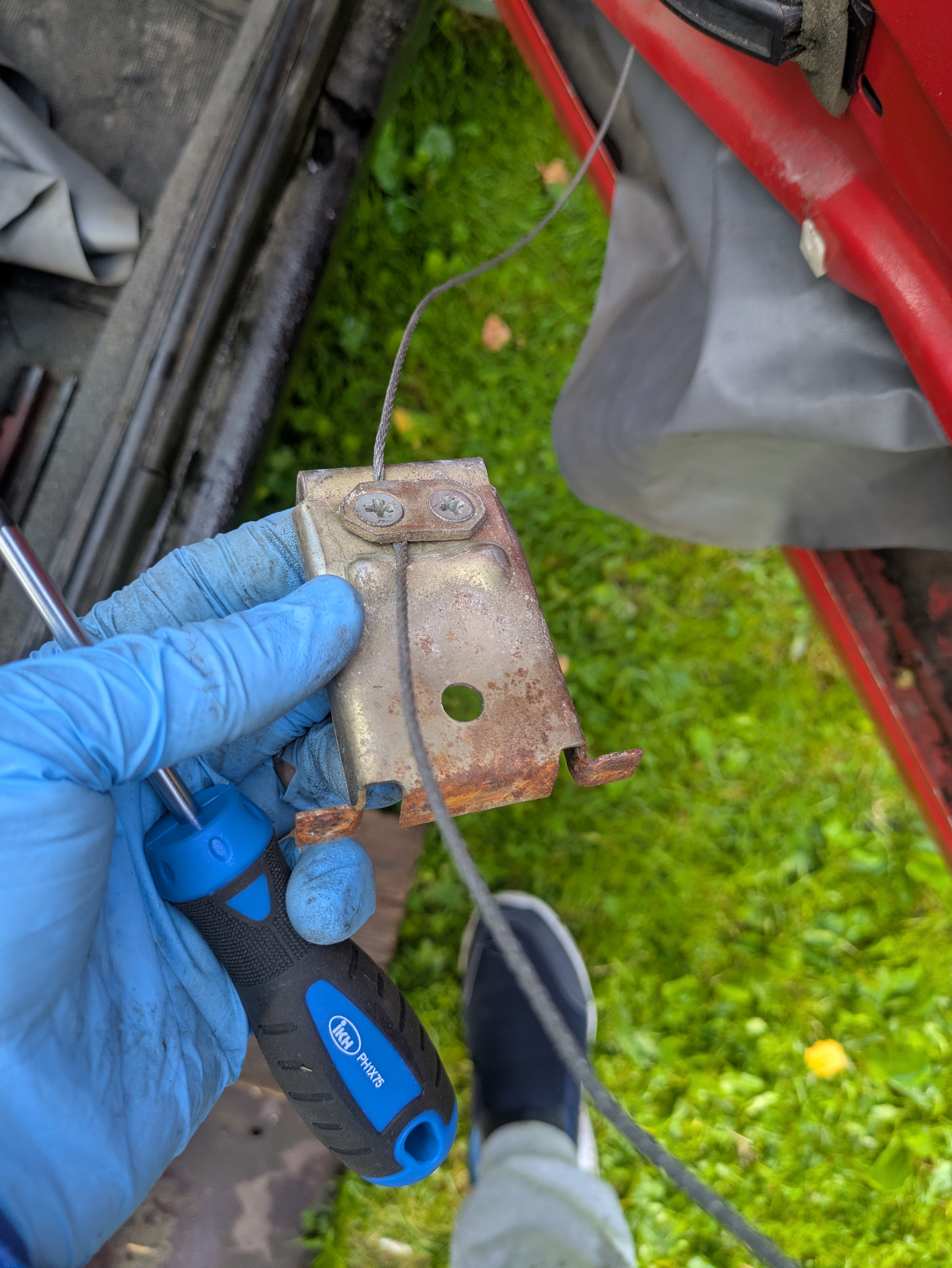
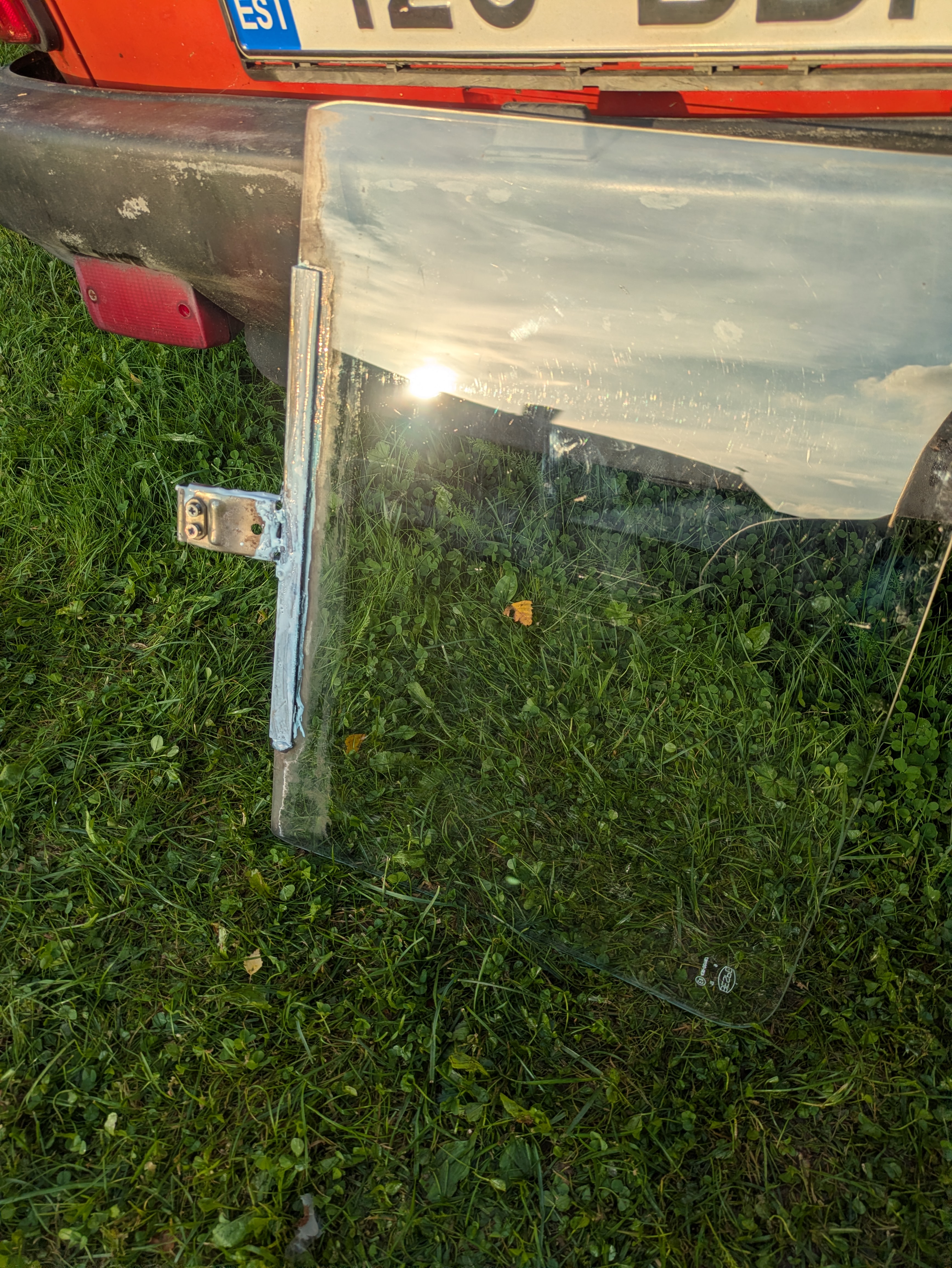
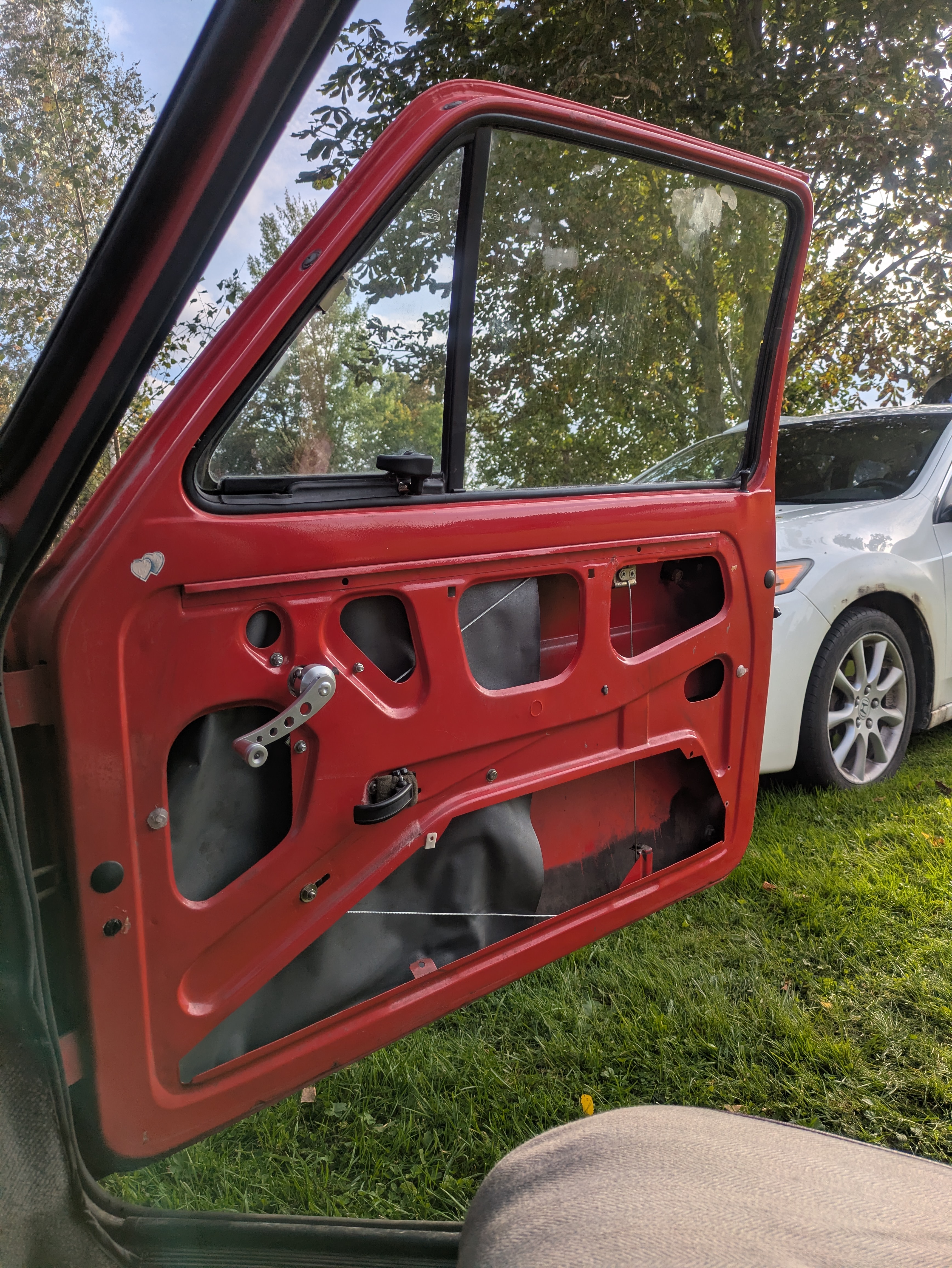
The right door window was a known issue, it would not go up and down, and a replacement window regulator part was already ordered for the car and came with it. But that was not the only issue with it. Turns out that the frame that holds the window had broken due to corrosion.
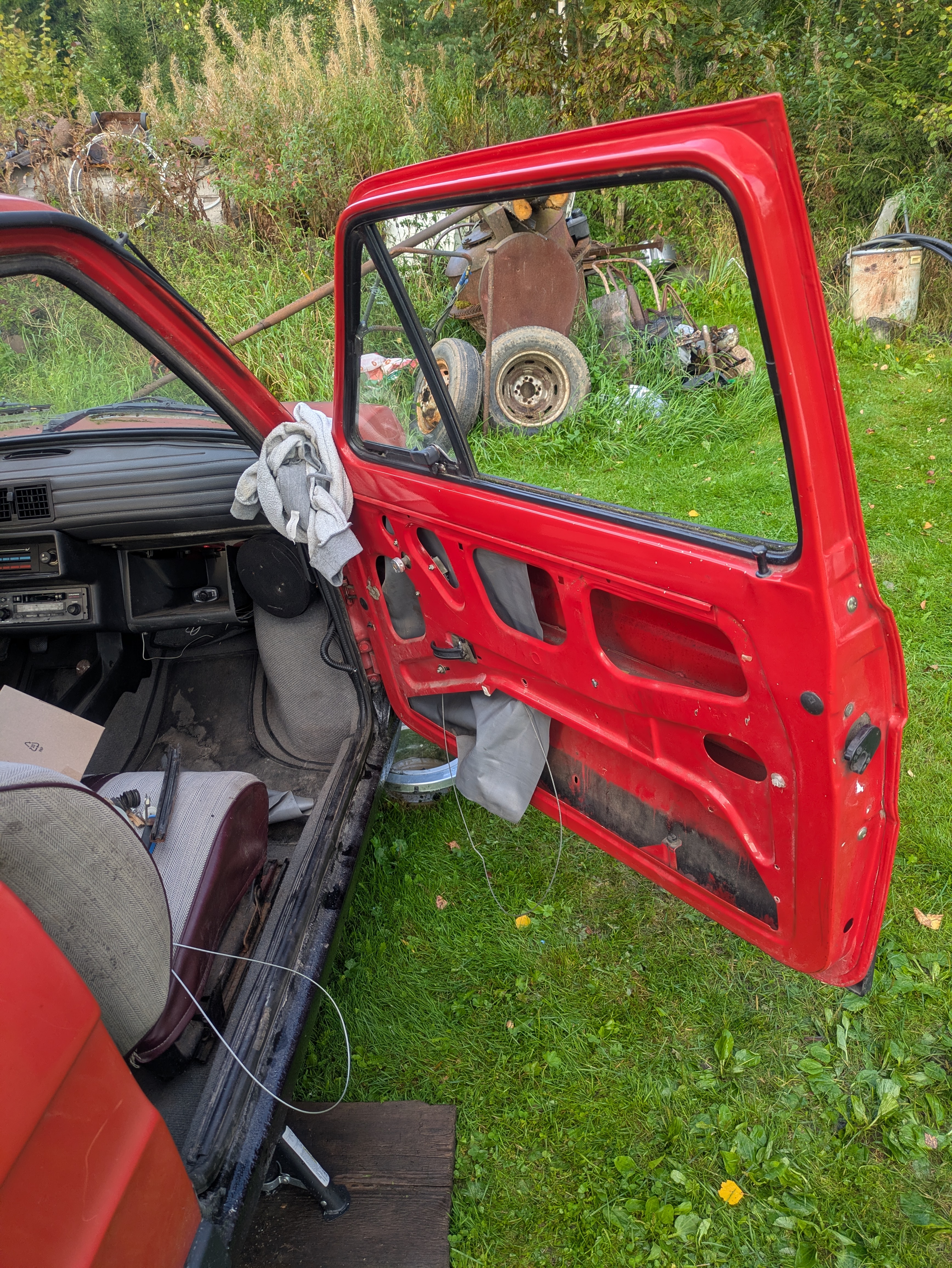
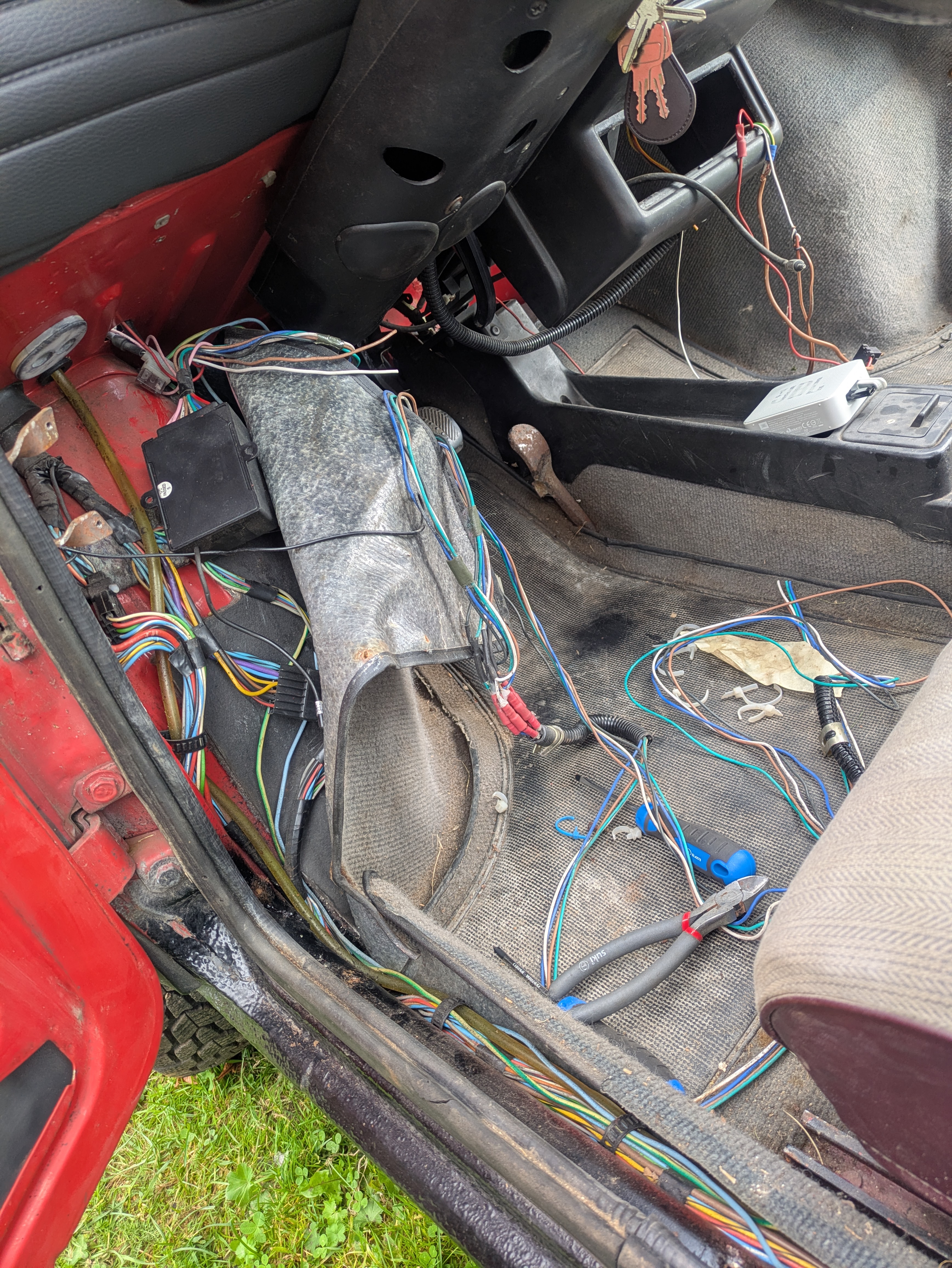
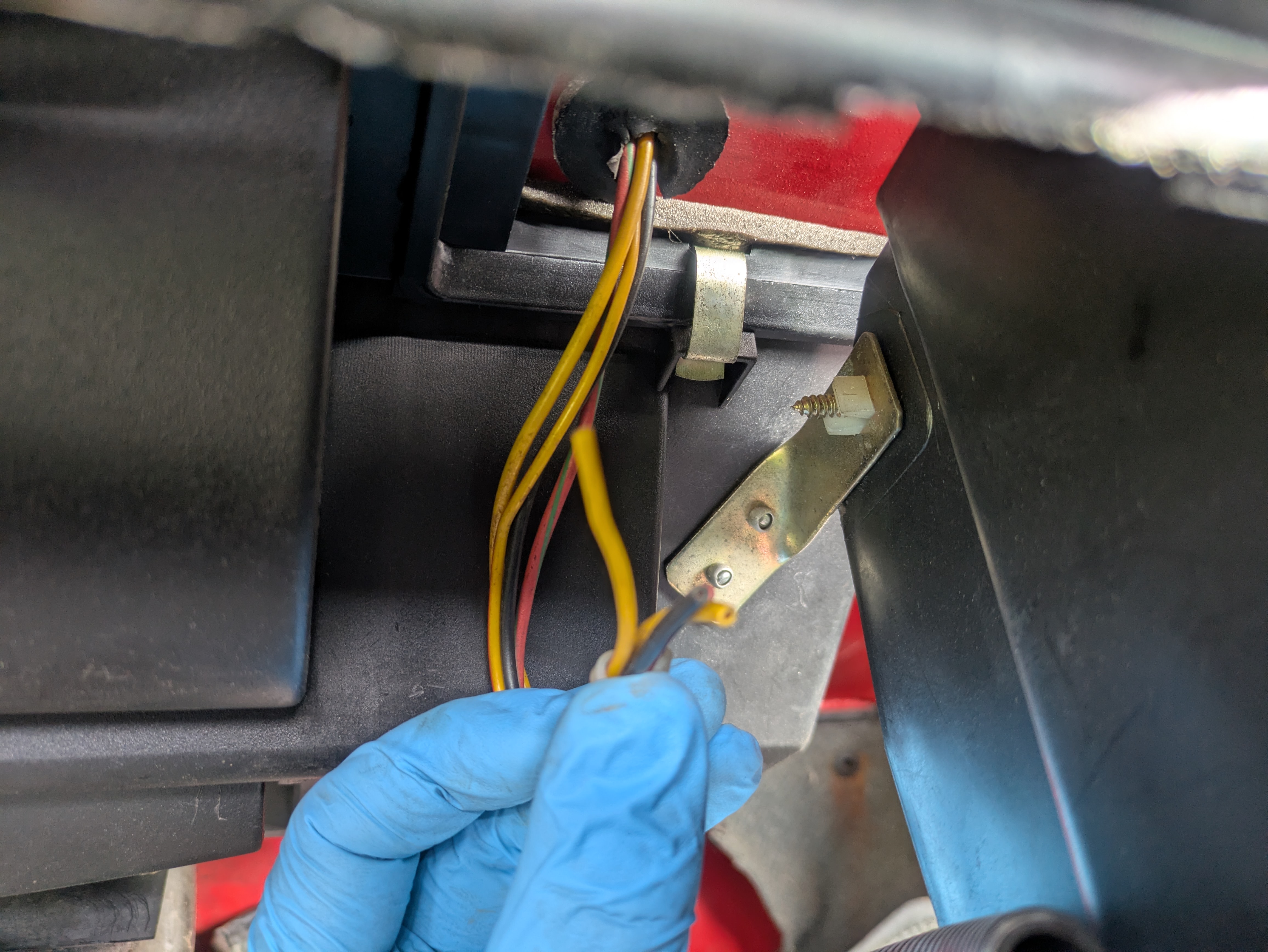
While fixing the window regulator, we found what these odd cables were that went to the door. Turns out someone had attempted the installation of central locks for this Fiat. Just one problem.
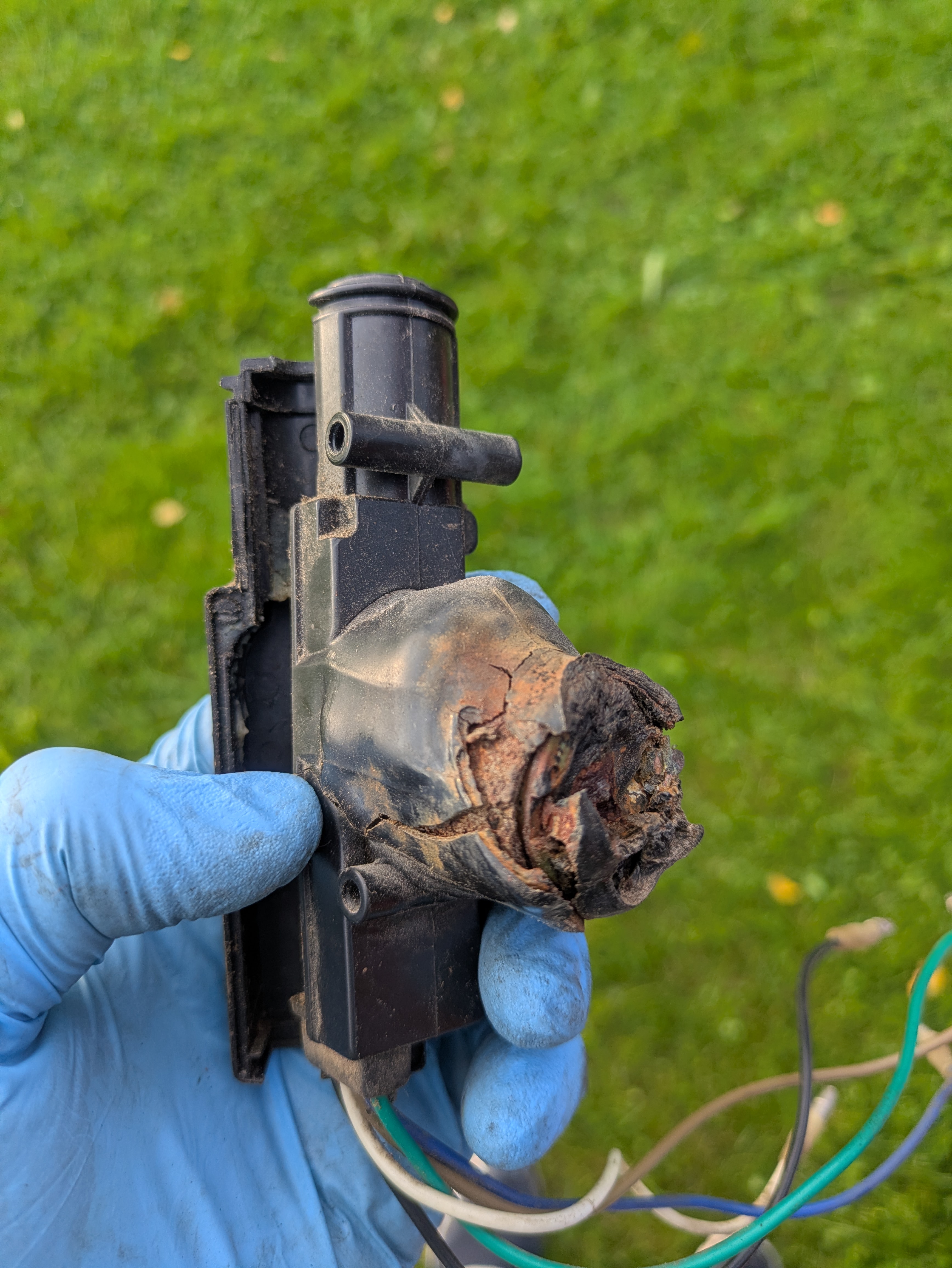
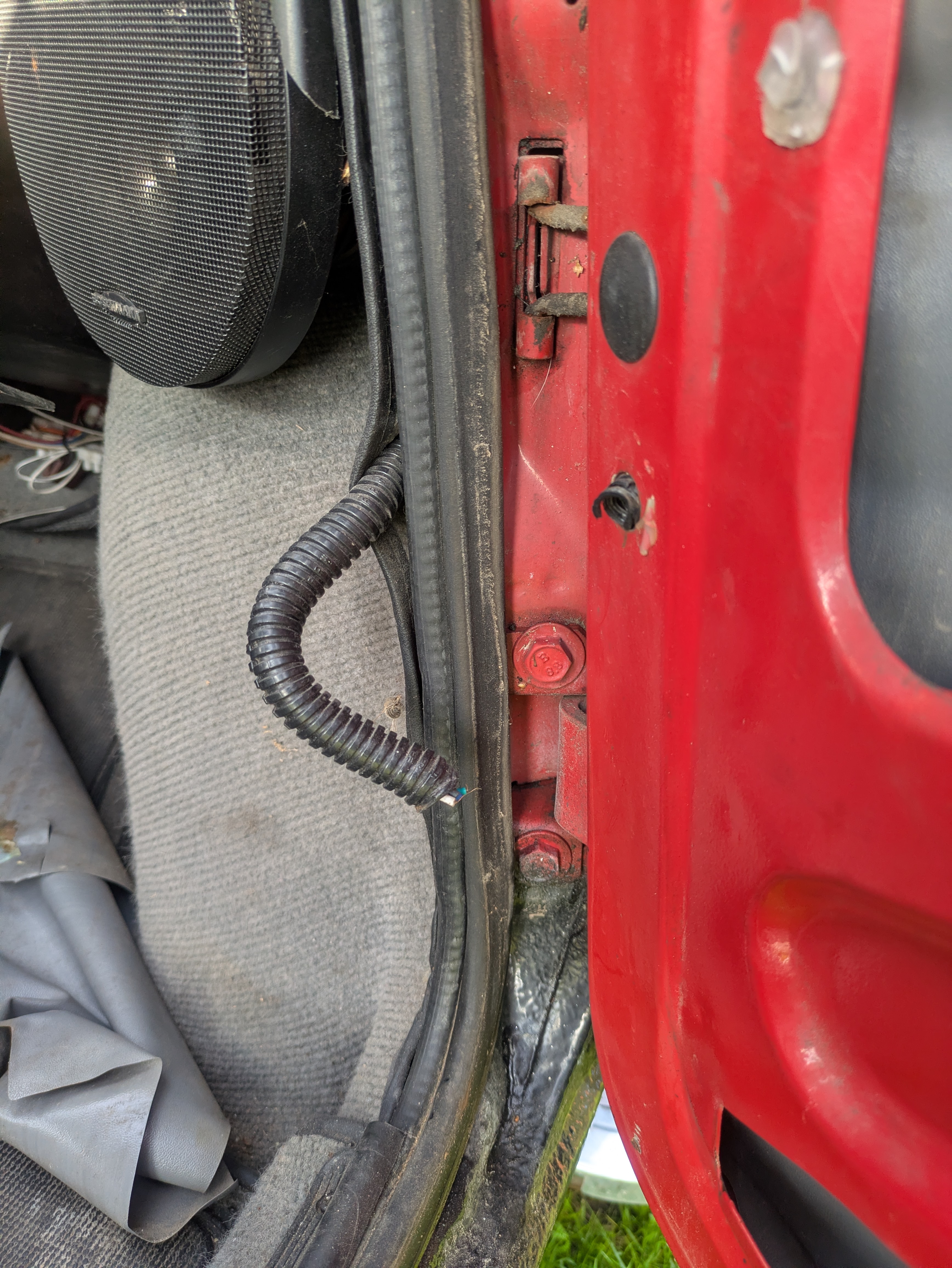
Anyway, after that fun discovery I got help from a family member with a welder, and fixed the point where the window holder connects to the regulator cable. Worked like a charm.
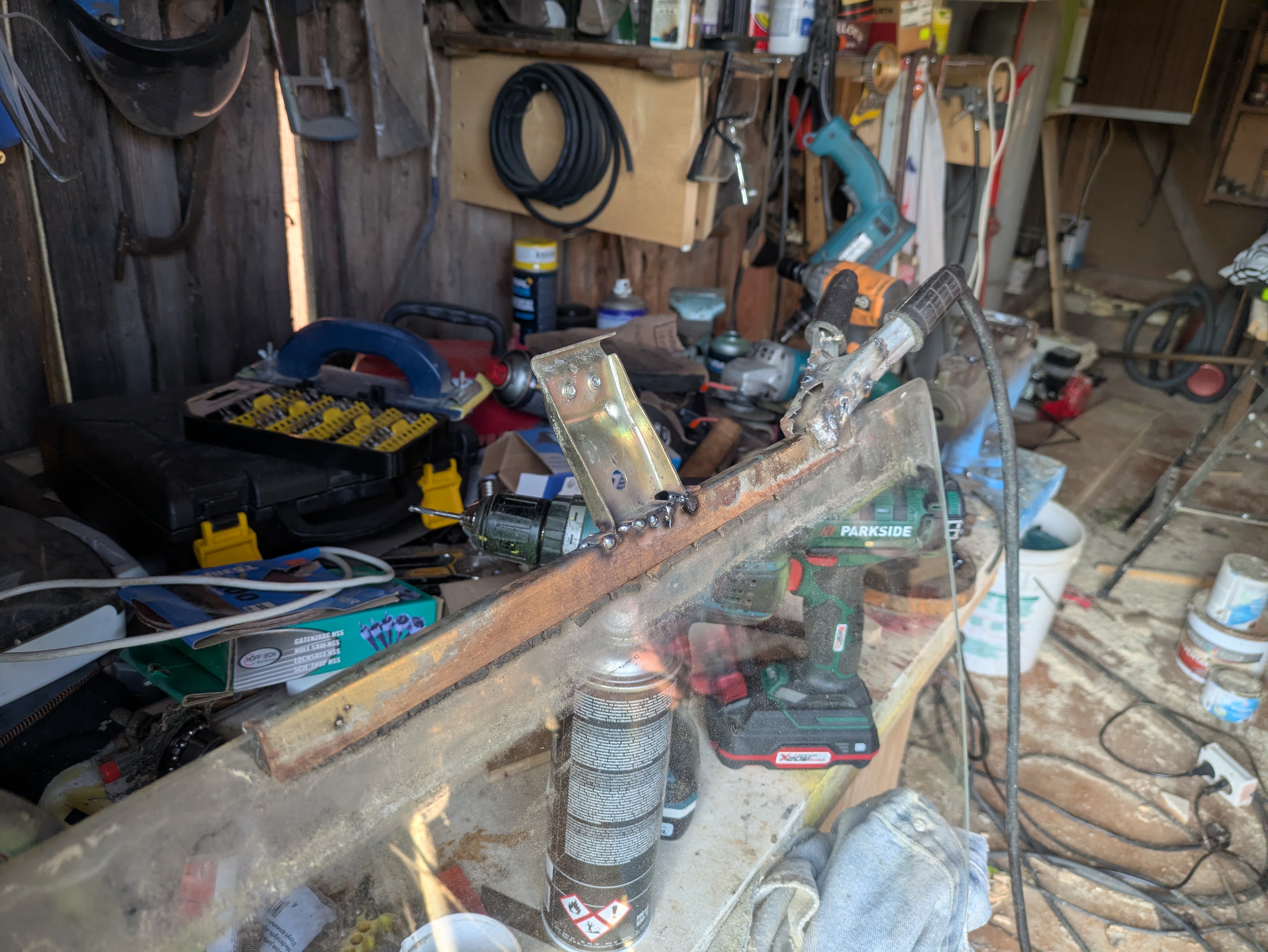
A solid amount of rust-proofing agent was applied to avoid a repeat of this issue. It will happen again at some point due to the seals around the window not really existing any longer after having disintegrated, but hopefully not in a few years.
2026 September
Around this time I was looking into assembling a big list of parts that I now need to order, and finding sites that specialize in these cars and comparing the results against more mainstream car parts stores.
One thing that became very obvious is that you really need to check what you have first before ordering any parts. Your version may have modifications, different replacement parts, and sometimes you just don’t know what you need before you take a look at things. The latter makes parts shopping especially painful if you don’t want to keep making small orders and pay for shipping, but it’s a fact of life, I feel, when working on cars.
Based on my research and my location in Estonia, here’s what I’ve more-or-less settled on. This does not serve as an endorsement, it’s just taken verbatim from my personal notes.
Specialist shops: higher prices, but much easier to navigate and less chances of getting the wrong parts:
- FD Ricambi
- Axel Gerstl Fiat 500, 126, 600 spare parts, tuning and accessories
- Ricambio
- Arnold Classic Shop
For more common and generic parts, such as brakes, fuel hoses, batteries and tyres, just go with whatever you have locally. In Estonia, I’ve found these places to be cromulent for this:
- Autodoc
- Inter Cars
- Aero Motors
- Motonet
- Automaailm
- Baltic Bolt (not to be confused with the other Bolt)
Somewhat surprisingly, Google AI mode and Claude were quite useless for making a proper list, and you had to rely on your own measurements, knowledge of the car, Polish Fiat 126 manuals, and specialty shop listings to get the right parts.
Enough about that, the work must go on.
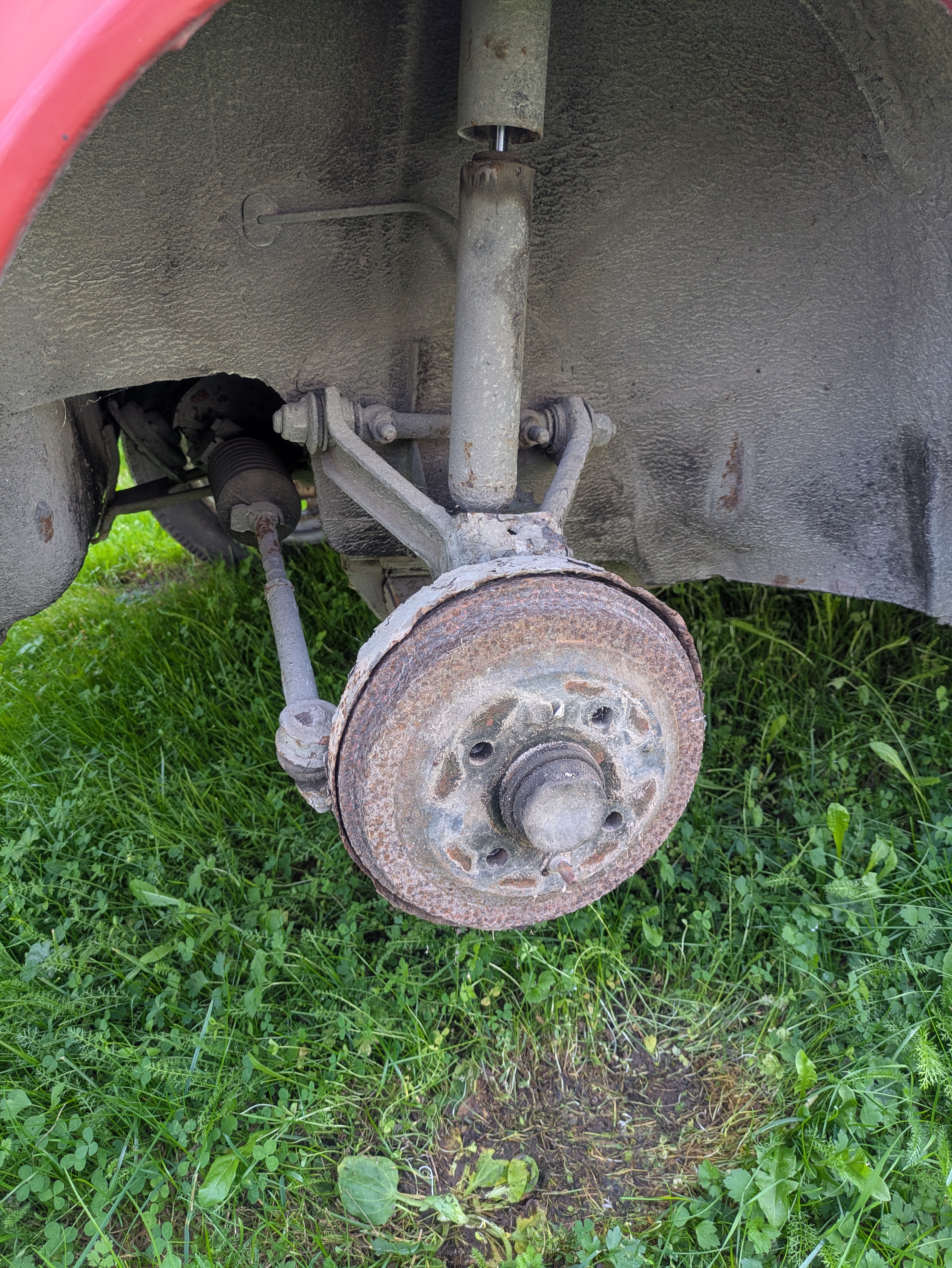
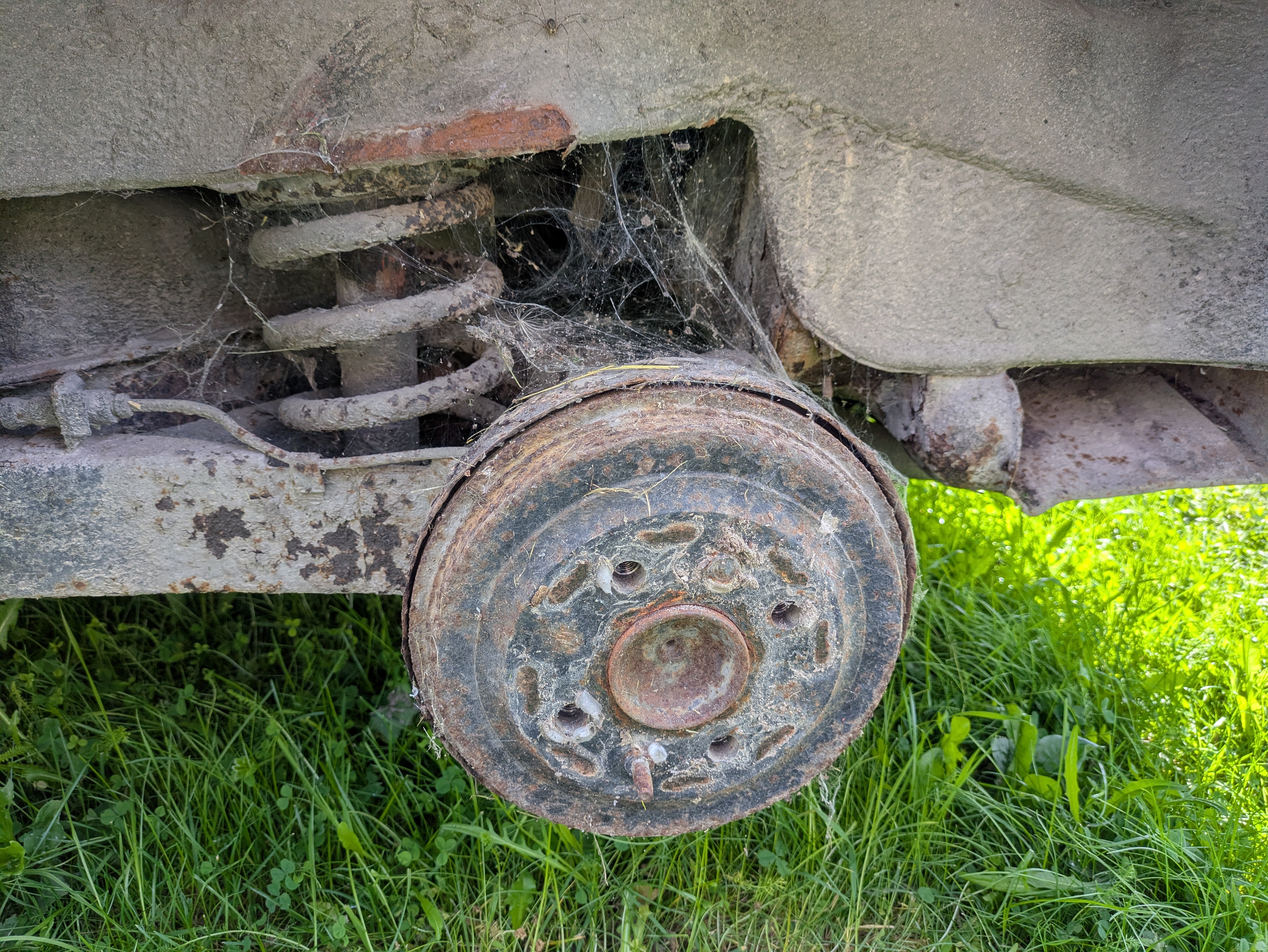
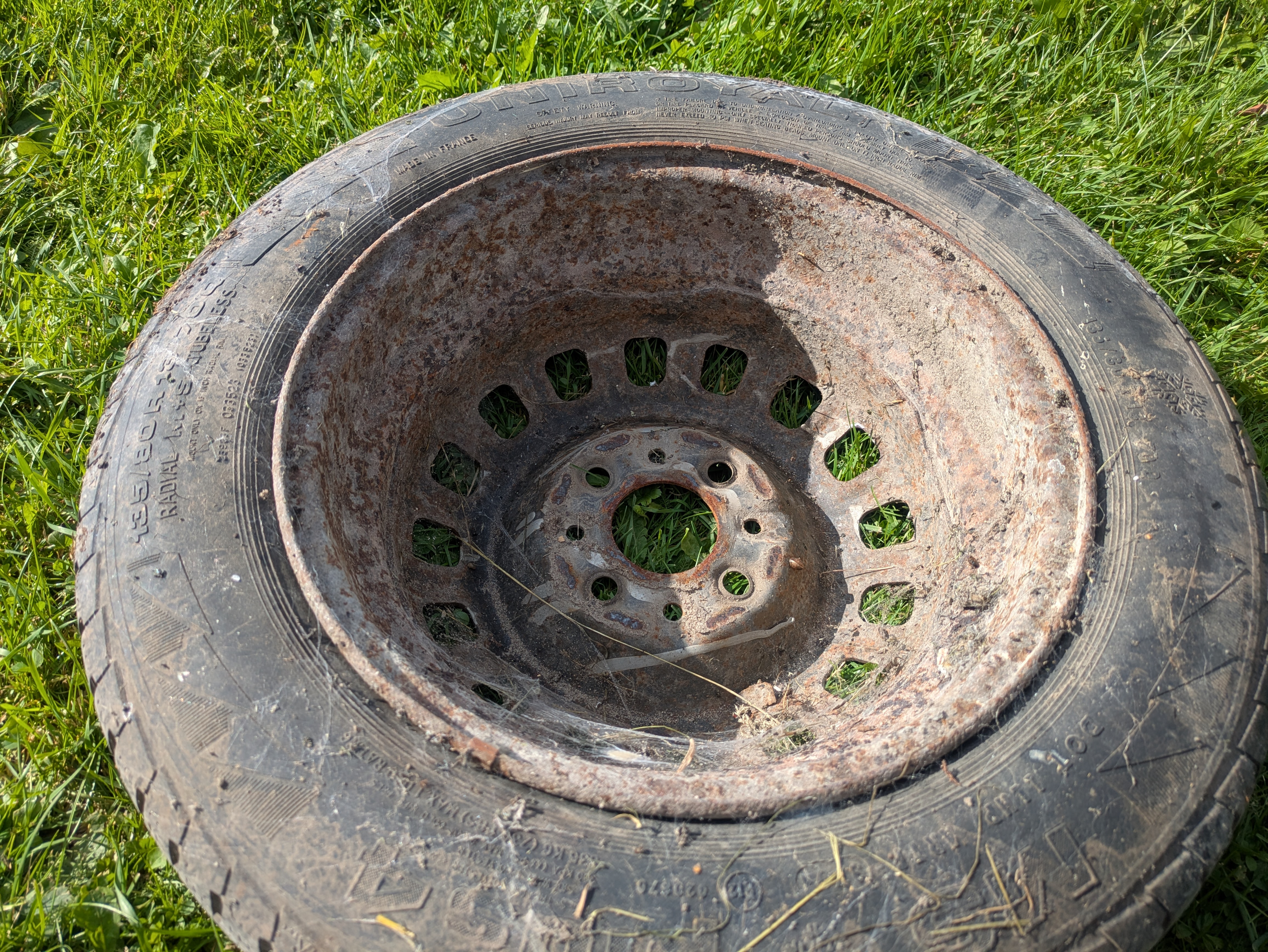
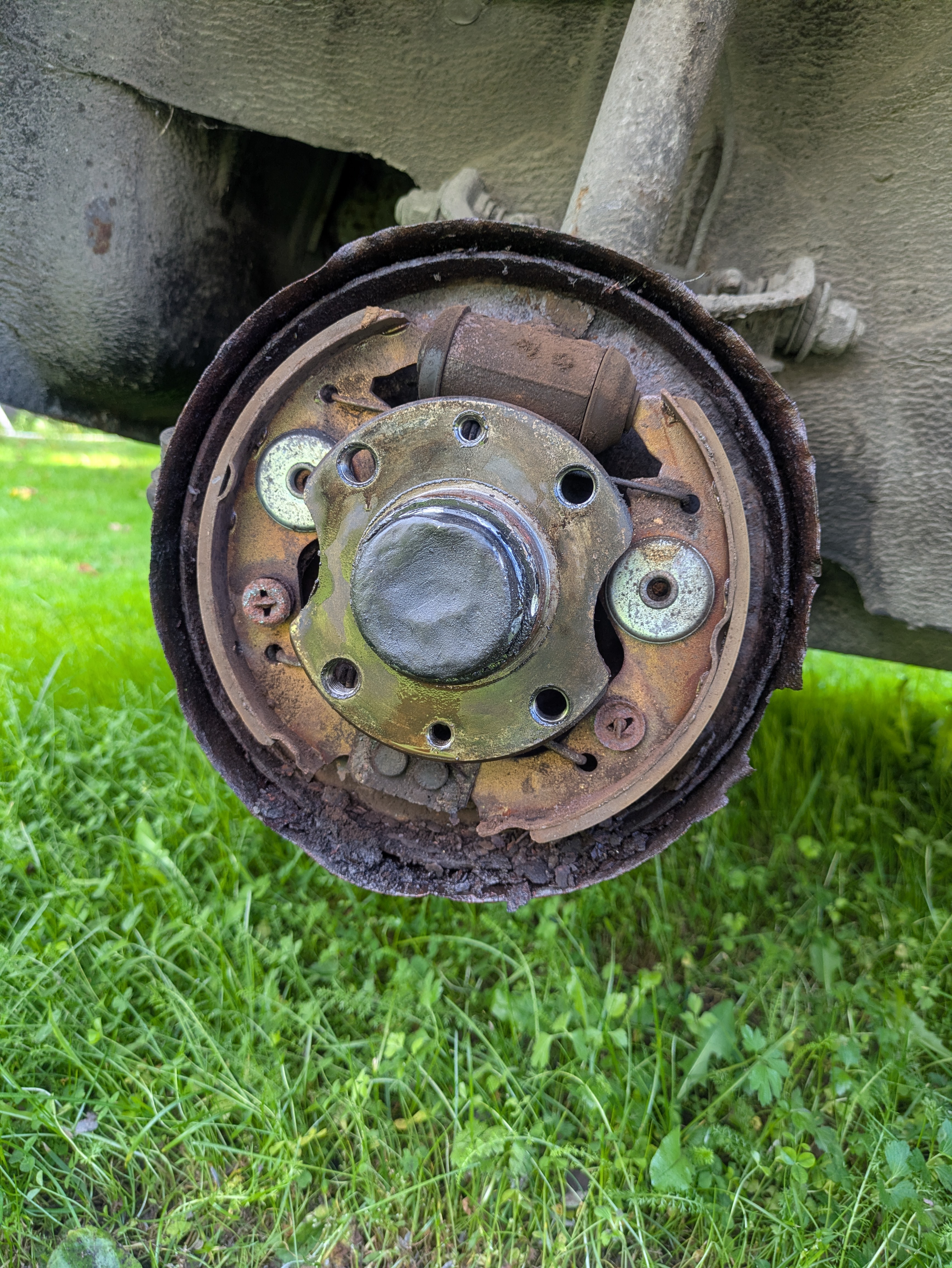
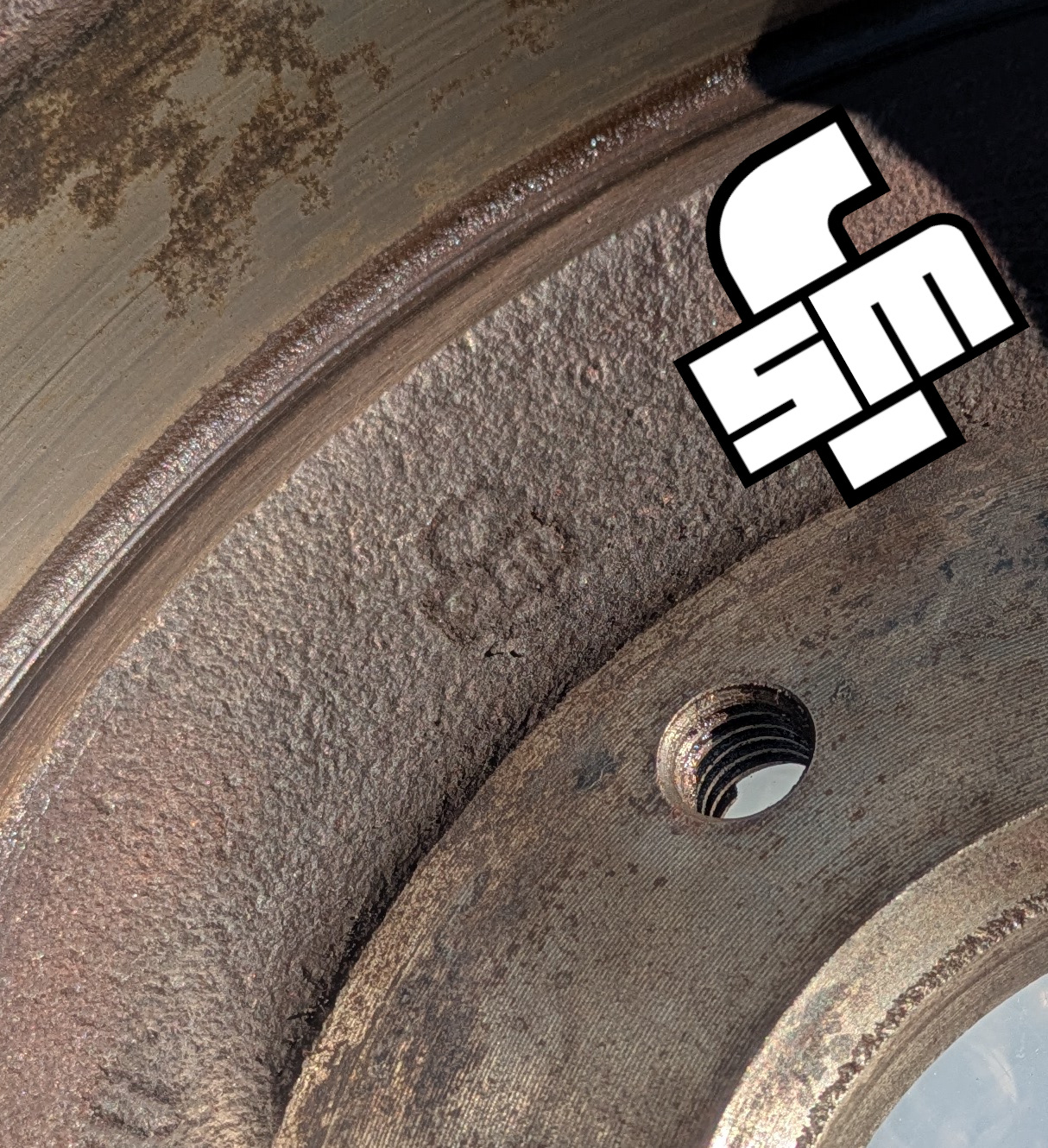
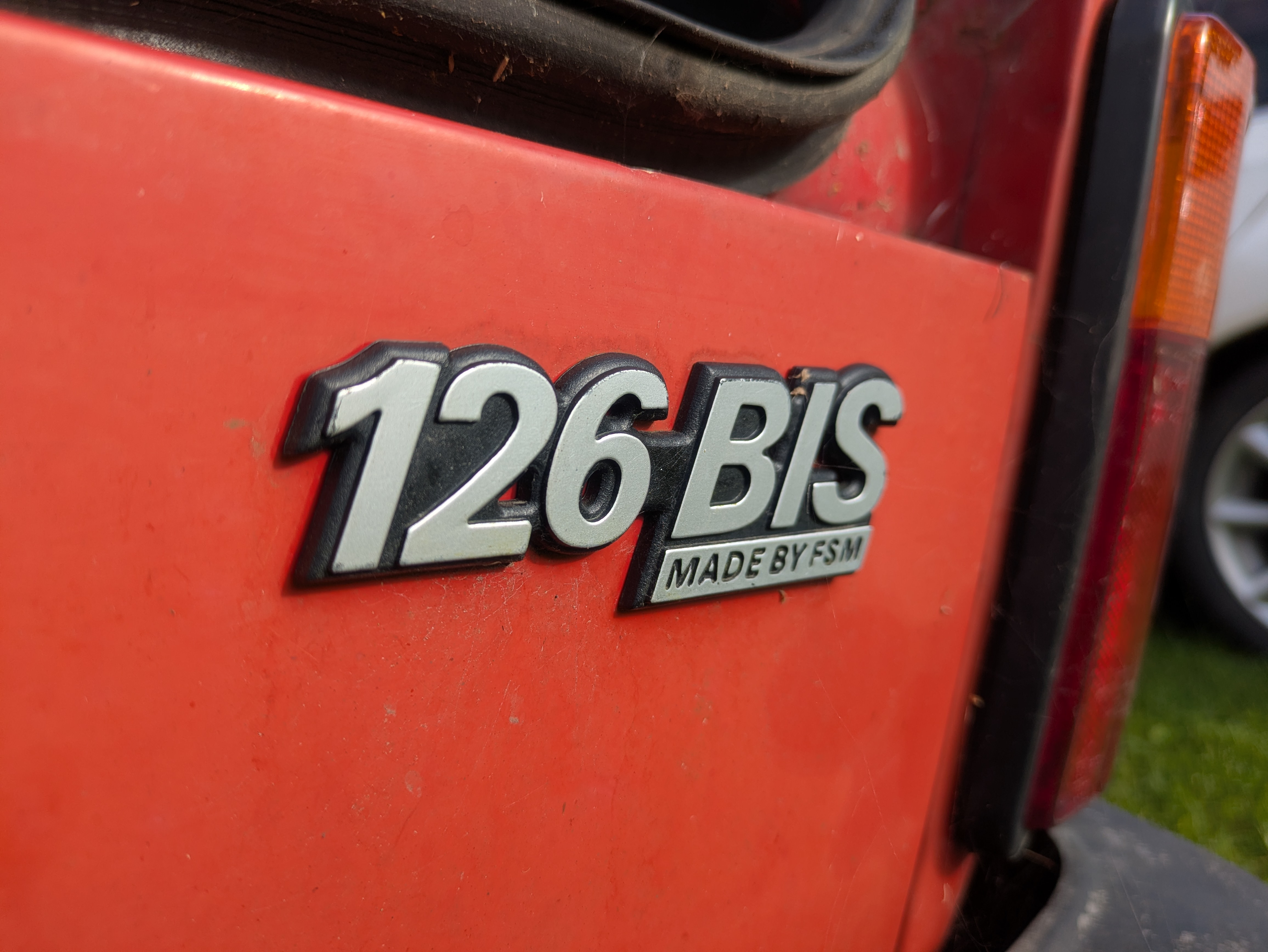
After dealing with the carnage, the car finally rolled around with ease when pushing it manually. Again, only ~620kg, so I could do it alone.
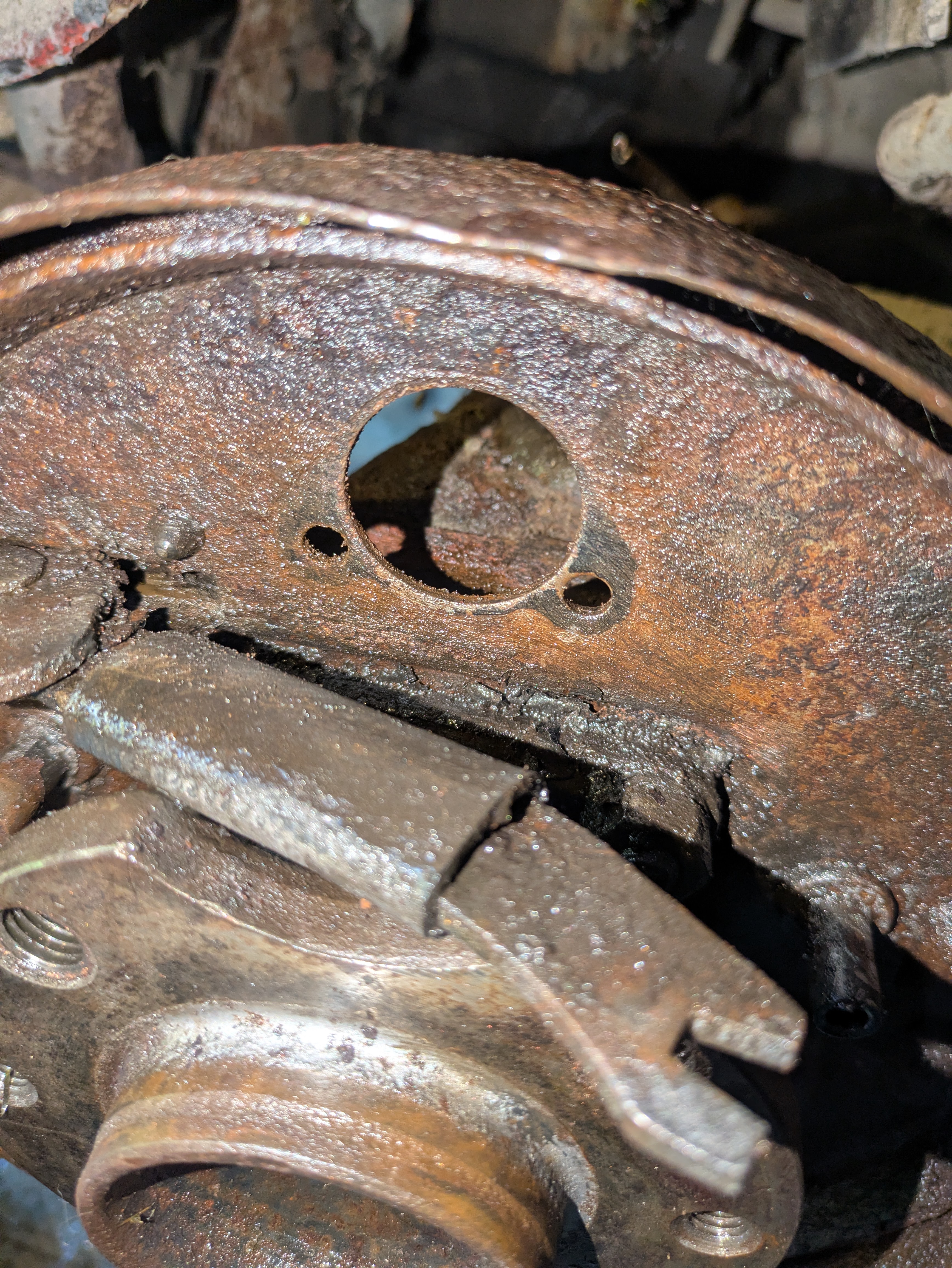
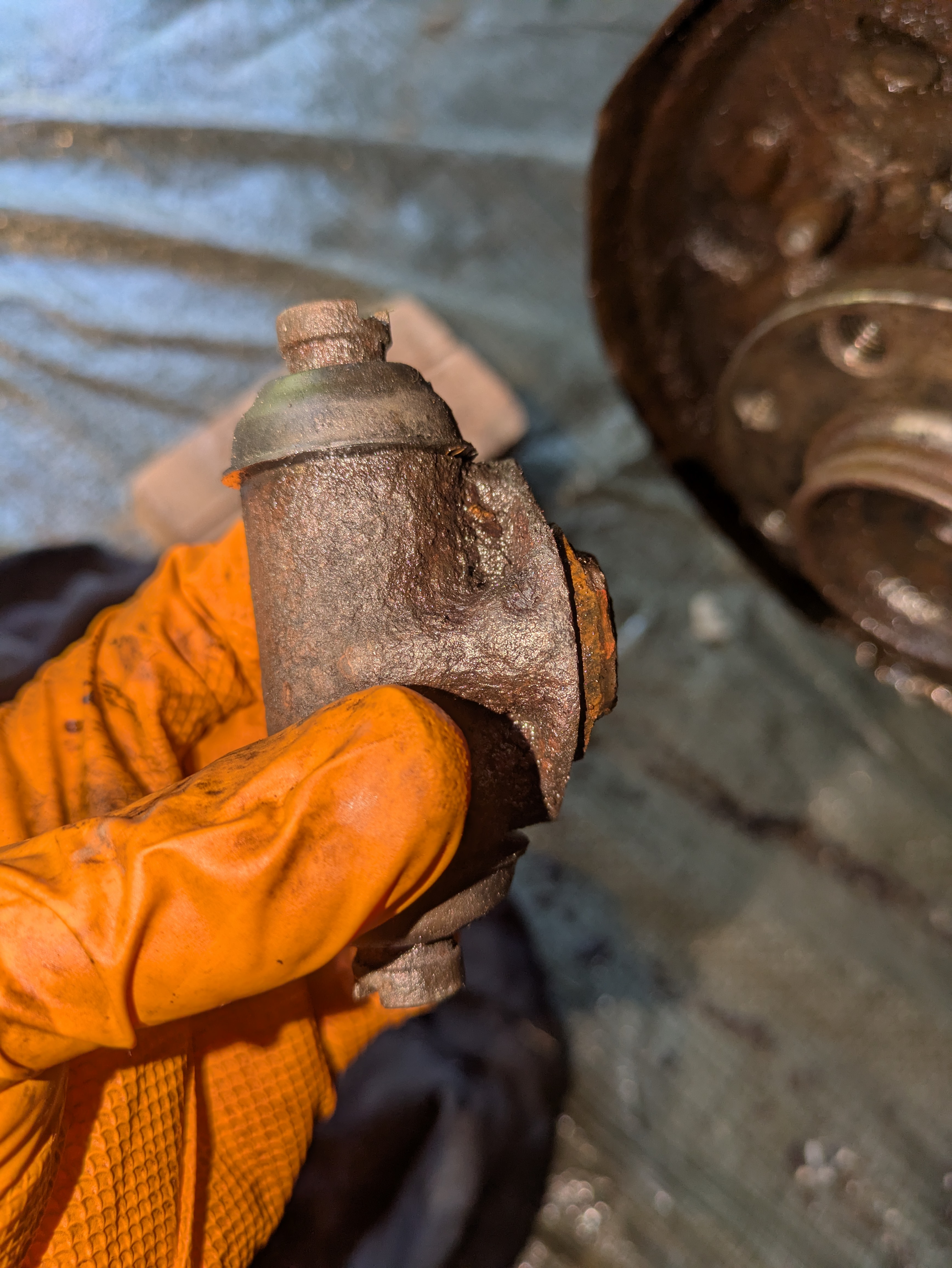
With brakes removed, it was clear that the parts list had to grow to include the hydraulic cylinders. The existing ones were stuck and full of gunk that was definitely not supposed to be there, plus the rubber bits were cracking and leaking brake fluid.
I still had some time, so I started tackling some other items based on whatever I felt like doing.
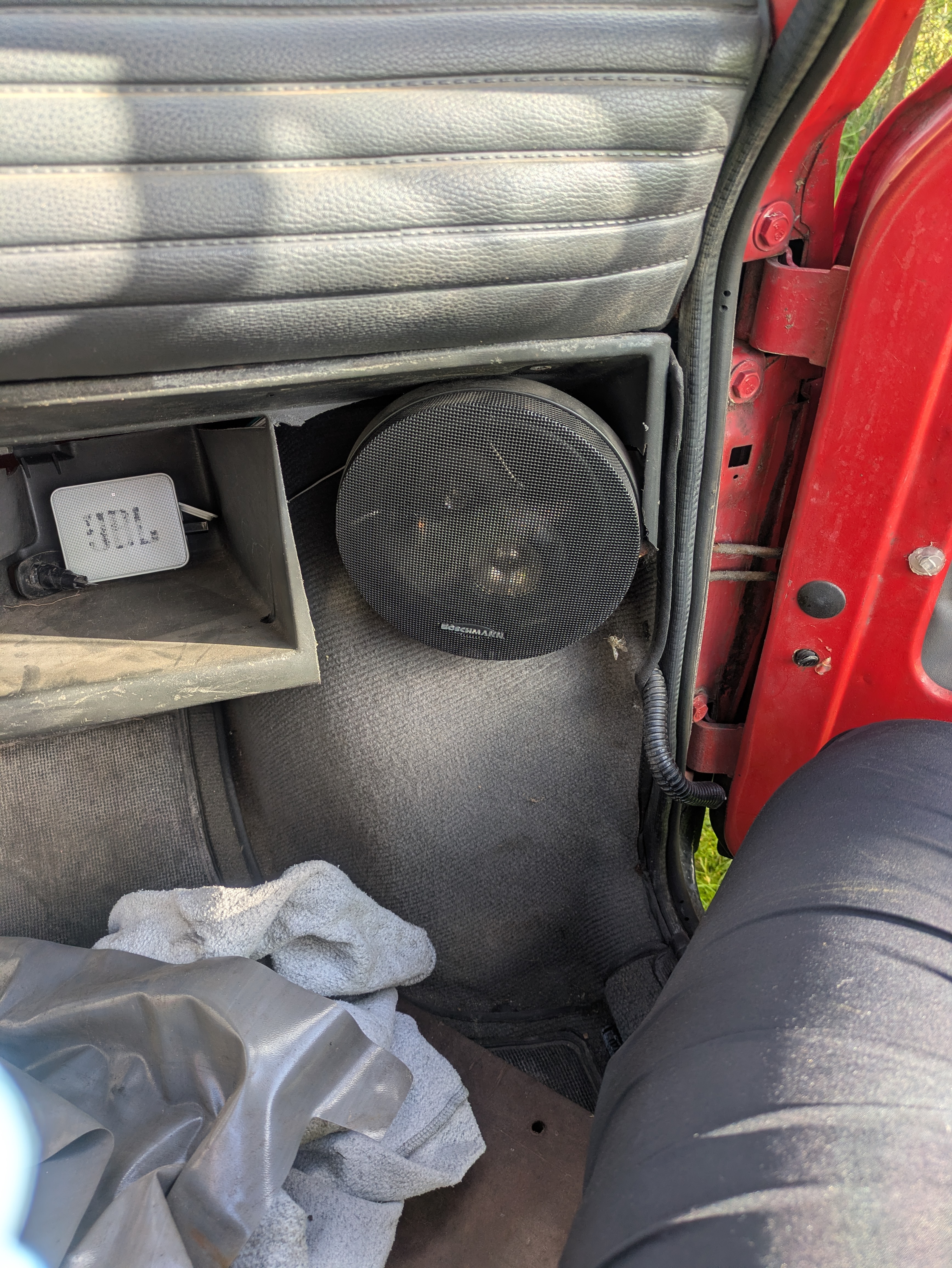
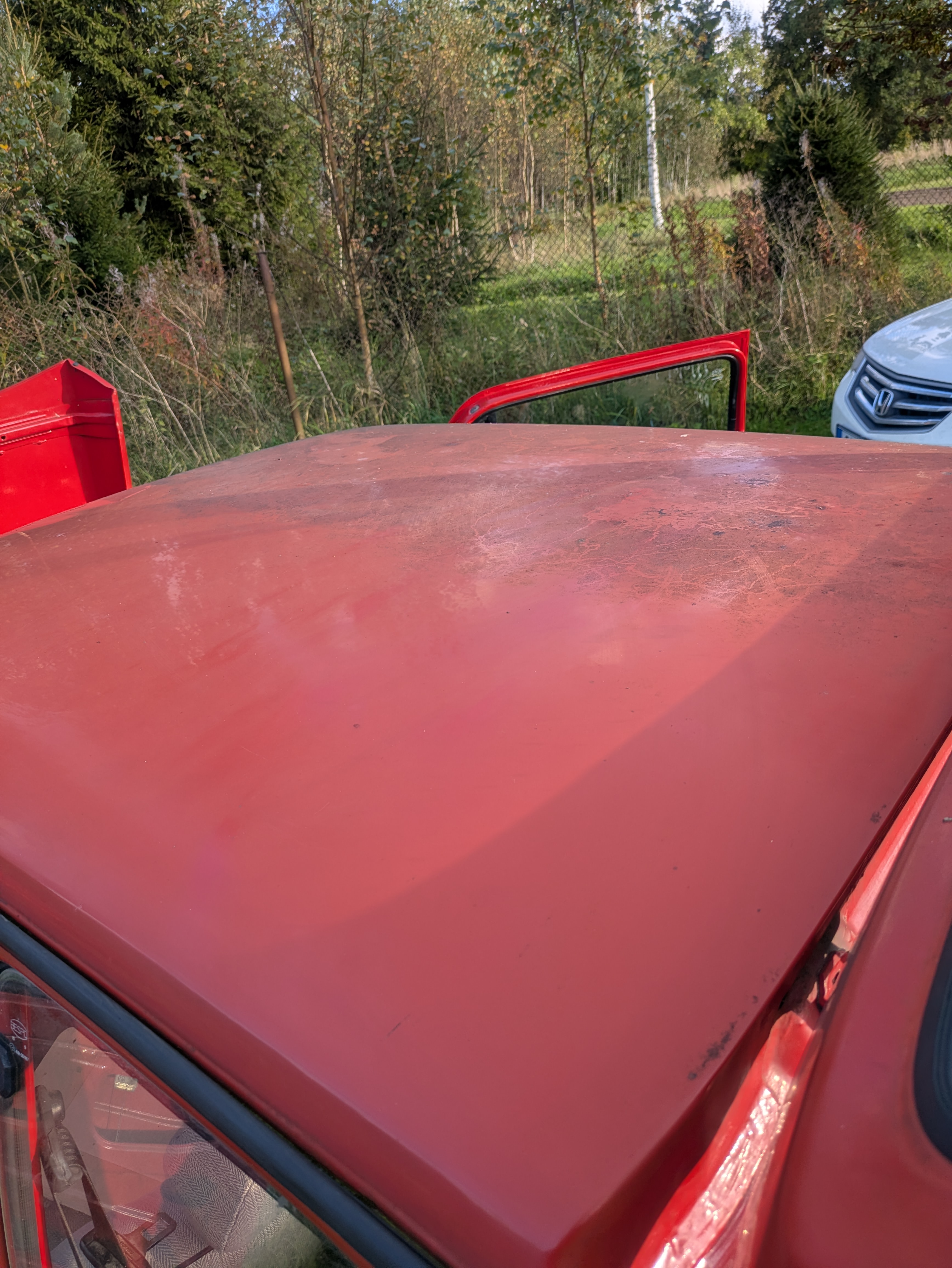
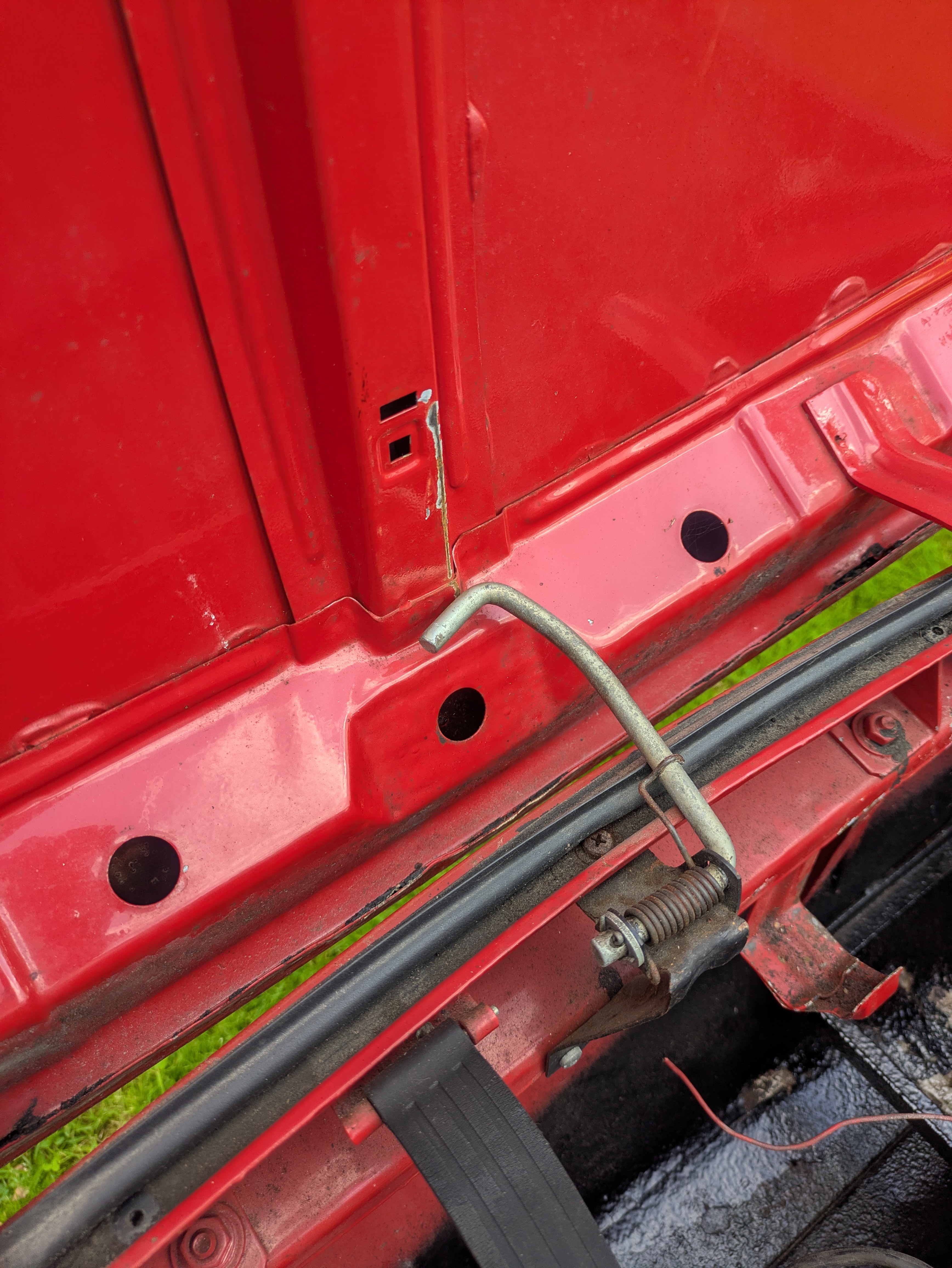
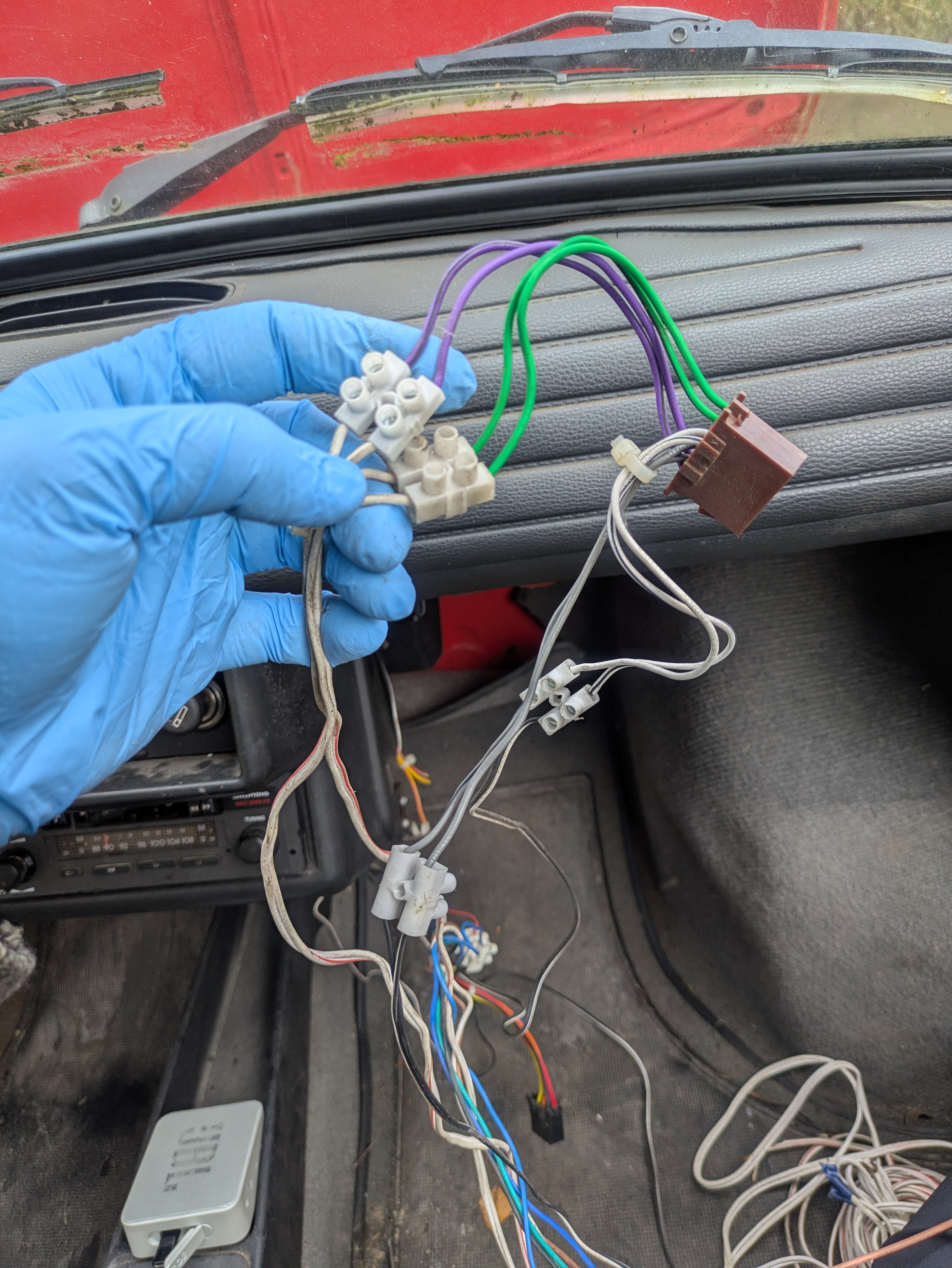
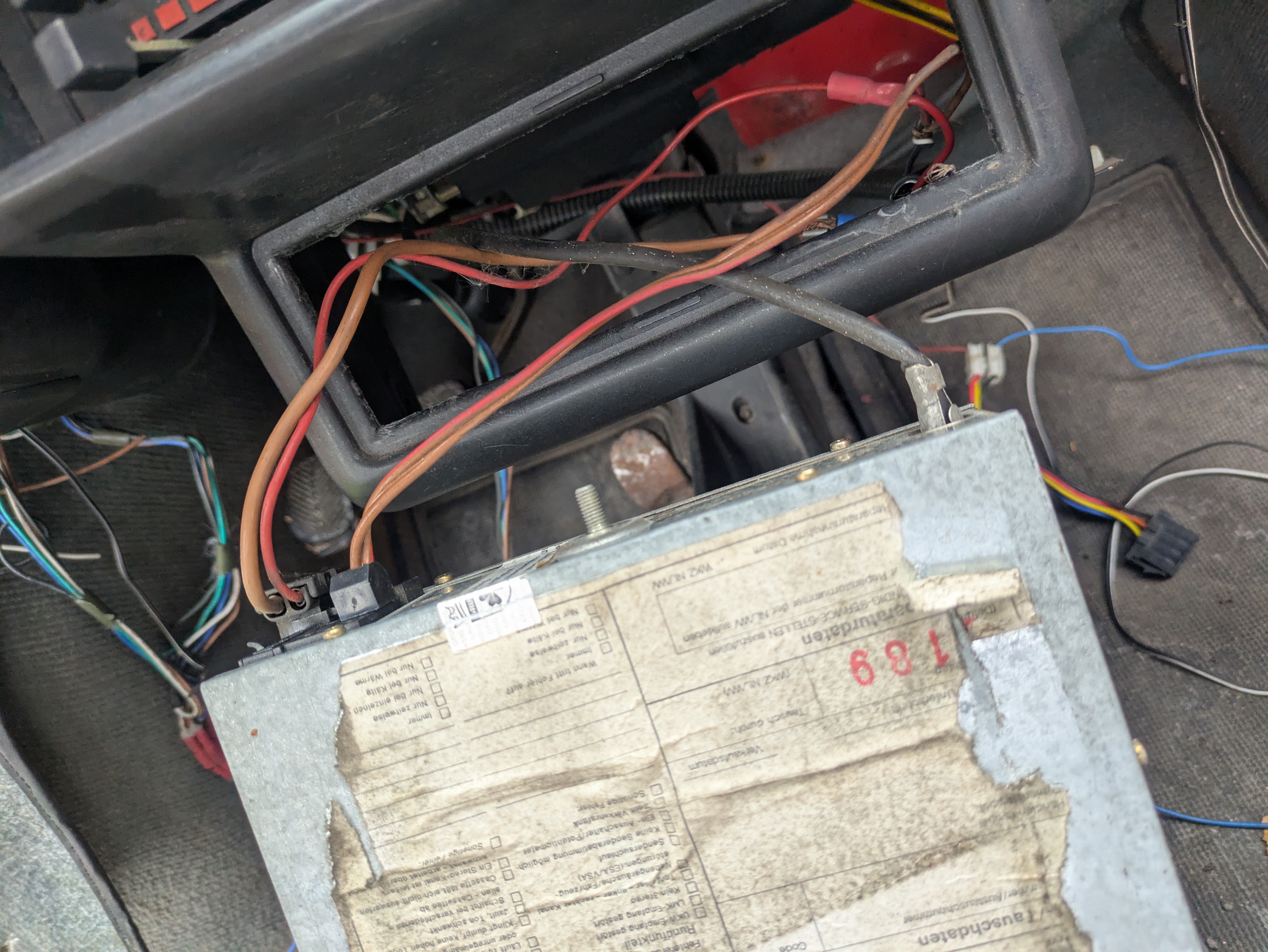
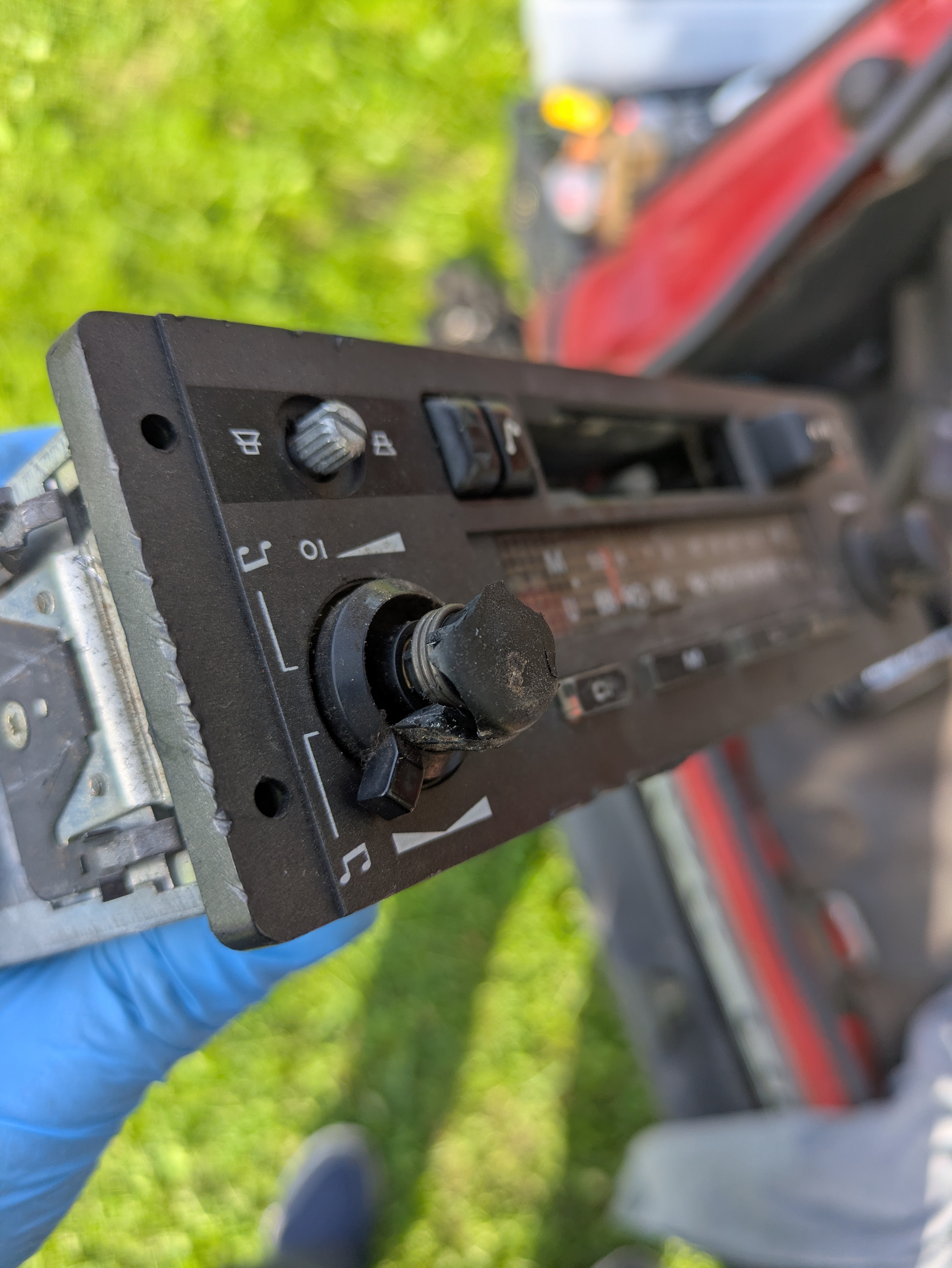
I finally also made progress on the window regulator, but annoyingly the new part seems to have an issue, the mechanism works, but it’s crunchy-feeling and makes odd clicks. But it works.
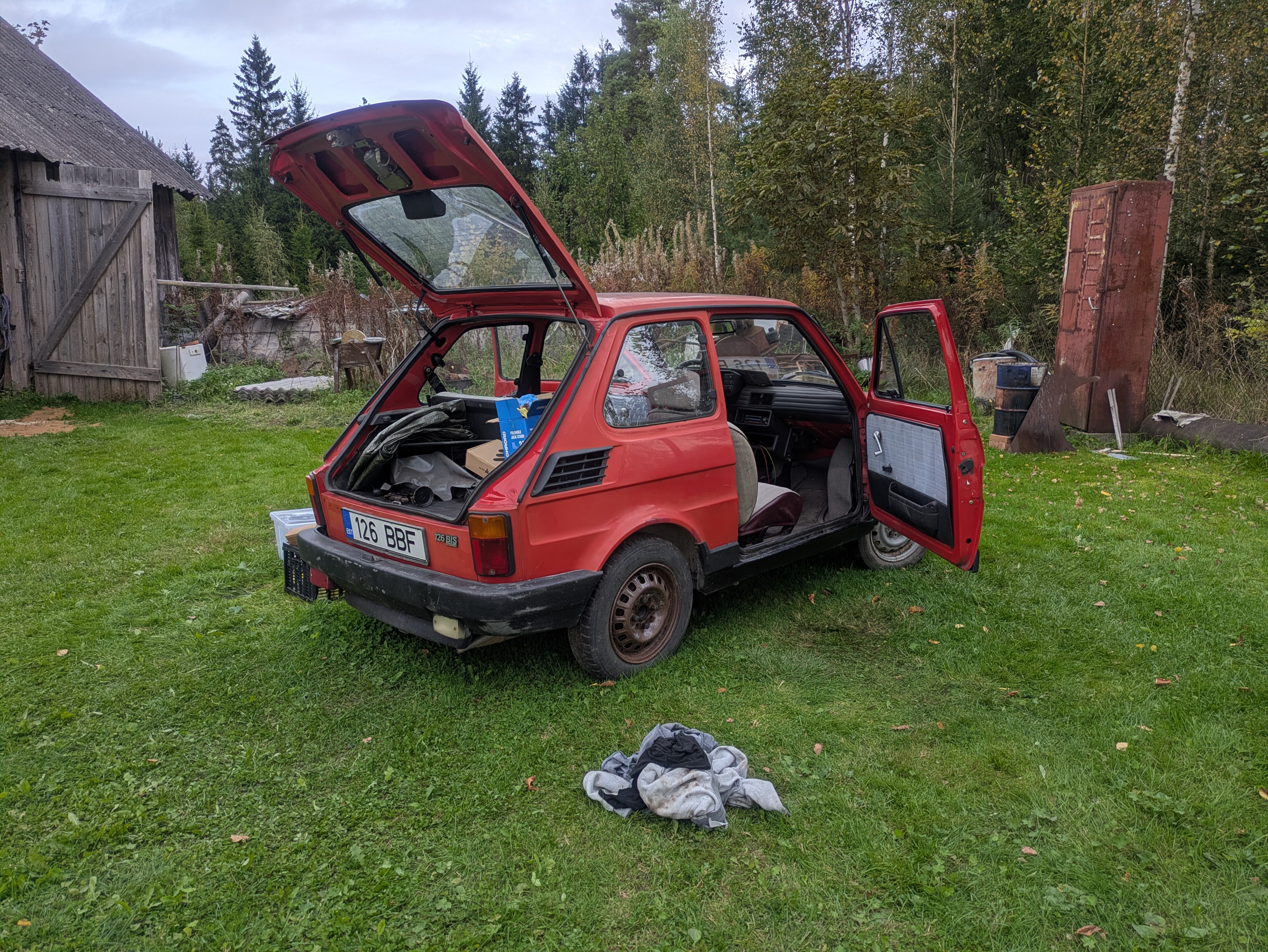
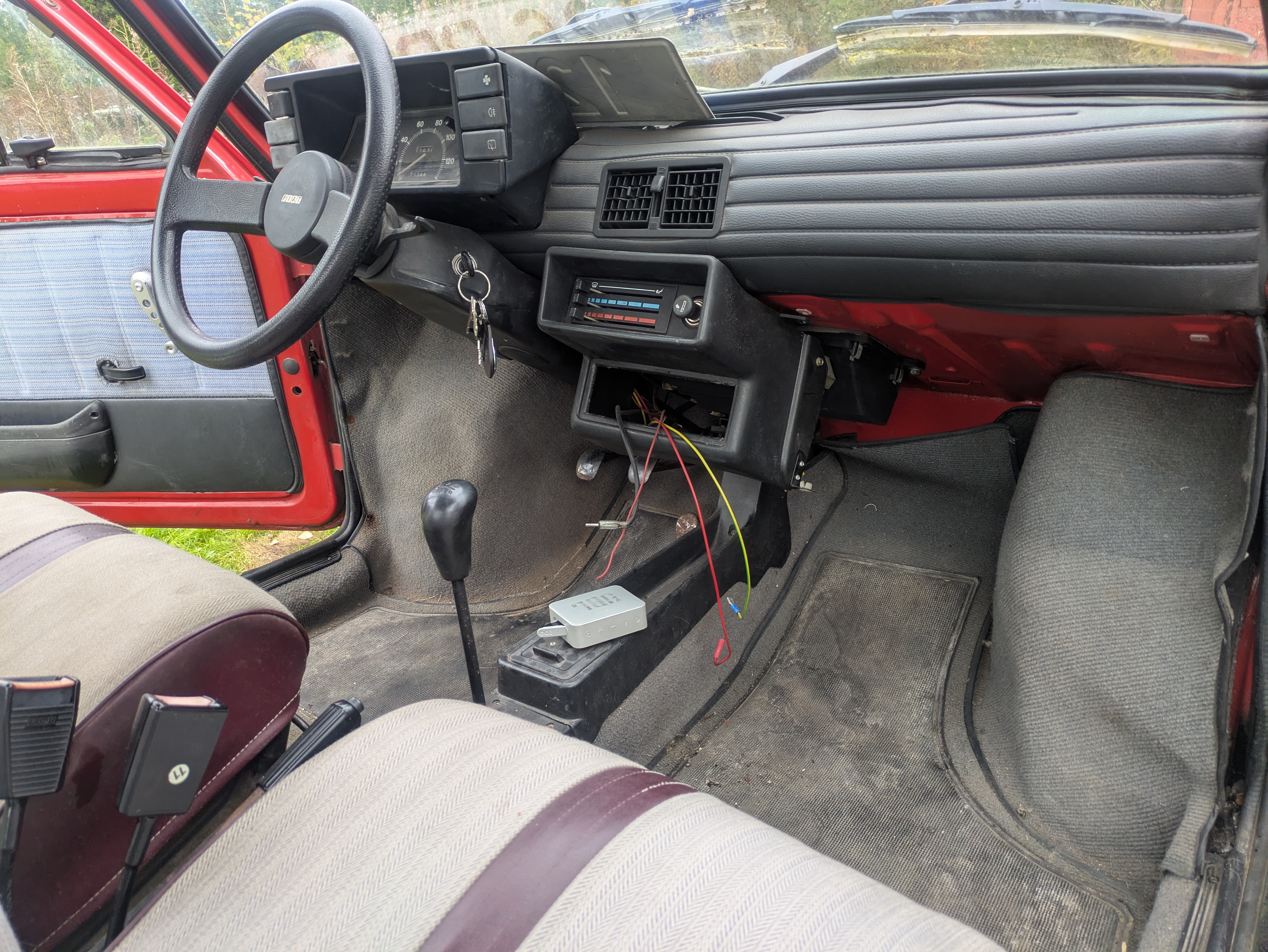
We now had the opportunity to move the car under a shed, which is optimal in September weather and doing work on the car.
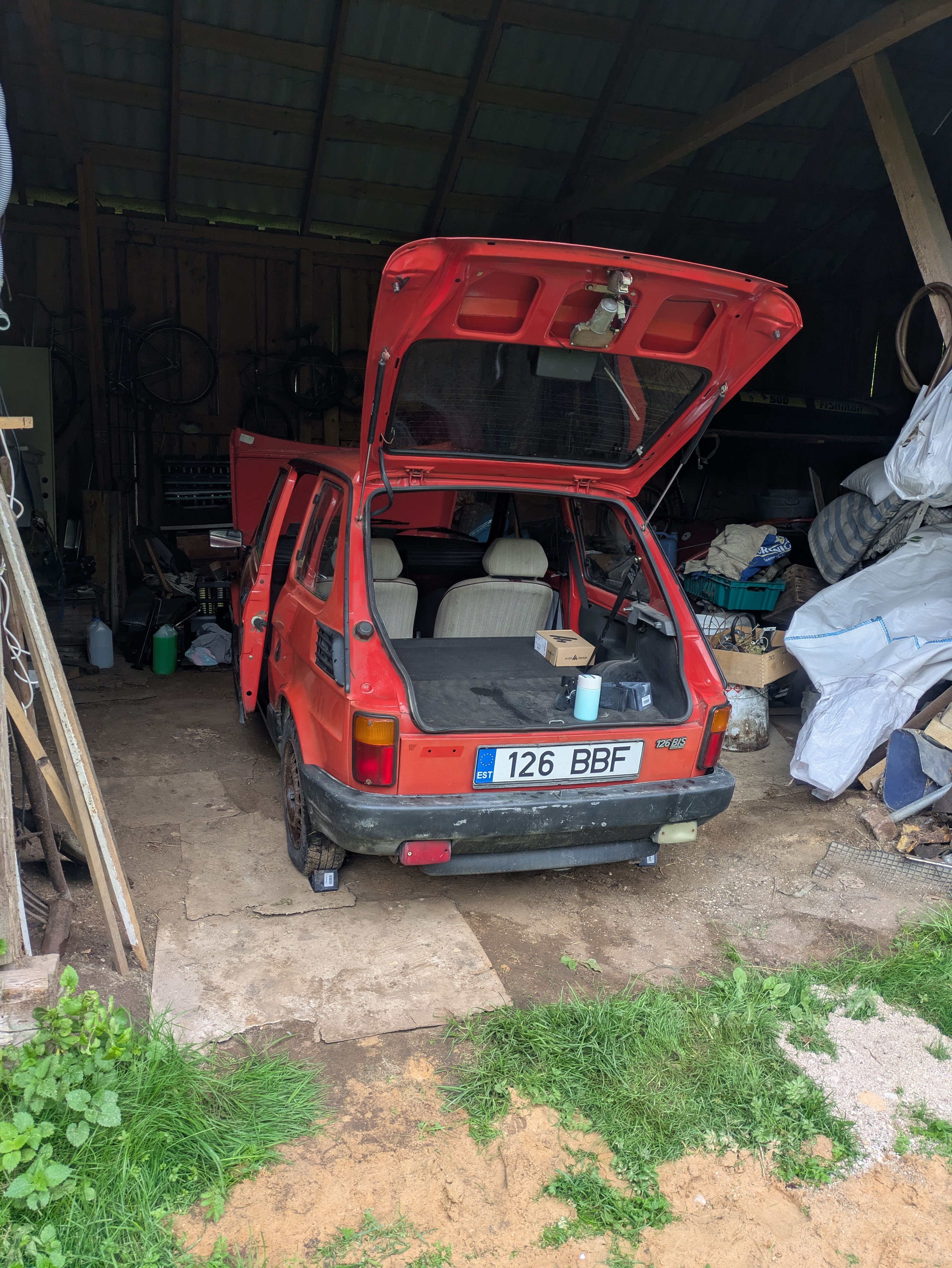
My brother joined in for a day to evaluate the situation and to try to do something useful with the car.
Equipped with some 15W40 engine oil, green G11 coolant, wire, an empty plastic canister, fuel hoses and a lot of hope, we got to work trying to get the car doing car noises.
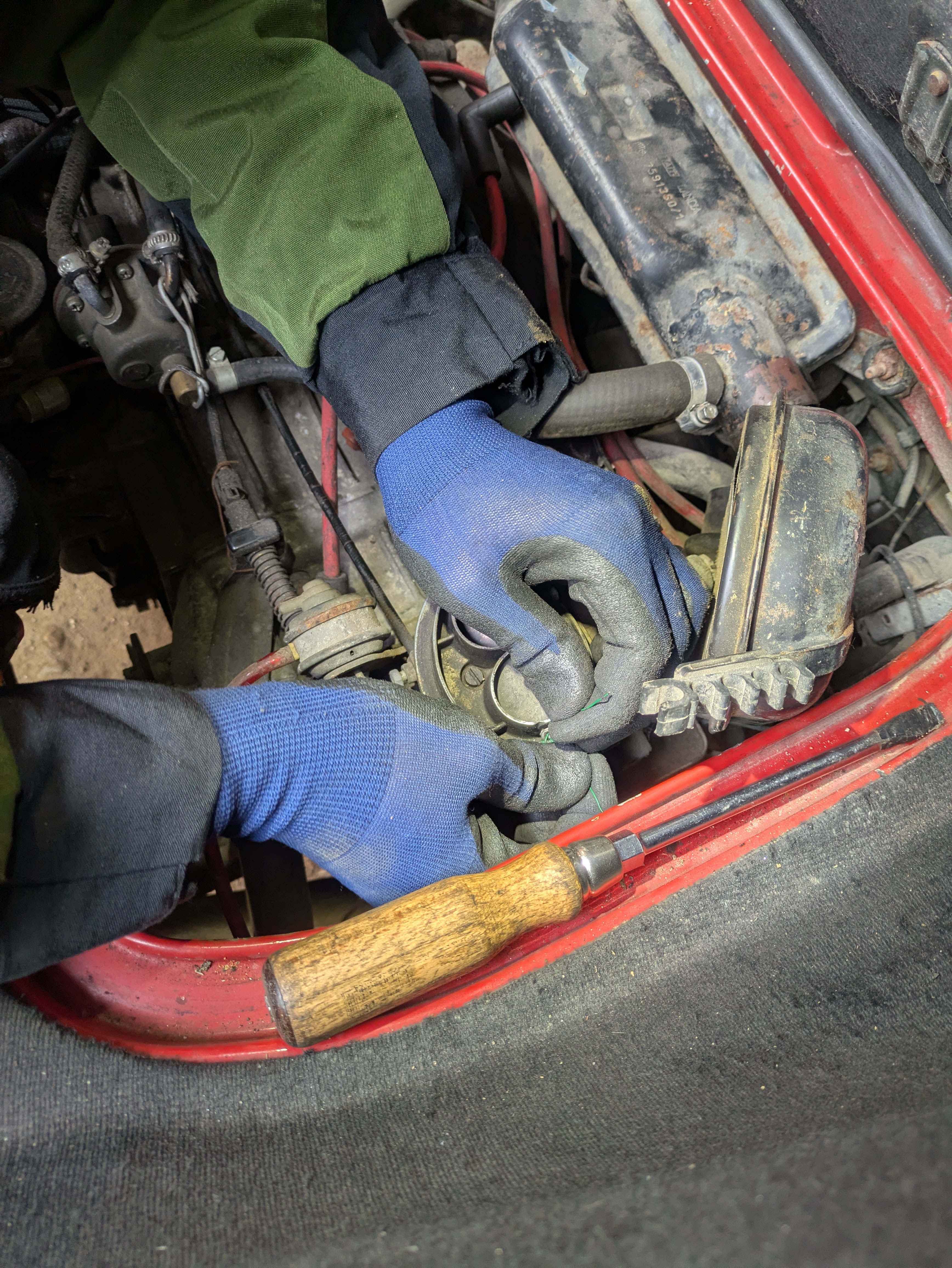
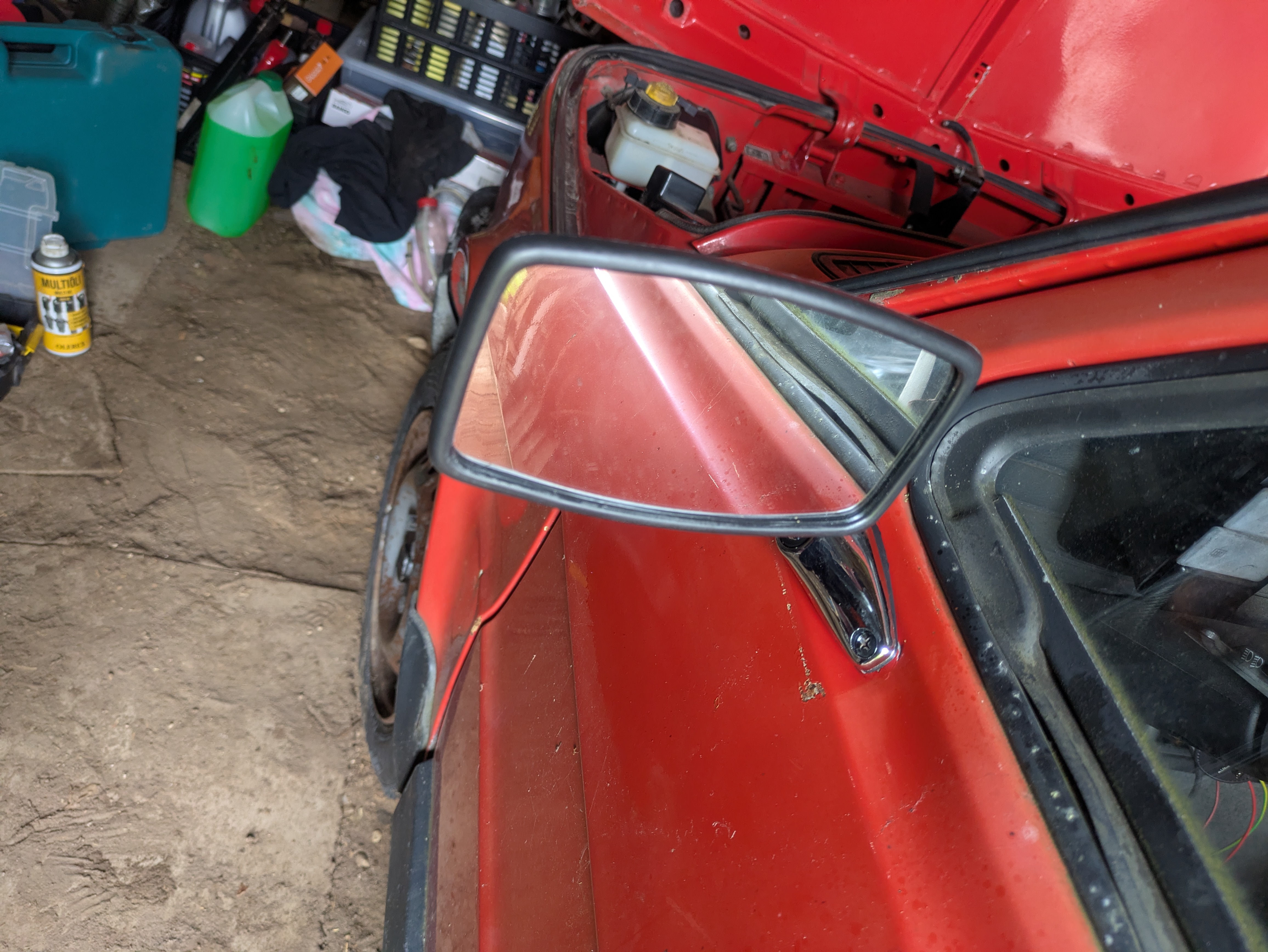
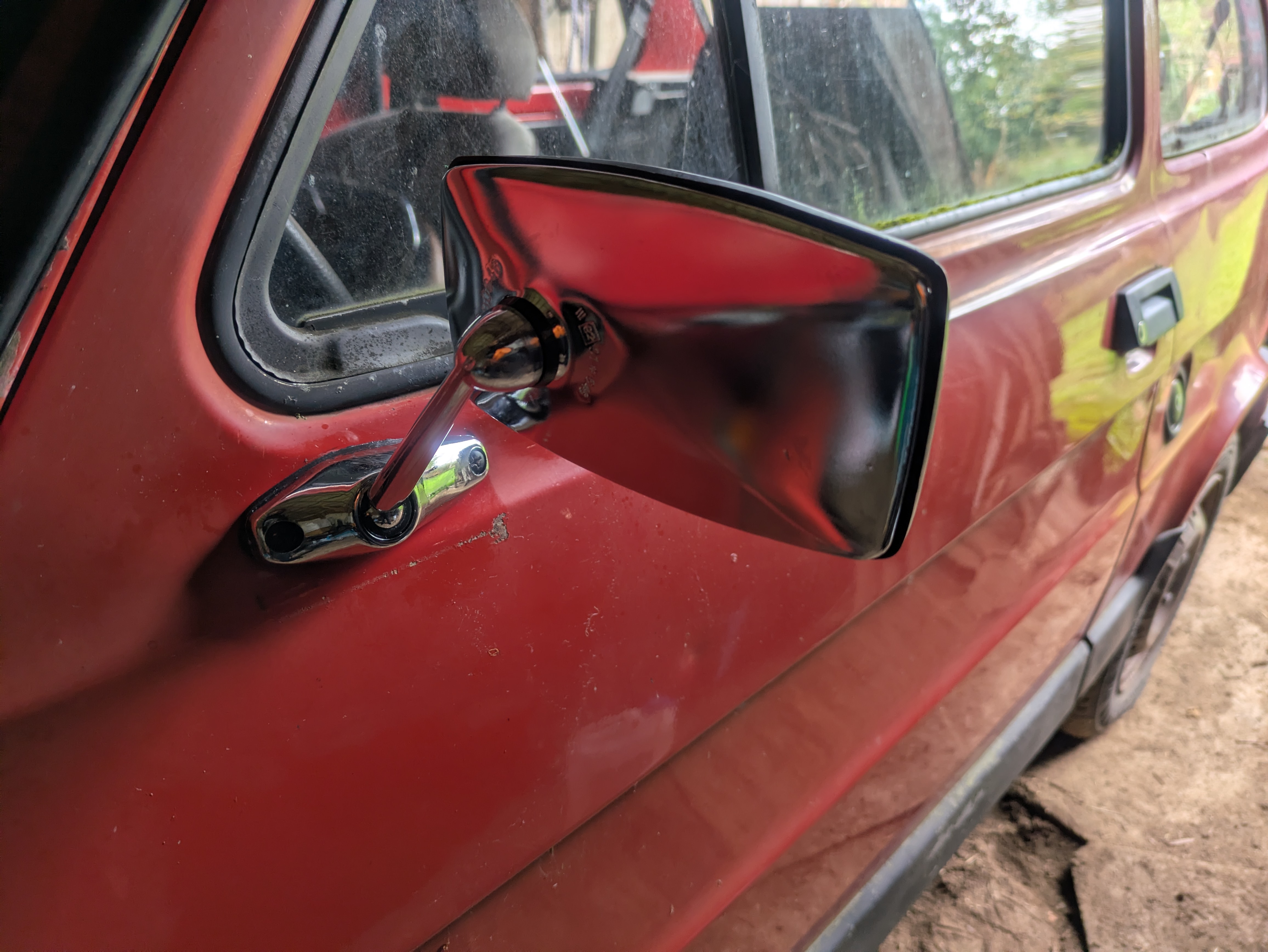
While that was going on, I installed new side mirrors. Bling-bling! Now we’re up to two, which is the correct number.
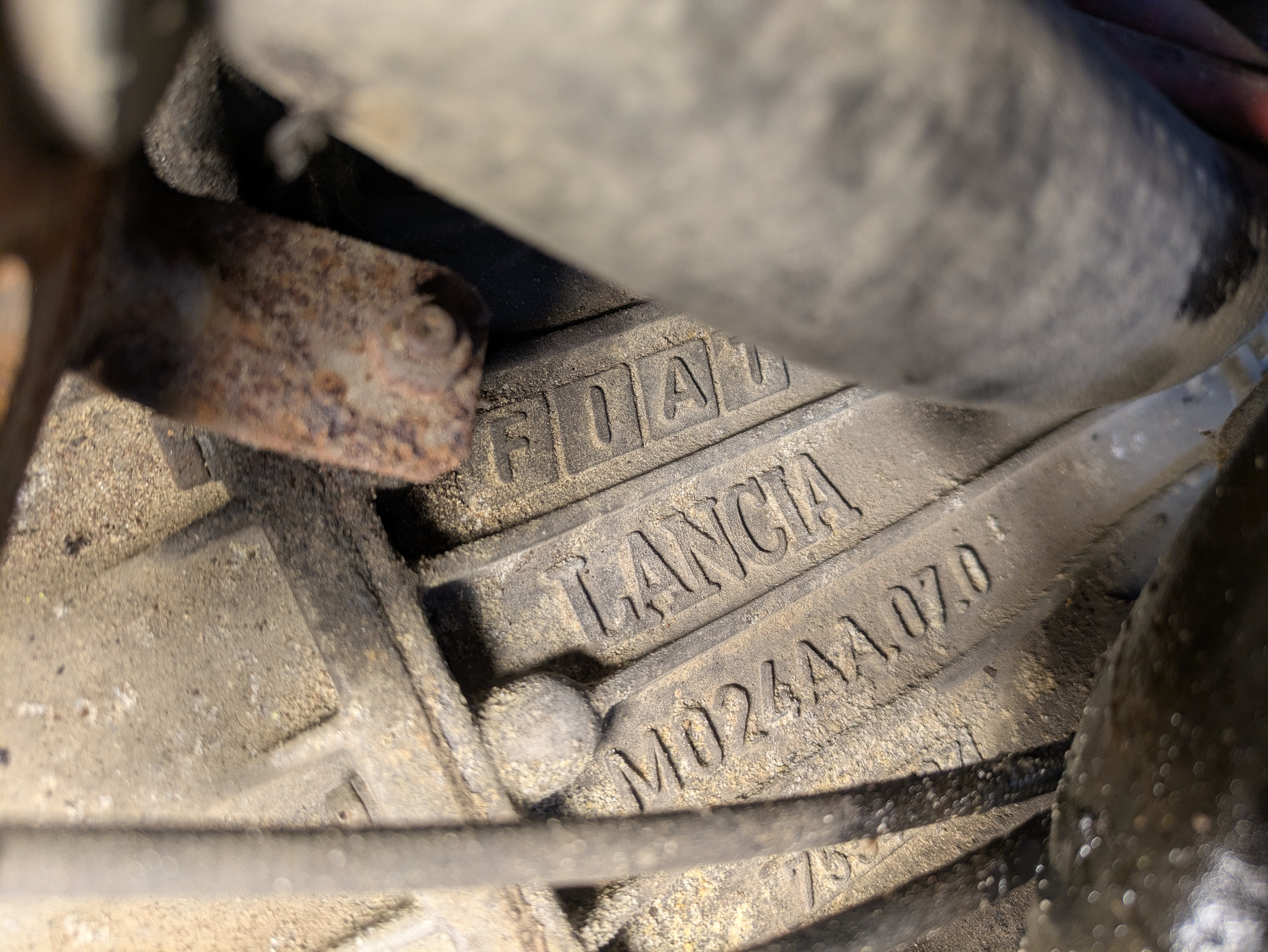
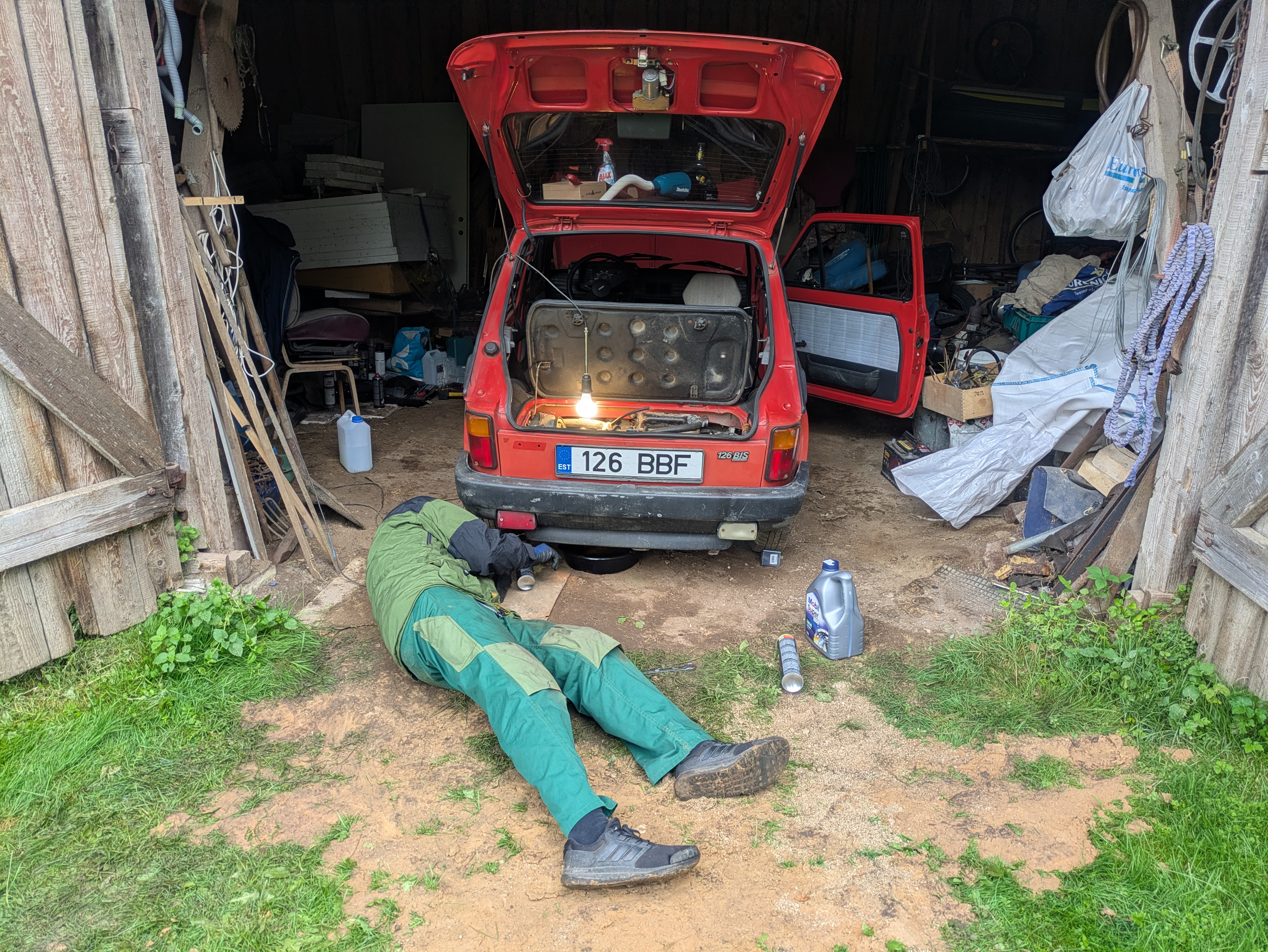
Then we started it. Engine go brrrr!
It was now time to approach the slightly annoying/scary work.
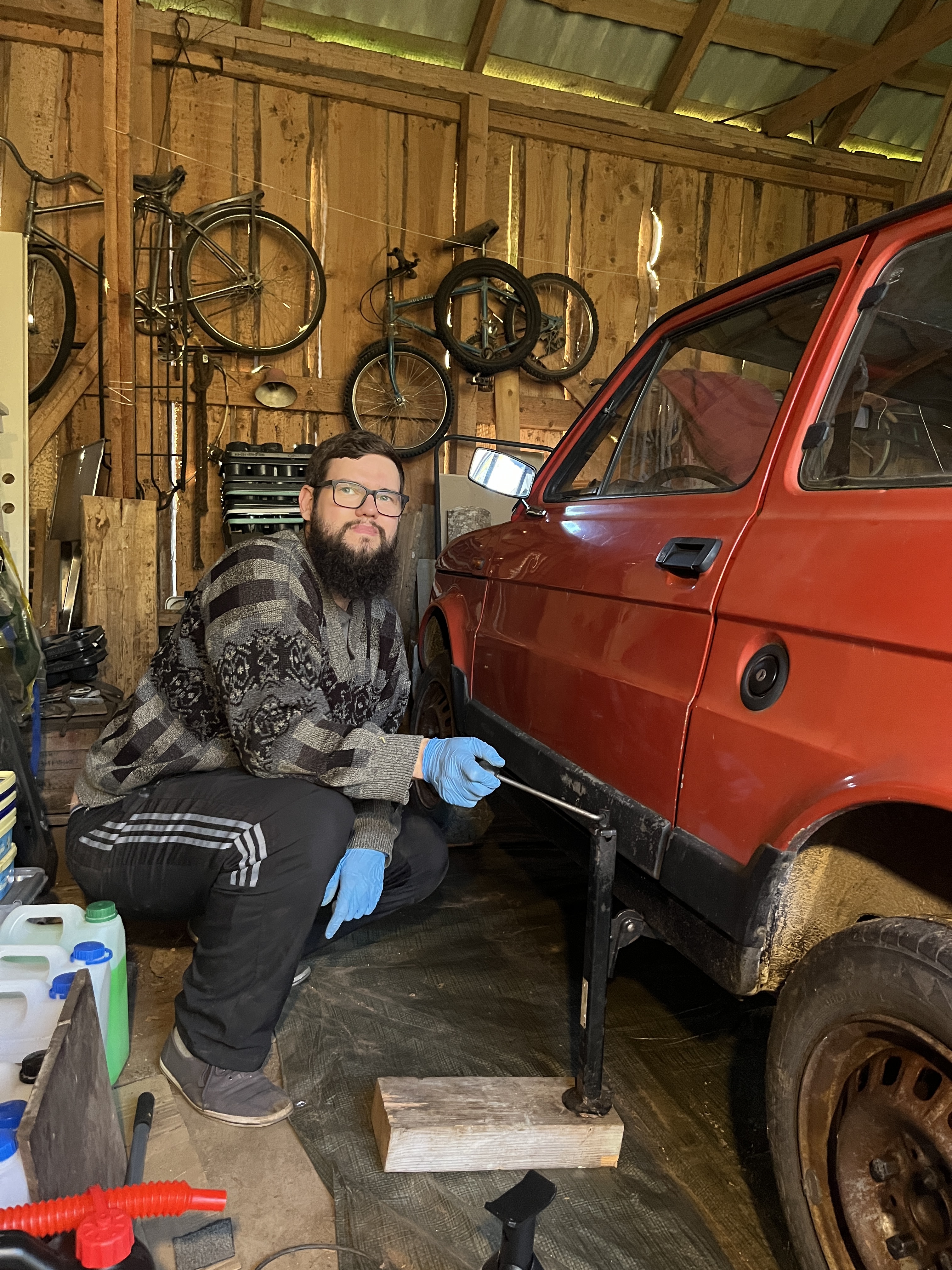
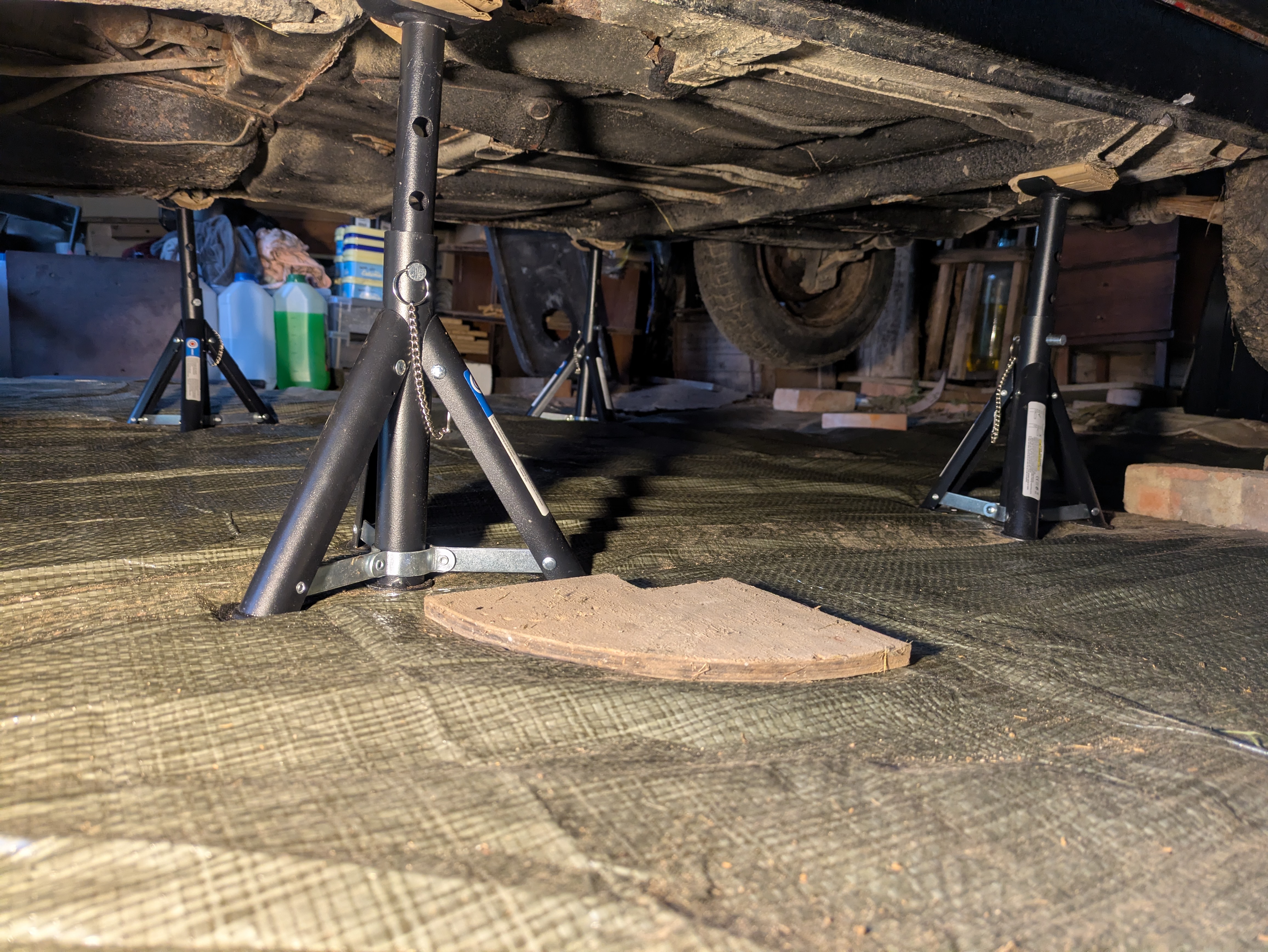
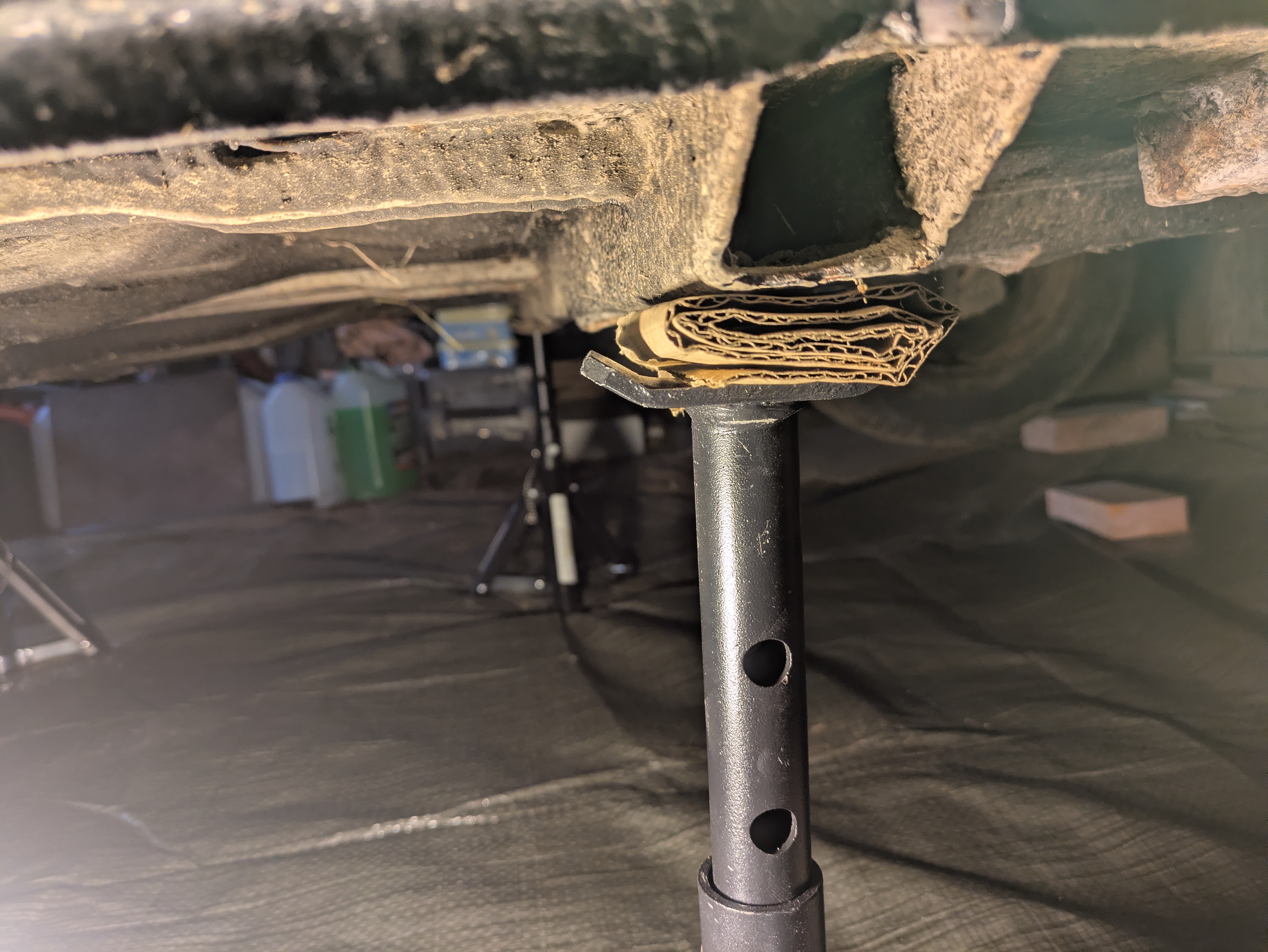
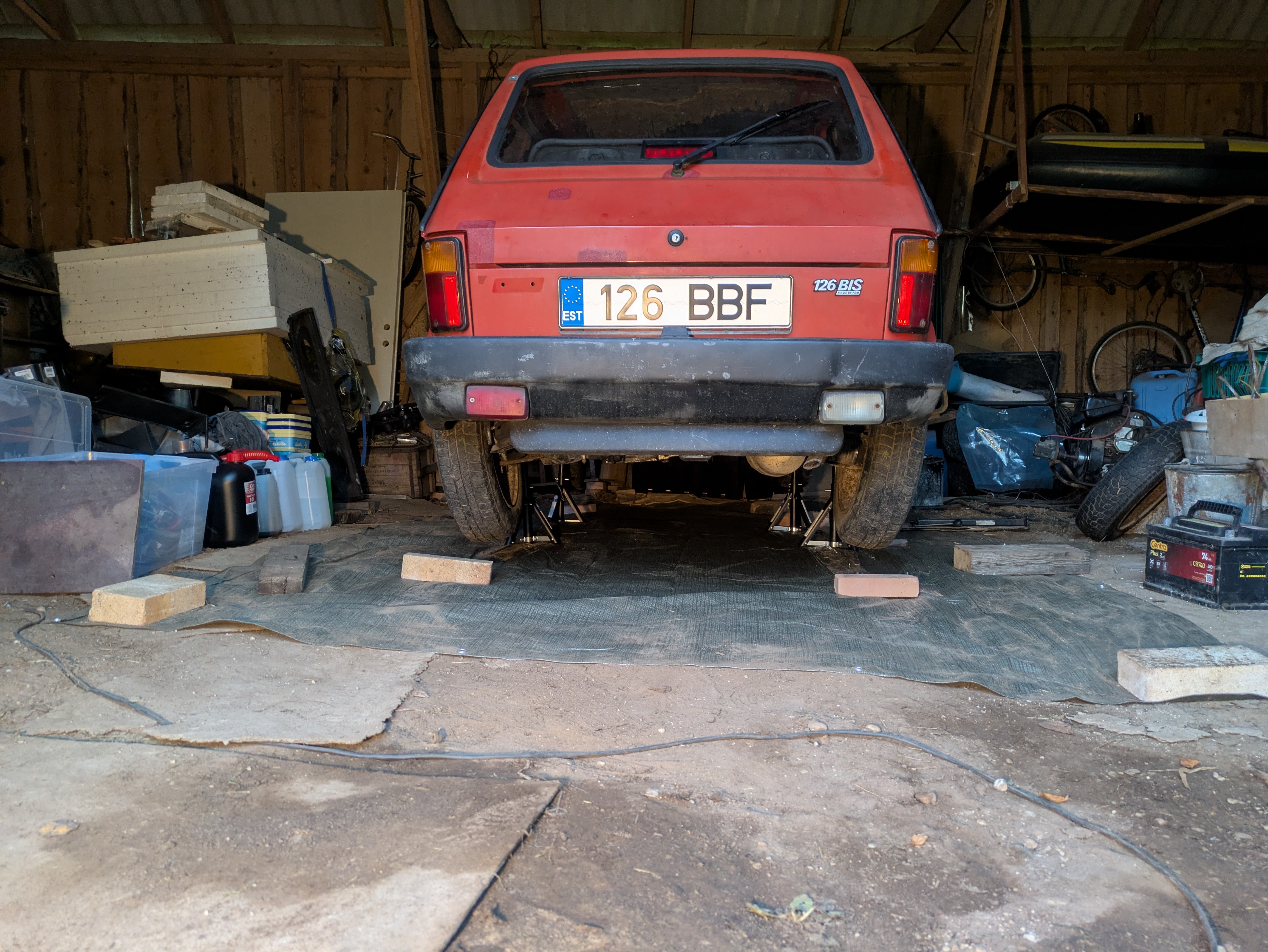
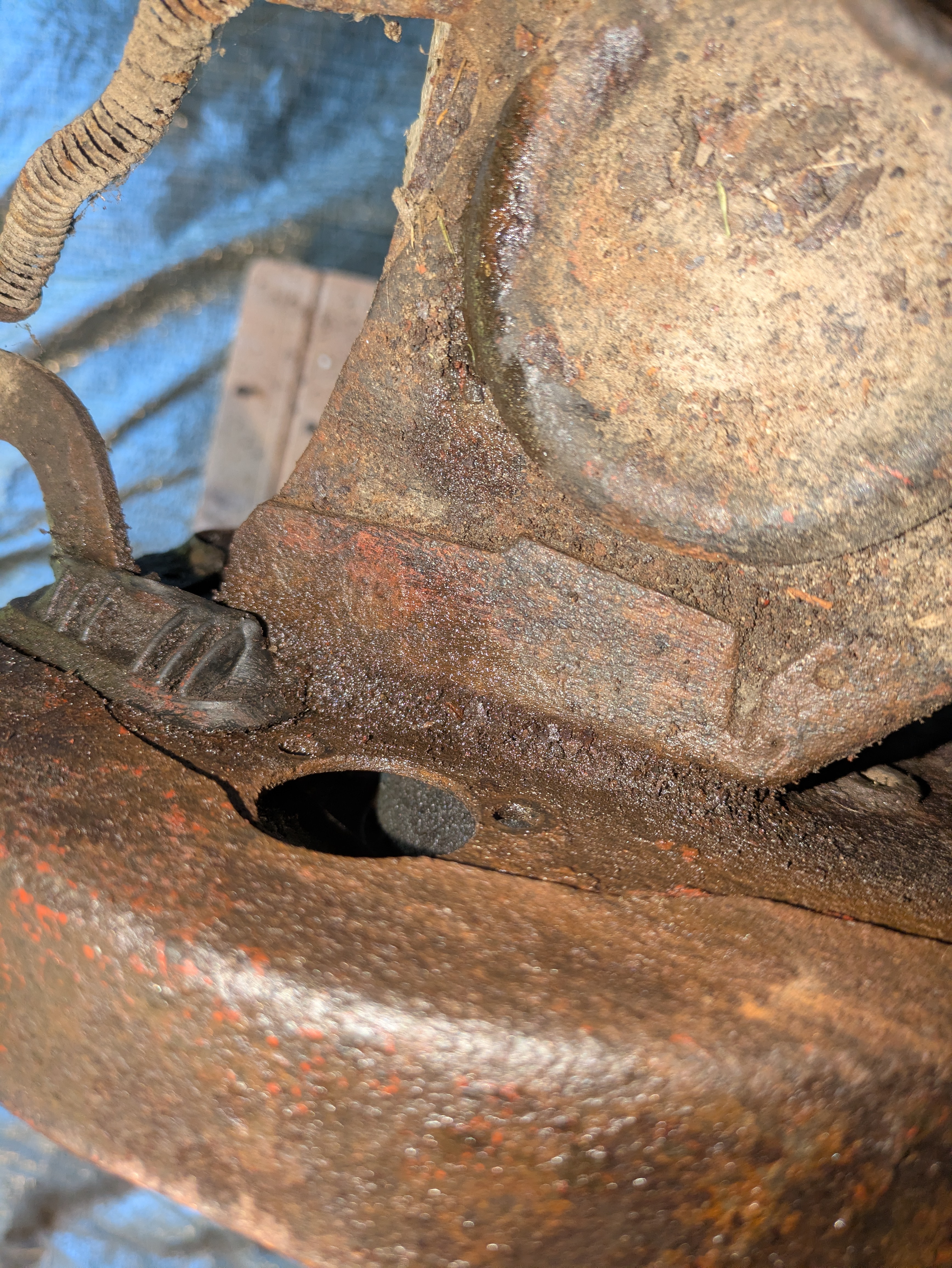
It’s time to install new brake hydraulic bits, but first you need to get the old ones off. That proved to be tricky. It’s also the time I learned about flare-nut wrenches, never realized that these were a thing.
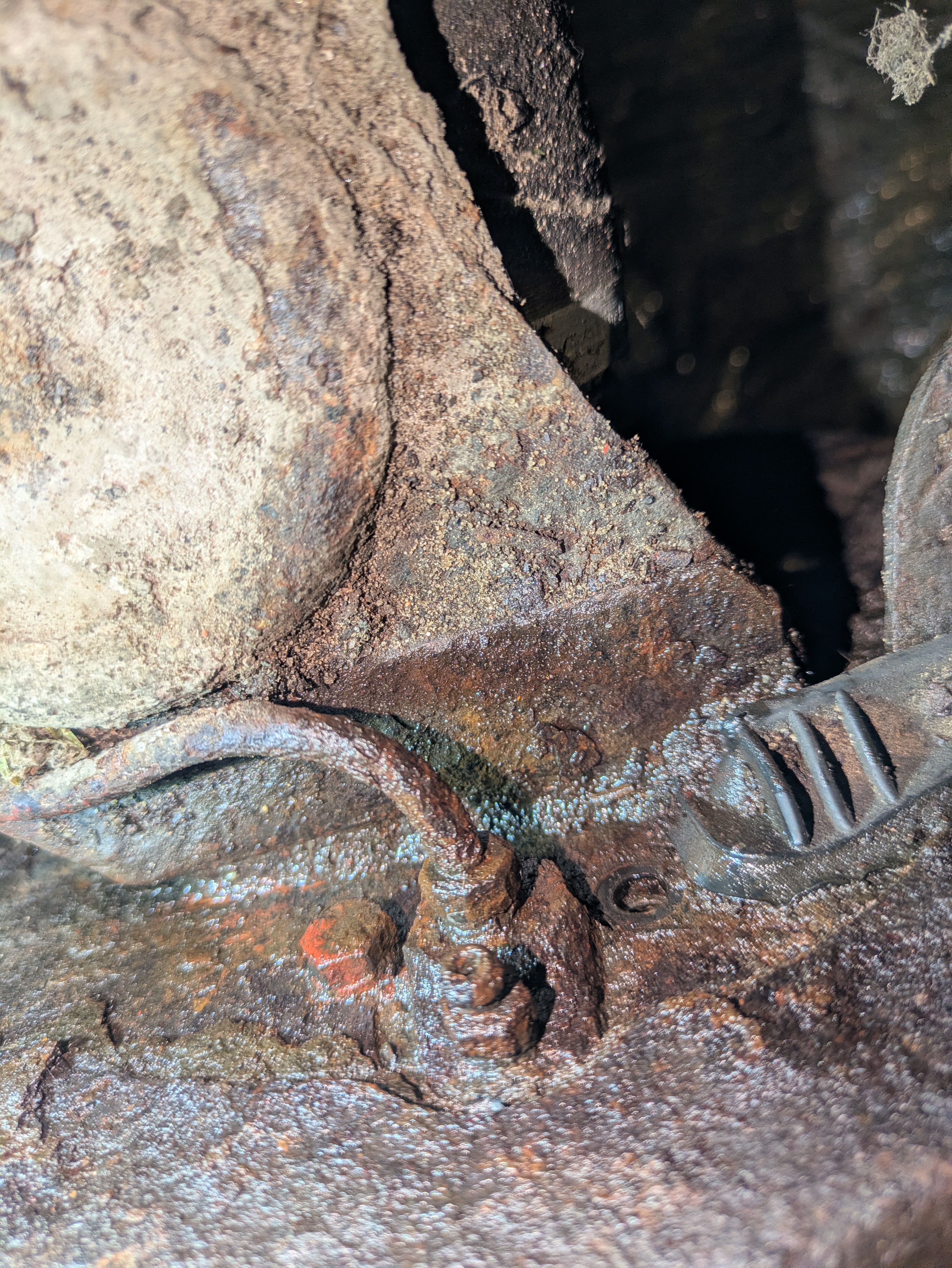
So far, I have only managed to get one off, with the rusted brake line also snapping, so yeah, new brake lines have entered the to-do list.
Since it was clear that brakes are a total pain, I did additional investigative work on the rear lights to check what’s the situation there. The rear brake lights work and stay on constantly, which is luckily just a sensor fix near the brake pedal, but the fog and reverse lights were iffier.
With the reverse light, the reflector bit just fell to bits, so that will need to be renewed.
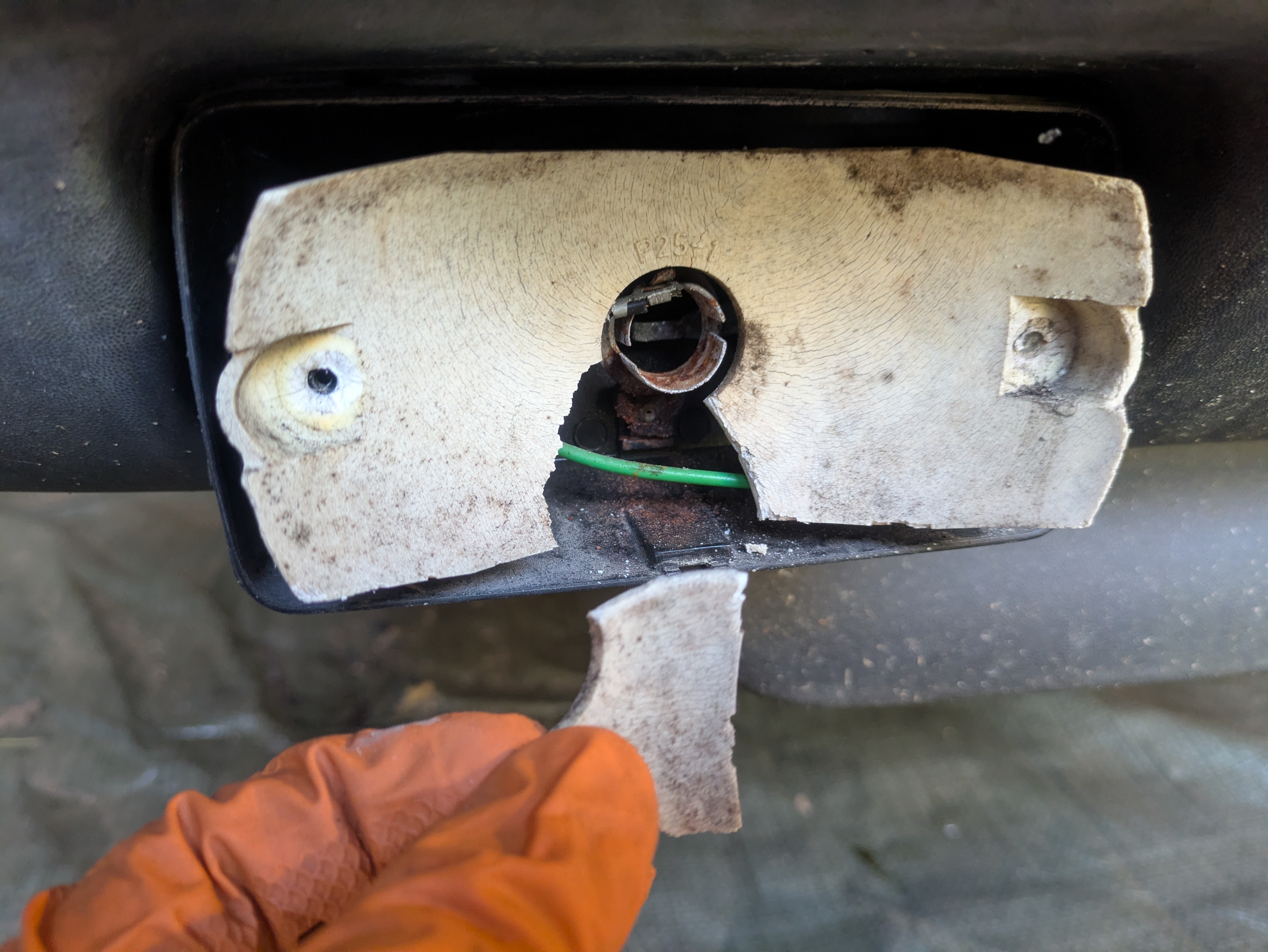
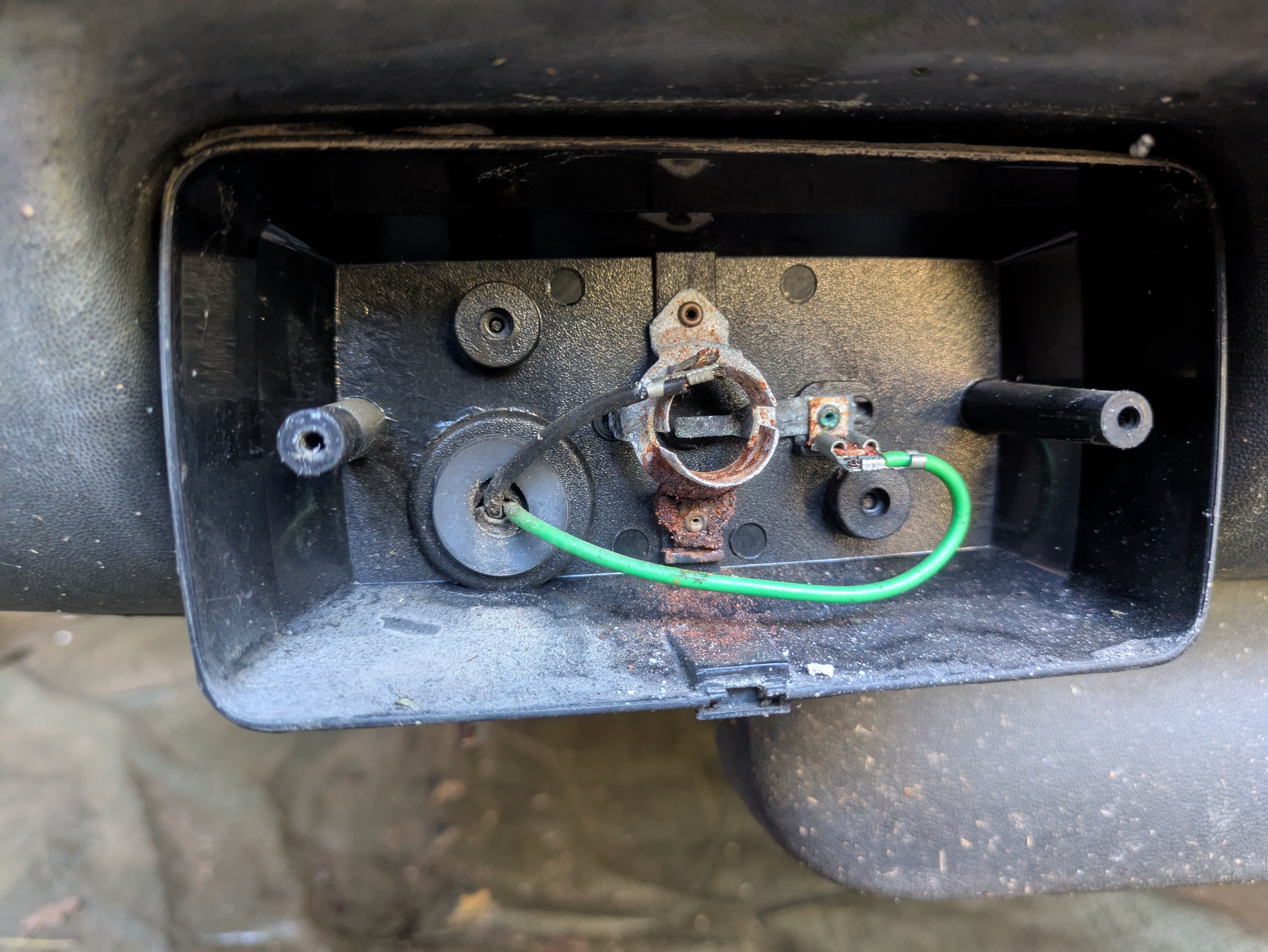
Behind that, I found lots of corroded bits and wires whose metal connectors have snapped. That’s a problem.
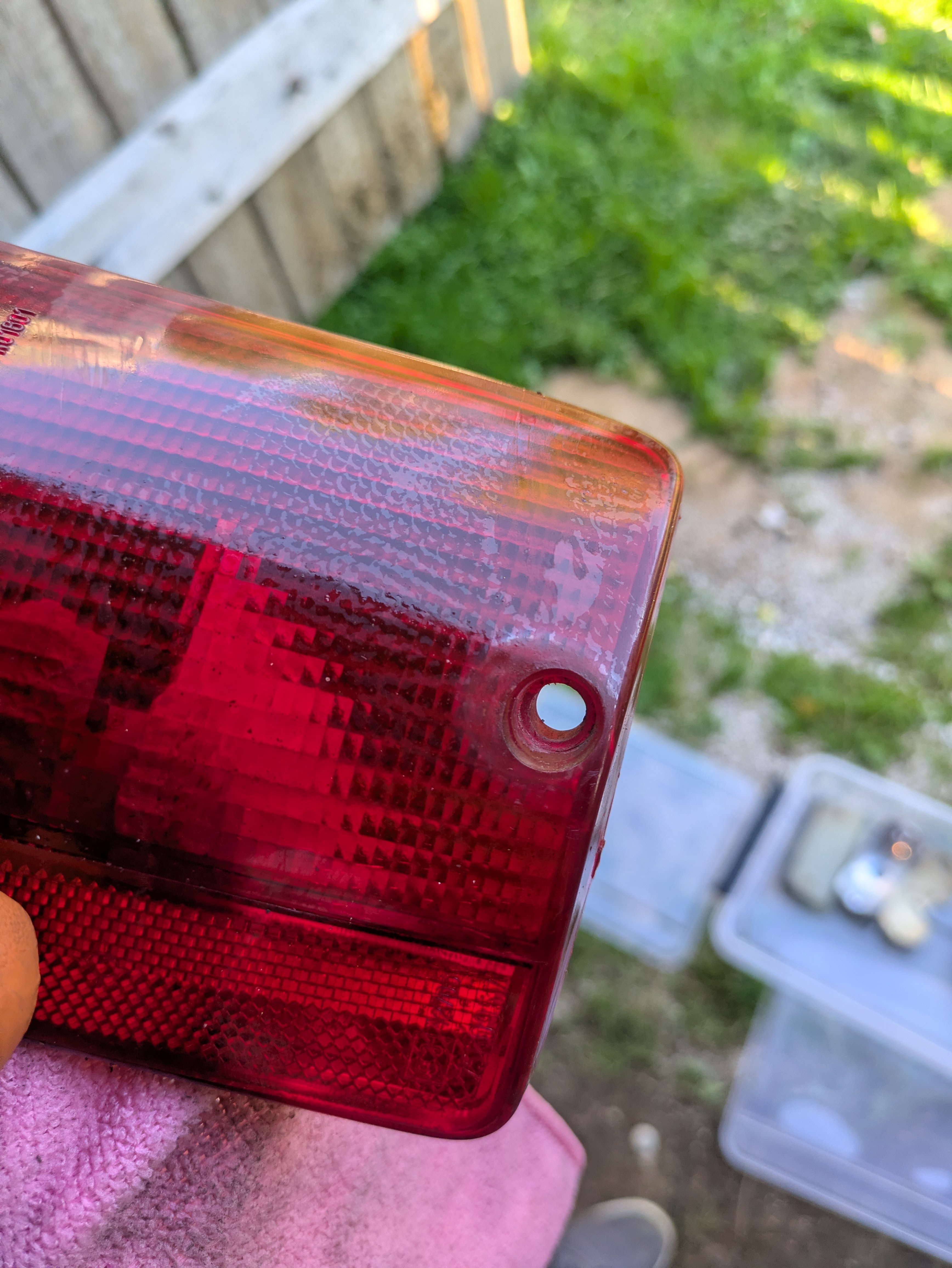
The plastic covers on the rear lights were screwed in using the plain old screws that had corroded, and when taking them off I learned why additional washers were used, as the screw holes in the plastic had worn and there wasn’t any plastic to attach to. Buying these parts new is also possible, but I may try to fix these properly.
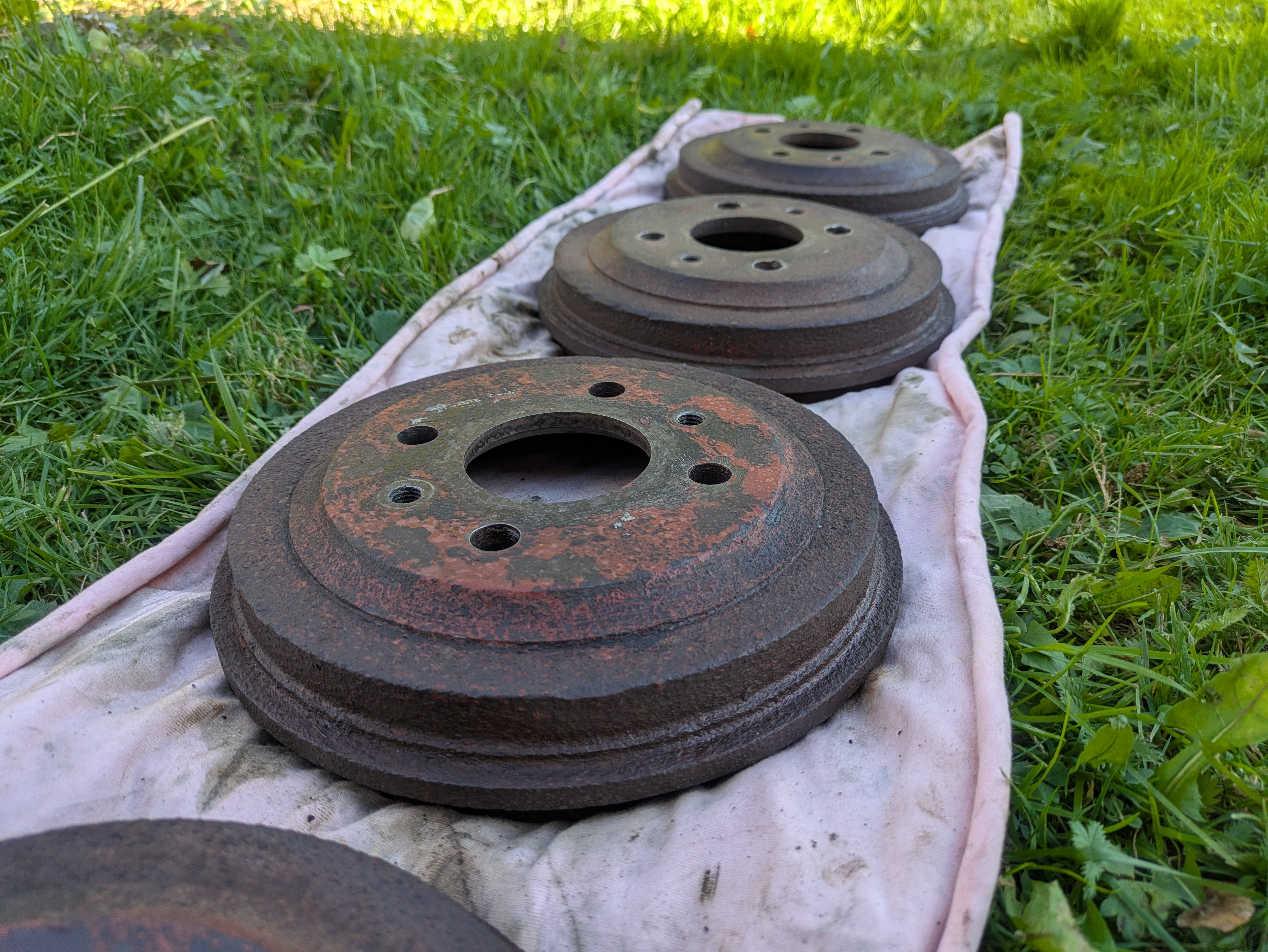
After getting very frustrated on that one nut that I simply could not get off, I got frustrated and decided to quickly paint the rusty drum brake covers on the outside with some anti-rust paint that I had bought for testing. There is no good reason to do this, I just did it for fun.
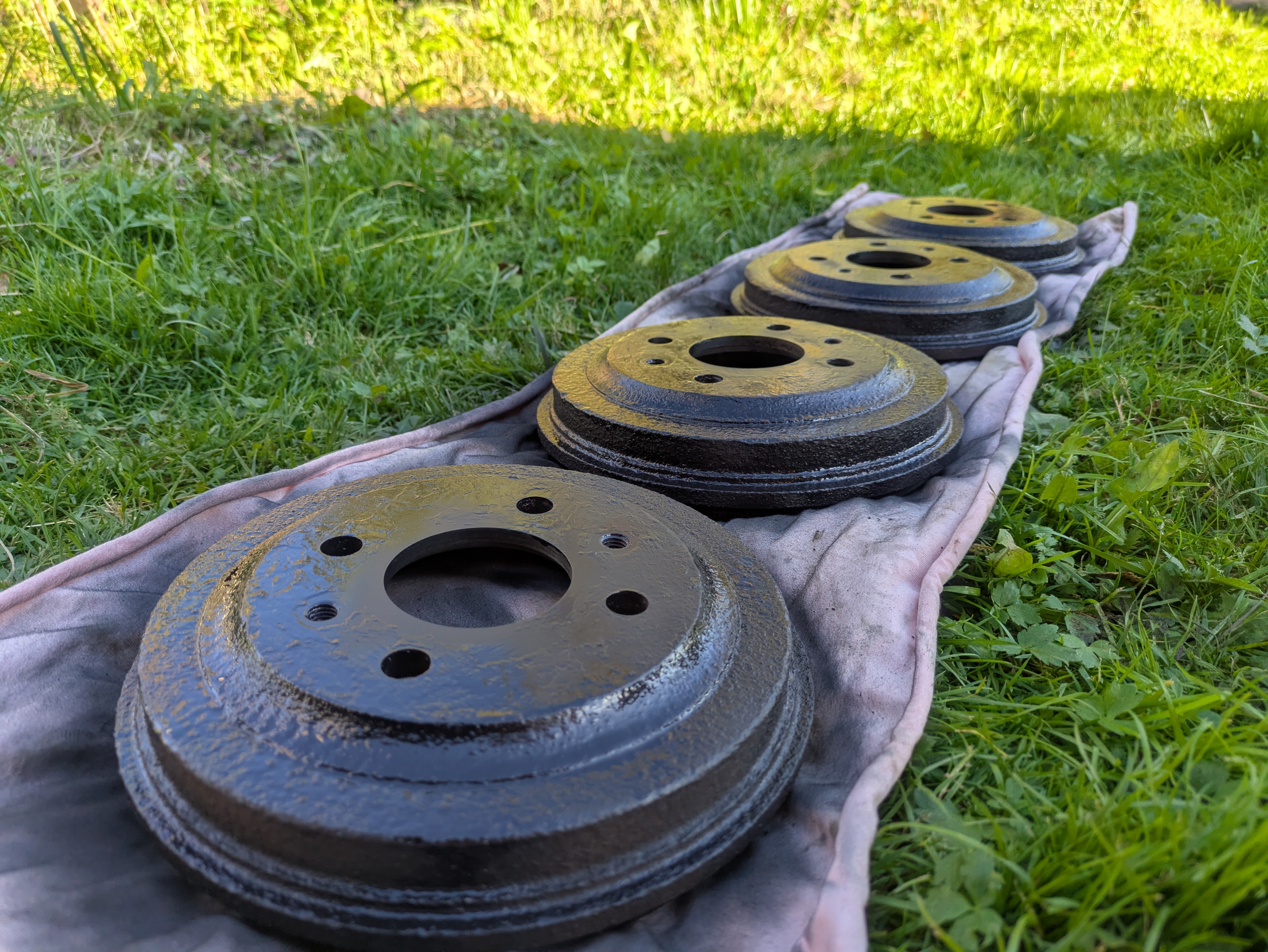
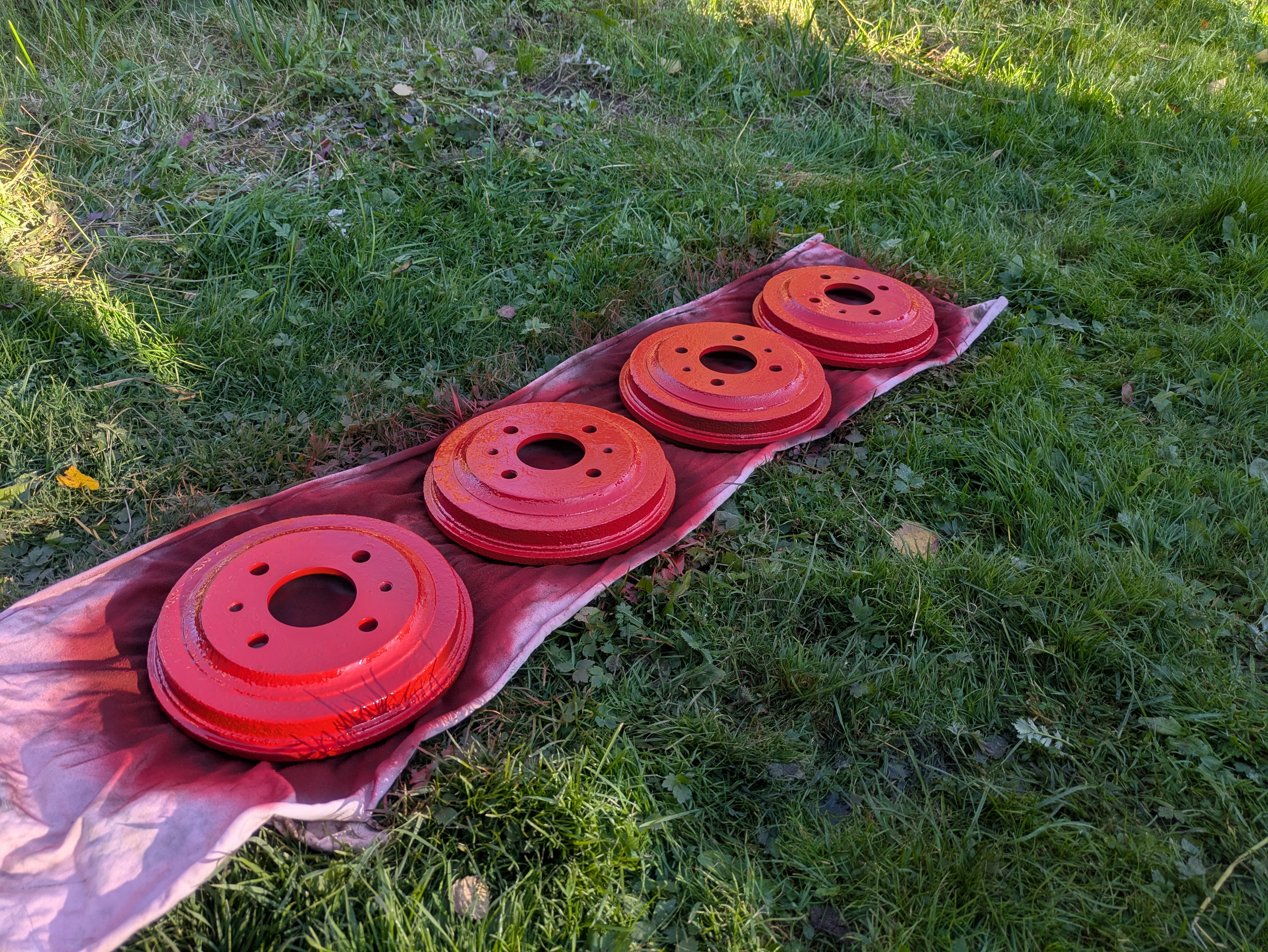
At this point, life happened, and my other cars demanded attention as well, with things like broken rear window wiper arm and a slow leak in the front left tyre. With winter on the horizon, I suspect I won’t make too much progress, but that’s a good opportunity to start researching and ordering all the parts that I need now.
Subscribe to new posts via the RSS feed.
Not sure what RSS is, or how to get started? Check this guide!
You can reach me via e-mail or LinkedIn.
If you liked this post, consider sharing it!