Anecdata: running shucked WD My Book/Easystore 8TB hard drives for over 5 years
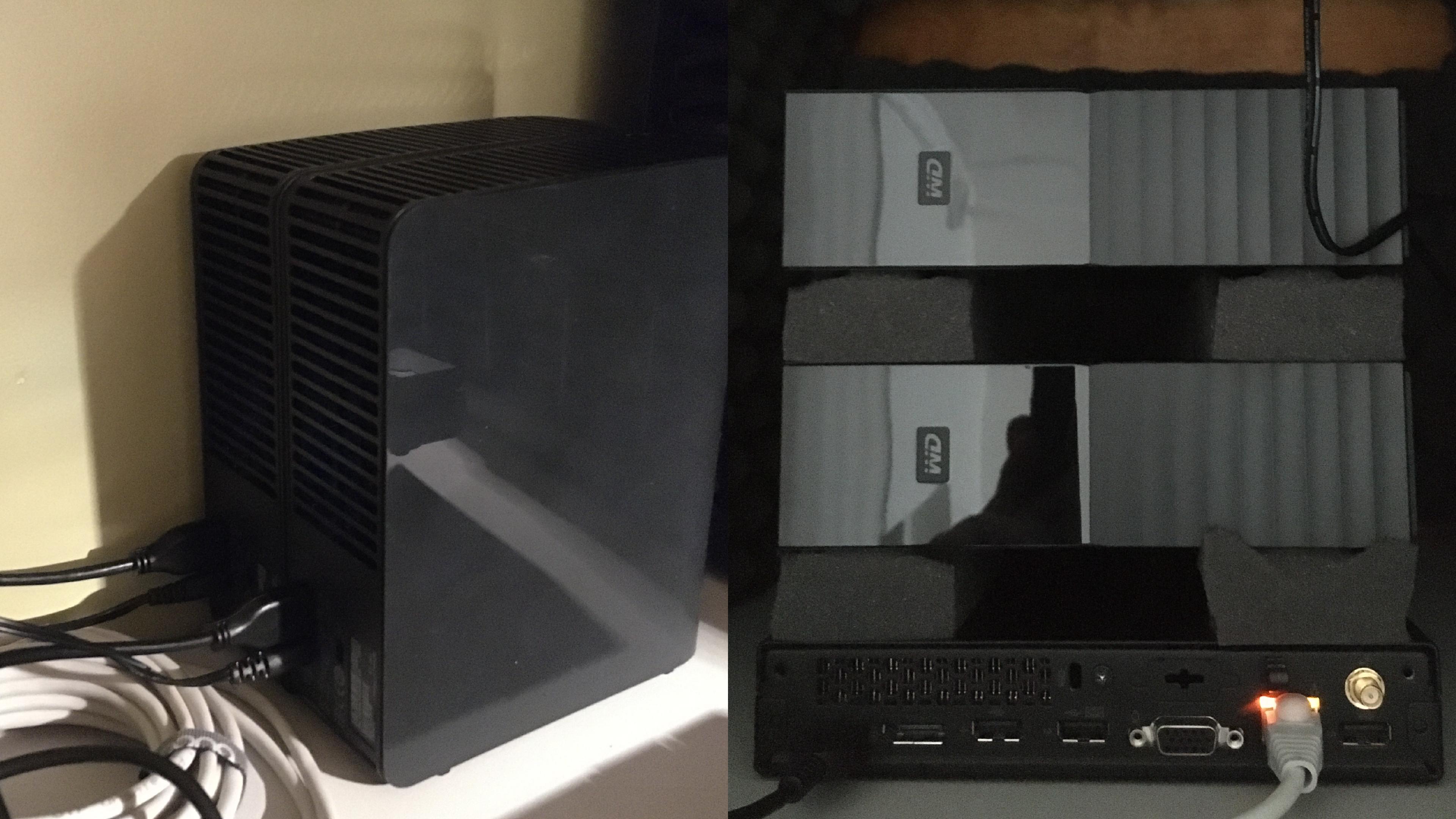
When I was getting my feet wet with self-hosting, I learned about shucking, which involves taking an external hard drive, prying its plastic case off and using it as a normal SATA hard drive. It’s not possible with every external hard drive, but with most ones it works well, and the WD My Book and Easystore drives are a prime example of this.
Back then, I remember quite a few people being skeptical about these hard drives, suggesting that they could be drives that were not good enough to be server-grade WD Red drives, so they were cheaply thrown into external enclosures and sold to customers. While I can’t disprove that, I can now provide a few data points that can help someone judge if similar approaches are worth trying.
I got mine quite soon after I had bought three WD Red 4TB hard drives. WD Red drives were pricey, but then I had one of them die after 6 months and although warranty service replaced it, it made me think about the alternative option. The math supporting this suggested that buying cheaper drives can make more sense even if they end up being more prone to failures, because with the savings you can simply buy an additional one and keep it as a spare that’s immediately available to you, which also improves the availability of your storage pool.
These two drives have seen various use cases in their early life, jumping from one setup to another, but for most of their lives, they have run in a server room and are serving as an offsite backup endpoint. The disks have seen some abuse, you can tell that by the lifetime maximum temperature hitting 67°C, but in my defense, that was when the disks were running in their original enclosure.
There was a brief moment where one of the disks started throwing some ZFS errors, but that could also have been an issue with the server that these drives are running in and its SATA connection.
The power-on hours on the disks are the following (at the time of writing):
- 55349 hours (6.4 years)
- 46513 hours (5.4 years)
Most people expect hard drives to last about 5 years, after which it becomes a lottery. Some have had drives successfully run for 10+ years, which is something I’d absolutely love to see with these two.
Here are full smartctl -ax outputs on both drives in case you want to dig into specifics:
After running these shucked WD drives and these white label Seagate ones, I’m convinced that for most use cases, these drives are just as good as buying the branded, more expensive ones.
Even with new ones it’s unwise to expect them to be perfect, they’re tiny mechanical miracles that somehow store and read data, after all, and you’d not want to use a large pool of drives without a filesystem like BTRFS or ZFS anyway if you care about your data integrity.
Now I need to go find some wood to knock on because I would love to not buy any replacement hard drives in this economy.
Subscribe to new posts via the RSS feed.
Not sure what RSS is, or how to get started? Check this guide!
You can reach me via e-mail or LinkedIn.
If you liked this post, consider sharing it!